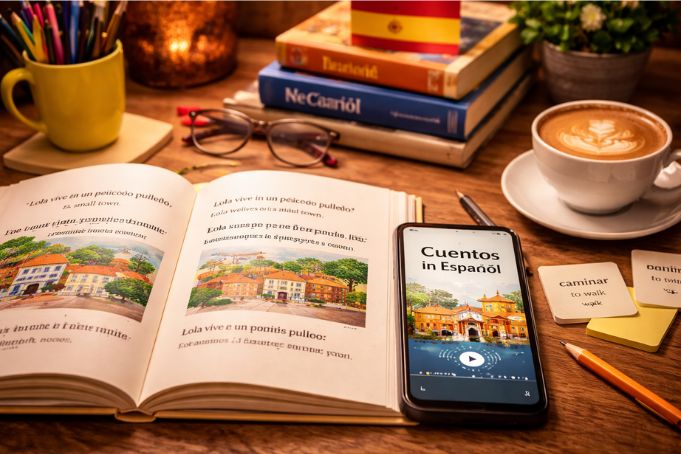


Have you ever wondered why some people pick up Spanish effortlessly while others struggle with memorizing vocabulary and grammar rules? The secret often lies not in rote learning, but in the magic of storytelling. Learn Spanish Through Storytelling transforms language learning from a mundane exercise into an engaging, memorable adventure that sticks with you.
Why Storytelling Works for Language Learning
Stories are more than entertainment—they activate multiple areas of the brain. Cognitive science shows that when we hear narratives, our brains process information more deeply, connecting new knowledge to emotions and experiences. This means learners are more likely to remember phrases, grammar structures, and cultural nuances.
Consider this: when you read “María walked to the market,” you’re not just memorizing a sentence—you’re visualizing the scene, empathizing with the character, and connecting vocabulary to real-life contexts. This multisensory learning approach is far superior to memorizing isolated words from a textbook.
Also Read: The Neuroscience of Bilingual Language Learning
Real-World Benefits of Learning Through Stories
- Contextual Vocabulary: Stories provide words in context, making it easier to understand their meaning and proper usage.
- Improved Retention: According to research published by Edutopia.org, learners retain information better when it’s embedded in meaningful narratives.
- Cultural Insight: Stories reflect the culture, idioms, and daily life of Spanish-speaking communities, enhancing cultural fluency alongside language skills.
How to Get Started with Story-Based Learning
Starting your journey is easier than you think. Begin with short, simple stories, gradually moving to more complex narratives. Platforms like Learn Spanish Through Storytelling provide a curated selection of beginner-friendly stories that integrate vocabulary and grammar seamlessly.
Practical Tips for Learners
- Listen and Repeat: Read stories aloud or listen to audio versions to enhance pronunciation and auditory comprehension.
- Note Key Phrases: Jot down useful expressions and idioms you encounter, then practice using them in your conversations.
- Engage with Characters: Imagine the characters’ perspectives. This builds empathy and strengthens memory associations with the language.
Combining Storytelling with Modern Tools
To accelerate learning, combine storytelling with online resources. Platforms offering structured courses can complement your story-based practice. For example, the Fastest Way To Learn Spanish involves a mix of interactive lessons, story reading, and practical exercises. This blended approach caters to different learning styles and keeps learners motivated.
Experts also recommend scheduling regular practice sessions, discussing stories with peers or mentors, and revisiting favorite narratives. Repetition within a meaningful context solidifies both vocabulary and grammar in long-term memory.
FAQs About Learning Spanish Through Stories
Can beginners benefit from story-based learning?
Absolutely! Beginners can start with simple stories designed for language learners. Short narratives introduce vocabulary gradually and help learners understand sentence structures naturally.
How often should I practice with stories?
Consistency is key. Even 15–20 minutes daily can be more effective than long, infrequent sessions. Regular engagement helps reinforce vocabulary and improves reading comprehension.
Do I need a teacher to use storytelling for Spanish learning?
Not necessarily. Self-guided story-based learning is highly effective, but a teacher or mentor can provide feedback, correct mistakes, and suggest more advanced narratives as you progress.
Can storytelling improve speaking skills too?
Yes! Reading aloud, acting out scenes, or summarizing stories orally strengthens pronunciation, fluency, and conversational skills, making storytelling a holistic language learning method.
Final Thoughts
Learning Spanish doesn’t have to be boring or frustrating. By embracing stories, you transform abstract grammar rules into living, relatable experiences. Whether you’re a beginner or looking to refine your skills, storytelling connects language with emotion, culture, and imagination, making every lesson both enjoyable and effective. Start your adventure today, and let narratives guide your way to fluency!
Also Read: Master Spanish Faster with Simple Story Learning
Blog Development Credits
This blog was a team effort fueled by smart ideas. Dual Language Stories picked the topic. Most content was crafted using tools like ChatGPT and Google Gemini.