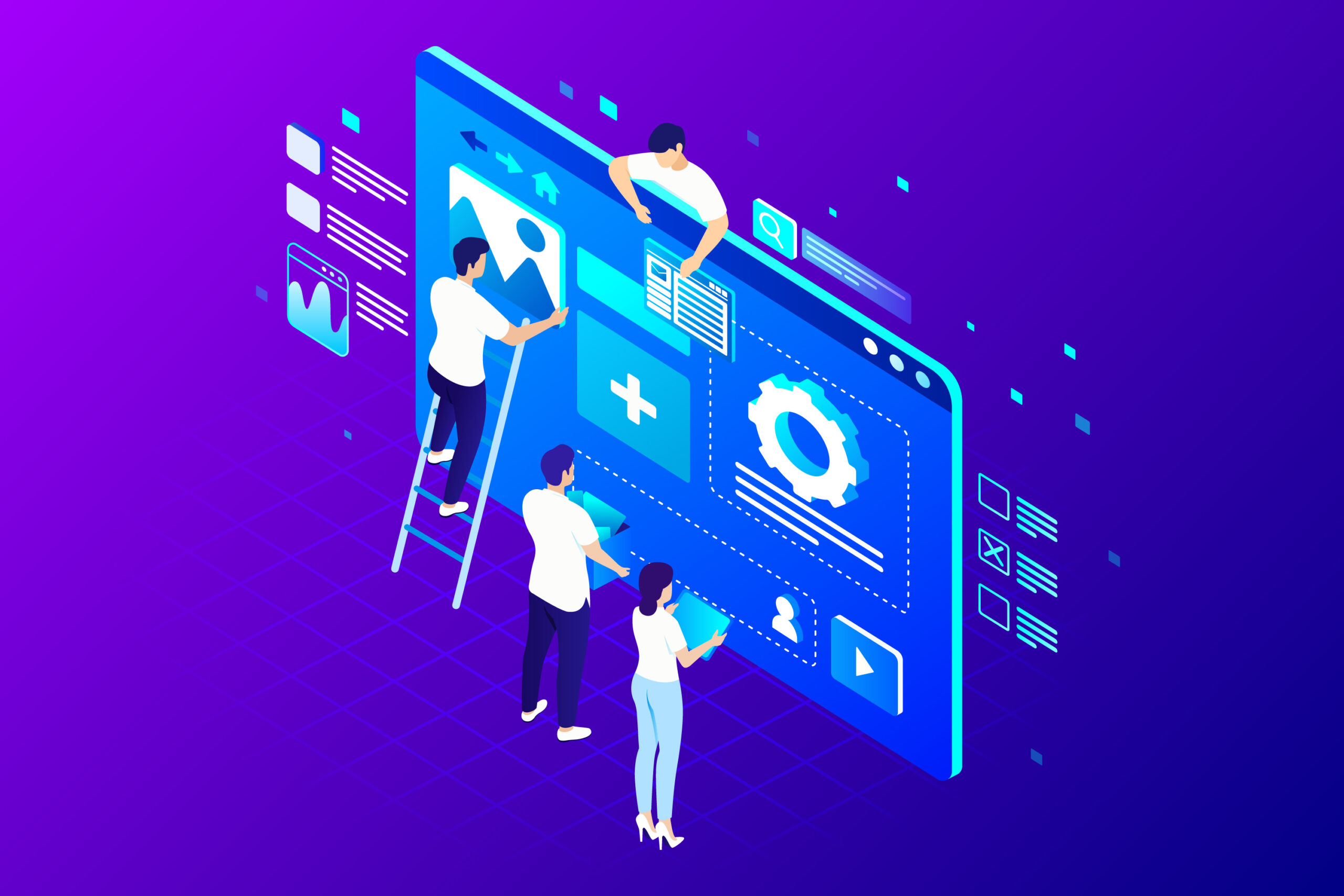

If you’ve built websites even a few years ago, you’ll remember the grind—endless lines of code, trial-and-error debugging, and constant back-and-forth between design and development. Fast forward to 2026, and things feel almost surreal. Artificial Intelligence isn’t just helping anymore—it’s quietly reshaping how modern websites are imagined, built, and experienced.
Even a forward-thinking Kolkata web design company today relies on AI-driven tools to speed up workflows and improve accuracy. What once took weeks can now happen in days—sometimes even hours—with surprisingly polished results.
From Manual Coding to AI Collaboration
Let’s be honest—coding used to feel like crafting something from scratch every single time. Now, AI-assisted development tools can generate entire code structures based on simple prompts. It’s less about writing every line manually and more about guiding the system toward the right outcome.
According to a study by McKinsey & Company, AI-powered development tools can improve productivity by up to 40%. That’s not just efficiency—it’s a complete shift in how development teams operate.
What Developers Are Experiencing Today
- Instant Code Suggestions: AI predicts what you’re about to write, often completing entire functions.
- Reduced Debugging Time: Smart systems detect potential issues before deployment.
- Rapid MVP Development: Startups can test ideas faster with minimal coding effort.
In many ways, developers are becoming strategists—focusing more on architecture and user experience rather than repetitive syntax.
Personalization at an Unprecedented Scale
Websites in 2026 don’t just display content—they respond, adapt, and evolve based on user behavior. AI analyzes clicks, scrolls, preferences, and even hesitation patterns to tailor the experience in real time.
- Dynamic content recommendations based on browsing habits
- AI-powered chatbots offering near-human interaction
- Personalized layouts that adjust to individual users
Research from Salesforce suggests that over 70% of customers expect personalized interactions from brands. That expectation has made AI integration almost unavoidable in modern web development.
Design That Thinks Ahead
Design has quietly evolved from static visuals to intelligent systems. AI tools now analyze user engagement data and automatically suggest layout improvements, color schemes, and even CTA placements.
Right in the middle of this evolution, businesses often collaborate with an India Web Design Company to implement data-driven design strategies that balance aesthetics with performance.
How AI is Transforming Web Design
- Predictive Layouts: Designs are generated based on what works best for specific audiences.
- Accessibility Automation: AI ensures compliance with accessibility standards effortlessly.
- Real-Time Optimization: Interfaces evolve continuously based on user interactions.
It’s almost like having a designer who never sleeps—constantly refining and improving the user experience.
Automation Meets Scalability
Scaling a website used to mean hiring more developers, increasing infrastructure, and managing complexity manually. AI has changed that equation entirely.
- Automated testing ensures consistent performance across devices
- AI-driven content updates keep websites fresh and relevant
- Cloud-based AI systems handle traffic spikes without breaking a sweat
According to IBM, organizations using AI for automation report significant cost savings while improving operational efficiency. That’s a compelling reason why businesses are investing heavily in AI web development tools.
The SEO Shift: Smarter, Not Harder
Search engine optimization is no longer just about keywords—it’s about intent. AI helps analyze what users really mean when they search, making content more relevant and meaningful.
Some emerging trends shaping the future of web design 2026 include:
- AI web development tools that optimize content in real time
- Machine learning in web development for predictive SEO strategies
- Voice and conversational search optimization
The focus has shifted from ranking pages to creating experiences that genuinely answer user needs.
Challenges That Can’t Be Ignored
Of course, every technological leap comes with its own set of challenges. AI is no exception.
- Over-dependence: Too much reliance on AI may limit human creativity.
- Data Privacy: Handling user data responsibly is more critical than ever.
- Skill Adaptation: Developers must continuously learn new tools and frameworks.
Still, when used thoughtfully, AI becomes less of a risk and more of a powerful ally.
FAQs
How is AI transforming web development in 2026?
AI is automating coding, improving design decisions, enabling personalization, and enhancing testing processes, making web development faster and more efficient.
Do developers still need to code manually?
Yes, but less frequently. Developers now focus more on logic, customization, and refining AI-generated code rather than writing everything from scratch.
Is AI-based web development suitable for small businesses?
Absolutely. AI tools help reduce costs, speed up development, and improve user experience, making them ideal for businesses of all sizes.
What skills are important for developers in the AI era?
Developers should focus on problem-solving, system design, AI tool integration, and user experience strategy to stay relevant in 2026 and beyond.
Final Thoughts
AI isn’t replacing web development—it’s redefining it. The real shift lies in how humans and machines collaborate to create smarter, faster, and more meaningful digital experiences. Those who embrace this change won’t just keep up—they’ll lead the next wave of innovation.
This piece was originally envisioned by Amlan Maiti, crafted with insights from AI platforms like ChatGPT, Gemini, and Copilot, and polished with strategic SEO input from Digital Piloto.