
Selecting a gimbal expansion joint for an industrial project isn’t just a technical task it’s a long-term decision that quietly determines whether your piping system runs smoothly or constantly demands attention. When temperature swings, vibration, and pressure loads collide, the wrong choice can be costly. The right one? Practically invisible in operation.
That’s why collaborating with a trusted gimbal expansion joints manufacturer in India is often the first smart move. Expertise in design calculations, pressure thrust management, and fatigue resistance ensures that the joint isn’t just installed it performs reliably for years.
What Makes Gimbal Expansion Joints Unique?
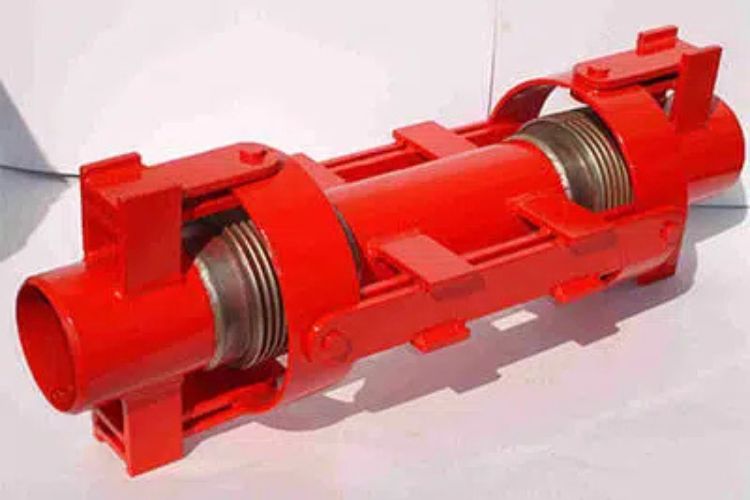
At their core, gimbal expansion joints are engineered to absorb angular movement in multiple planes while restraining pressure thrust. Unlike simple axial expansion joints, gimbal assemblies use a pivoted hinge mechanism that allows controlled flexibility without transferring unwanted stress to equipment like turbines, pumps, or boilers.
According to the Expansion Joint Manufacturers Association (EJMA.org), improper expansion joint selection is one of the leading contributors to premature piping system failures. The takeaway? Engineering precision matters more than convenience.
Common Industrial Applications
- Thermal power plants: Steam pipelines experience dramatic expansion and contraction cycles.
- Petrochemical facilities: High-pressure lines require multi-plane angular flexibility.
- Marine exhaust systems: Vibration control is critical for structural longevity.
Key Factors to Consider Before Selection
Choosing the right gimbal expansion joint is a balancing act between movement capability, material strength, and system design.
1. Angular Movement Requirements
Start with accurate load and stress analysis. Gimbal joints are specifically suited for angular deflection rather than axial movement. Overlooking this detail can cause fatigue cracks or misalignment. Engineering teams often rely on finite element analysis (FEA) simulations to predict performance under dynamic loads.
2. Pressure and Temperature Ratings
Industrial piping systems in refineries or energy plants often operate under extreme conditions. The U.S. Department of Energy (energy.gov) emphasizes that thermal expansion in steam systems significantly impacts equipment life if not properly controlled. Selecting bellows material whether stainless steel 304, 316L, or higher alloys must align with both operating pressure and corrosion risk.
3. Material and Corrosion Resistance
- Use higher-grade alloys in corrosive chemical environments.
- Consider multi-ply bellows for high-cycle fatigue applications.
- Evaluate protective coatings for outdoor installations.
These small design decisions often determine whether your joint lasts five years or fifteen.
The Importance of Manufacturer Expertise
Even the best design calculations fall short without quality fabrication. A reliable gimbal expansion joints manufacturer will follow strict testing protocols, including hydrostatic pressure testing, dye penetrant inspection, and dimensional verification.
Look for manufacturers that comply with ASME and EJMA standards. Quality documentation isn’t paperwork—it’s proof that the expansion joint can withstand real-world operating stress.
System Integration: The Often-Overlooked Element
Here’s something many project teams underestimate: the expansion joint does not work in isolation. Anchors, guides, and pipe supports must be correctly positioned to allow controlled movement. Without proper anchoring, pressure thrust can cause system instability.
In specialized environments like vacuum systems, bellows performance becomes even more critical. If you’re exploring deeper engineering principles, this guide on How Are Metal Bellows Crucial in Vacuum Technology? provides useful technical insight into material behavior under pressure differentials.
Practical Selection Checklist
- Confirm accurate load, stress, and movement calculations.
- Verify compliance with EJMA and ASME codes.
- Review installation drawings and anchor placement plans.
- Request documented pressure and cycle testing reports.
Think of this checklist as insurance. It’s easier to validate specifications now than troubleshoot system failures later.
Frequently Asked Questions
1. How is a gimbal expansion joint different from a hinged expansion joint?
A gimbal joint allows angular rotation in multiple planes, while a hinged joint permits movement in only one plane.
2. Can gimbal joints absorb axial movement?
They are primarily designed for angular movement and pressure thrust restraint. Axial displacement is typically managed by other expansion joint types.
3. What industries commonly use gimbal expansion joints?
Power generation, petrochemical processing, marine systems, and heavy engineering projects frequently rely on gimbal assemblies.
4. How long do gimbal expansion joints typically last?
Service life depends on operating temperature, pressure, and cycle frequency, but well-designed joints can operate reliably for many years.
Final Thoughts
Choosing the right gimbal expansion joint isn’t about finding the cheapest component it’s about engineering confidence. When specifications align with operating realities and fabrication quality matches design intent, the joint becomes a silent protector of your entire piping system. And in industrial projects, silence often means success.