

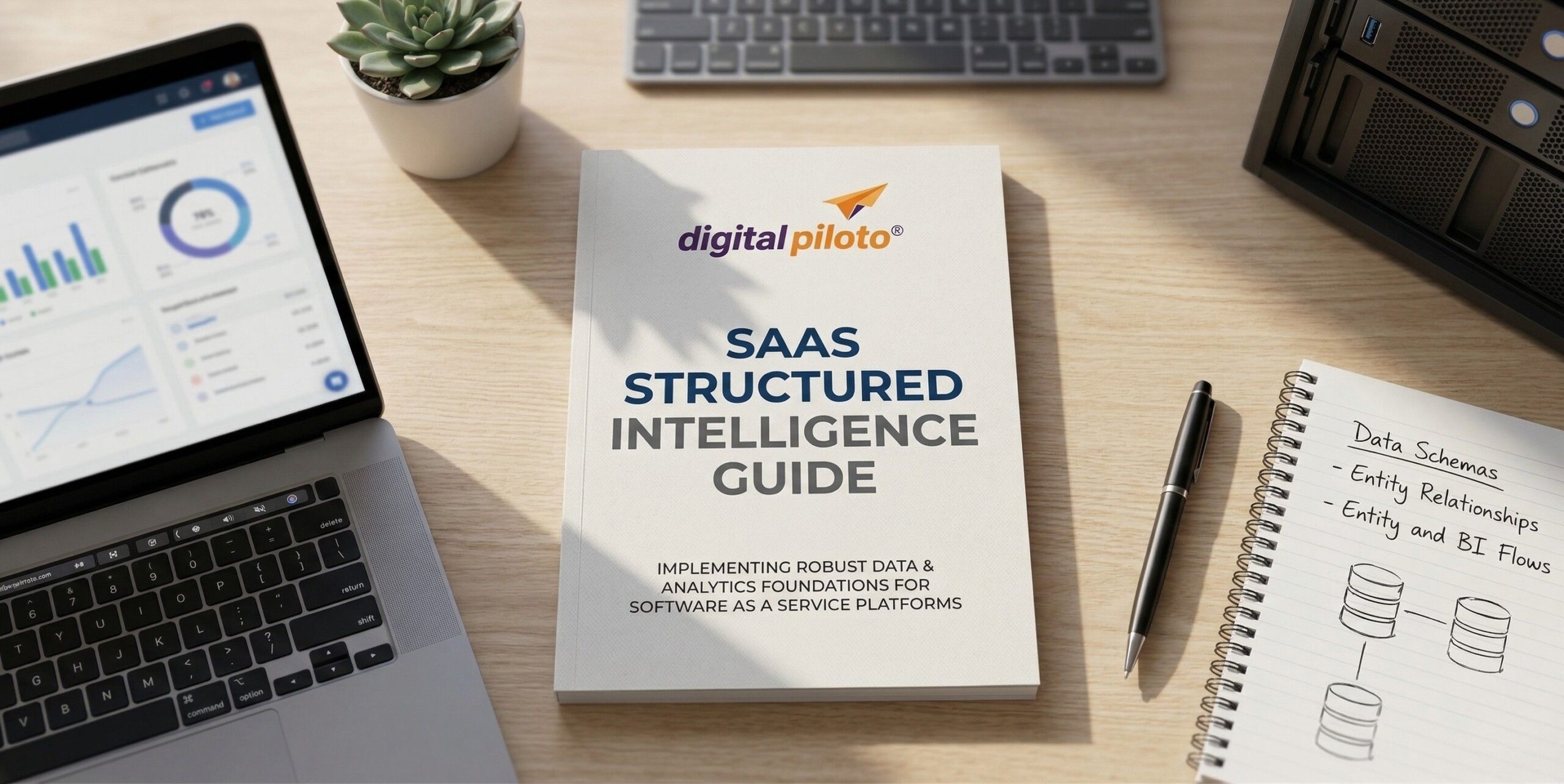
Structured Intelligence for SaaS is the practice of organizing your data, content, and product signals in a way that both users and AI systems can easily understand, interpret, and act on. It helps SaaS businesses improve discoverability, decision-making, and user experience by turning scattered information into structured, actionable intelligence.
For SaaS companies working with a local digital marketing service in Kolkata, structured intelligence becomes a strategic advantage—bridging product data, marketing signals, and AI-driven search behavior.
What is Structured Intelligence in SaaS?
Definition:
Structured Intelligence refers to the process of organizing raw data into structured formats (like schema markup, structured data models, and taxonomies) that enable machines and humans to derive clear insights and take meaningful actions.
Why It Matters for SaaS
- Improves AI readability and search visibility
- Enhances user onboarding and product understanding
- Enables better analytics and decision-making
- Aligns product messaging with real user intent
In SaaS, where complexity grows quickly, structured intelligence acts as a control system that keeps everything aligned.
How is Structured Intelligence Different from Traditional Data Management?
Most SaaS businesses already collect data. The problem is not data scarcity—it’s lack of structure.
Key Differences
- Traditional Data: Stored, but often siloed and underutilized
- Structured Intelligence: Organized, connected, and actionable
Think of it this way: traditional data tells you what happened. Structured intelligence tells you what to do next.
Step-by-Step Tutorial to Build Structured Intelligence
Practical implementation steps:
1. Map Your Core Data Sources
Identify where your data lives—CRM, analytics tools, product usage logs, and customer support systems.
2. Define a Unified Data Structure
Create a consistent framework using structured data principles. This includes naming conventions, taxonomies, and schema markup for content.
3. Implement Schema Markup for Content
Use schema markup to help search engines and AI systems understand your content. This improves visibility in rich results and AI-generated answers.
4. Align Product and Marketing Data
Ensure your product features, landing pages, and campaigns communicate the same value propositions.
5. Build Feedback Loops
Continuously refine your data structure based on user behavior, search trends, and performance metrics.
How Structured Data Improves SaaS Growth
Structured data is not just a technical layer—it directly impacts growth metrics.
Growth Benefits
- Better Discovery: AI systems can easily index and recommend your product
- Higher Conversions: Clear messaging reduces user confusion
- Faster Onboarding: Users understand your product quickly
- Improved Retention: Consistent experiences build trust
This is especially important in competitive SaaS markets where clarity often beats complexity.
Role of AI and Search in Structured Intelligence
AI-driven search is changing how users discover SaaS products. It’s no longer about keywords—it’s about context and meaning.
Implementing generative AI search engine optimization ensures your structured data aligns with how AI systems interpret and present information.
What AI Looks For
- Clear, structured content
- Consistent terminology across pages
- Accurate and up-to-date information
If your data is messy, AI systems will either ignore it or misinterpret it.
Common Mistakes SaaS Companies Make
- Overcomplicating data structures instead of simplifying them
- Ignoring schema markup and structured data implementation
- Misalignment between product, marketing, and support content
- Failing to update data structures as the product evolves
Structured intelligence is not about adding complexity—it’s about reducing it.
How SEO Supports Structured Intelligence
SEO plays a critical role in making structured intelligence visible. Without proper optimization, even well-structured data can go unnoticed.
Partnering with experienced SEO companies in Kolkata can help ensure your structured data is properly implemented and aligned with search intent.
SEO + Structured Intelligence Checklist
- Use schema markup for key pages
- Ensure consistent keyword and entity usage
- Optimize content for answer extraction
Real-World Example: SaaS Product Optimization
Imagine a SaaS platform offering project management tools. Without structured intelligence, its features are scattered across pages with inconsistent messaging.
After implementing structured data:
- Feature pages follow a consistent format
- Schema markup highlights key functionalities
- AI tools accurately describe the product in search results
The result? Better visibility, faster onboarding, and higher conversions.
FAQs: Structured Intelligence for SaaS
1. What is structured intelligence in simple terms?
It is the process of organizing data so that both humans and AI systems can easily understand and use it.
2. How does schema markup help SaaS businesses?
Schema markup makes content machine-readable, improving search visibility and enabling richer search results.
3. Is structured data only for SEO?
No, it also improves internal analytics, product experience, and decision-making.
4. How long does it take to implement structured intelligence?
Basic implementation can take weeks, but full optimization is an ongoing process.
5. Can small SaaS startups benefit from structured intelligence?
Yes, especially because it helps them scale efficiently without losing clarity or consistency.
Conclusion
Structured Intelligence is not just a technical upgrade—it’s a strategic shift for SaaS businesses. When your data is clear, your growth becomes predictable. And in SaaS, predictability is everything.
Blog Development Credits:
This article was ideated by Amlan Maiti, developed with AI-assisted insights, and refined with advanced SEO strategies by Digital Piloto Private Limited.