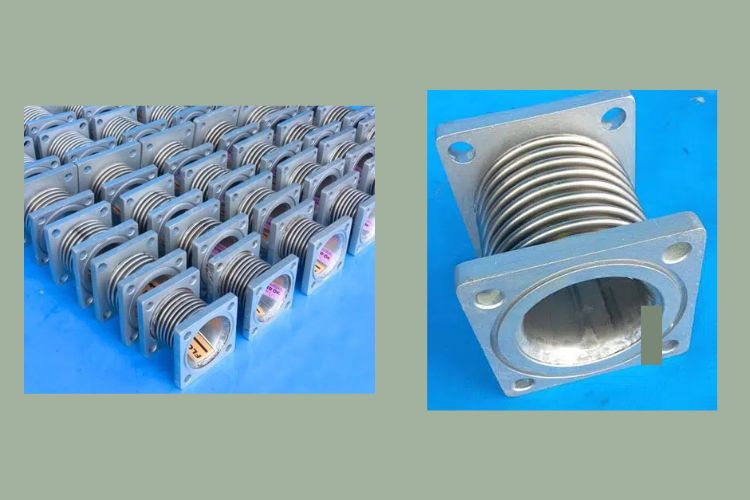


When industrial pipelines heat up, cool down, or operate under pressure, even small dimensional changes can create serious mechanical stress. An axial expansion joint helps manage this movement, but its performance depends heavily on the quality of its design and manufacture. So, how do you choose the right supplier? The answer goes beyond price and delivery promises.
A dependable axial expansion joint manufacturer should understand your operating conditions, engineering requirements, and long-term reliability goals. The right partner will help you select a solution that accommodates thermal movement without compromising piping integrity. Here are the essential factors worth examining before making your decision.
1. Look Beyond the Product Catalogue
Not every expansion joint suits every pipeline. Axial expansion joints are designed primarily to absorb movement along the pipe’s longitudinal axis, helping accommodate expansion and contraction caused by temperature changes. However, pressure, temperature, movement range, vibration, and installation conditions all influence the final design.
Choose a manufacturer that asks detailed questions before recommending a product. A supplier who offers the same configuration for every application may overlook important engineering requirements.
For example, a steam line operating at elevated temperatures needs a different level of material and performance evaluation than a low-temperature water pipeline. The manufacturer should assess the complete application rather than simply matching pipe dimensions.
2. Check Engineering Expertise and Design Standards
Engineering capability is one of the strongest indicators of a reliable manufacturer. The Expansion Joint Manufacturers Association (EJMA) develops technical standards for the design and application of metallic bellows expansion joints. Its guidance addresses important considerations such as pressure calculations, movement capacity, and bellows performance.
You can explore the association’s resources through the official EJMA Standards page. These standards provide a useful technical reference when evaluating a supplier’s design approach.
Before approving a manufacturer, ask whether its engineering team can explain the proposed design and provide relevant calculations or documentation. Depending on your project, useful checks include:
- Axial movement capacity under specified operating conditions.
- Pressure and temperature suitability for the intended service.
- Expected fatigue life based on operating cycles.
- Bellows stability, piping loads, and anchoring requirements.
- Material compatibility with the process fluid and environment.
A technically sound supplier should be comfortable discussing these details in understandable terms, not hiding behind complicated terminology.
3. Evaluate Material Quality and Manufacturing Processes
The bellows is the flexible heart of an axial expansion joint. Its material, wall thickness, and corrugation geometry influence how it responds to repeated movement and operating pressure. Selecting a material solely because it is inexpensive can become a costly mistake if corrosion or fatigue leads to premature failure.
Ask prospective suppliers about material grades, traceability, welding procedures, inspection methods, and applicable quality requirements. Stainless steel may suit many applications, but the correct grade depends on factors such as temperature, chemical exposure, and process conditions.
Also, check whether the manufacturer can provide material test certificates and inspection records when required. For critical applications, discuss the availability of suitable pressure testing, dimensional inspection, and weld examination.
4. Assess Customisation and Application Support
Industrial piping rarely follows a perfectly standard layout. Space restrictions, equipment connections, movement limits, and site-specific conditions can make a customised expansion joint necessary.
A capable axial expansion joint manufacturer in india should be able to evaluate your drawings, operating data, and installation constraints before proposing a suitable configuration.
When discussing a project, prepare the following information:
- Operating conditions: Design pressure, temperature range, and process medium.
- Movement requirements: Expected axial compression and extension, including operating cycles.
- Installation details: Pipe diameter, connection type, available space, and support arrangement.
- Project requirements: Applicable codes, inspection documents, delivery schedule, and maintenance expectations.
Providing these details early helps the manufacturer make a more accurate recommendation and reduces the risk of expensive design changes later.
5. Compare Quality, Price, and Long-Term Value
Price matters, especially when purchasing multiple components for a large project. Still, the lowest quotation does not necessarily represent the best investment. A cheaper unit may have limited documentation, unsuitable materials, or inadequate technical support.
Instead, compare quotations on a like-for-like basis. Check whether each proposal covers the same operating conditions, design requirements, accessories, inspection procedures, and warranty terms.
Consider the potential cost of an unexpected shutdown, replacement labour, and production losses alongside the purchase price. An appropriately engineered joint can offer better long-term value by reducing avoidable maintenance and reliability problems.
6. Review Communication and After-Sales Support
Manufacturing quality is only part of the relationship. Clear communication before and after delivery is equally important. Your supplier should respond to technical questions, explain installation requirements, and provide practical guidance on inspection and maintenance.
Ask how design changes are handled, what documentation accompanies the finished product, and whether assistance is available if site conditions differ from the original specifications.
For a broader understanding of how movement influences industrial piping layouts, read Exploring the Importance of Flexibility in Piping Design for Industrial Applications. Understanding the piping system as a whole makes it easier to assess whether a supplier’s recommendations are appropriate.
Frequently Asked Questions
1. What does an axial expansion joint manufacturer do?
An axial expansion joint manufacturer designs and produces flexible components that accommodate longitudinal movement in piping systems. Depending on the application, the manufacturer may also provide engineering calculations, material documentation, testing, and installation guidance.
2. How do I know which axial expansion joint is suitable?
Start with the design pressure, operating temperature, process medium, expected axial movement, and available installation space. A qualified manufacturer can evaluate these details and recommend a design that meets the application’s requirements.
3. Why are material certificates and testing important?
Material certificates help verify the supplied material’s specified properties and traceability. Appropriate testing and inspection provide additional evidence that the component meets the agreed requirements. The exact documentation depends on the project specifications and applicable standards.
4. Is the lowest-priced expansion joint always the best choice?
No. A lower initial price may not account for material quality, engineering support, service life, or inspection requirements. Comparing the complete technical and commercial offer helps identify better long-term value.
Final Thoughts
Choosing the right axial expansion joint manufacturer is ultimately about finding a partner who understands your application and takes engineering, quality, and reliability seriously. Review technical capabilities, verify manufacturing practices, compare complete quotations, and ask questions before committing. A thoughtful selection today can help protect your piping system and avoid unnecessary complications tomorrow.
Listen Here: Click Now