

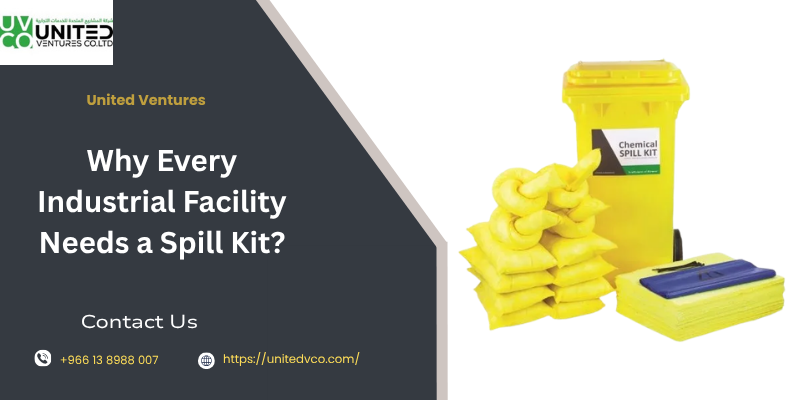
Every industrial facility needs a spill kit because leaks and spills can happen without warning, creating safety, environmental, operational, and compliance risks within minutes. A properly selected Spill Kit gives workers the materials needed to contain and clean up many routine spills quickly, before a manageable incident becomes a costly problem.
What Is an Industrial Spill Kit?
An industrial spill kit is a prepared collection of absorbent and response materials designed to help workers contain, control, and clean up specific types of liquid spills.
The important word is prepared. A spill kit should not be an assortment of whatever absorbent pads happen to be available. Its contents should match the liquids handled at the facility, the likely spill volume, and the hazards workers may encounter.
Why Are Spill Kits So Important?
A spill can change the working environment almost instantly. Oil can make a floor dangerously slippery, chemicals can expose workers to hazardous substances, and contaminated liquids can migrate toward drains or soil.
The first few minutes often matter most. Having response equipment nearby reduces the time between discovering a spill and beginning containment.
-
- Reduces exposure: Workers can begin controlling the spill using appropriate response materials.
-
- Limits spread: Absorbents and containment products can prevent liquids from travelling across floors or reaching drains.
-
- Reduces downtime: Faster response can help affected work areas return to service sooner.
-
- Improves preparedness: Employees know where essential spill-response materials are located.
-
- Supports environmental protection: Prompt containment can reduce the chance of pollutants escaping into surrounding areas.
Which Industrial Spills Require Special Attention?
Not every liquid should be handled with the same absorbent. This is one of the most commonly overlooked aspects of spill preparedness.
Oil and petroleum spills
Workshops, garages, manufacturing plants, and maintenance areas may handle lubricants, hydraulic fluids, diesel, or other petroleum-based liquids. Oil-only absorbents are designed specifically for these applications.
Chemical spills
Acids, alkalis, solvents, and other aggressive liquids may require chemical-resistant absorbents and additional personal protective equipment. The response procedure should always follow the substance’s safety information and site emergency plan.
General-purpose liquid spills
Water-based fluids and many non-aggressive liquids can often be managed using general-purpose absorbents, provided the material is suitable for the substance involved.
Practical rule: never choose an absorbent simply because it is available. Choose it because it is appropriate for the liquid and the conditions of the spill.
How Does a Spill Kit Help During an Emergency?
The value of a spill kit is not only in the absorbent material. A well-organised kit brings several response essentials together so workers do not waste valuable time searching for individual items.
Depending on the application, a kit may contain absorbent pads, socks, pillows, disposal bags, gloves, protective equipment, and other containment materials.
Step-by-Step: What Should Workers Do After a Spill?
-
- Assess the situation. Identify the substance, approximate quantity, source, and immediate hazards without putting yourself at risk.
- Protect people first. Keep unnecessary personnel away from the affected area and use appropriate PPE.
- Stop the source if safe. If it can be done without exposure or additional danger, prevent further leakage.
- Contain the spill. Use suitable socks, barriers, or other containment materials to stop the liquid from spreading.
- Absorb the liquid. Apply the appropriate absorbent pads, rolls, pillows, or granules.
- Collect contaminated materials. Place used absorbents and waste into suitable disposal containers or bags according to site procedures and applicable requirements.
- Inspect the area. Make sure the surface is safe and no residual contamination remains.
- Report and restock. Document the incident when required and replace used spill-response supplies immediately.
This sequence is a useful framework, but it should never override a facility’s emergency response plan, chemical-specific instructions, or applicable safety requirements.
Why Spill Kit Location Matters as Much as the Kit?
A spill kit hidden inside a locked storage room may technically exist, but it is not particularly useful during a fast-moving incident.
Facilities should position spill-response equipment where spills are reasonably foreseeable: near chemical storage areas, loading zones, maintenance workshops, production lines, fuel-handling areas, and other relevant points.
Large sites may need several kits rather than one central kit. Workers should also know how to identify the correct kit and when they should escalate an incident rather than attempt cleanup themselves.
How Does a Spill Pallet Support Spill Prevention?
Containment should not begin only after liquid reaches the floor. Secondary containment can help reduce the consequences of leaks from drums, containers, and other stored materials.
A Spill Pallet provides a dedicated containment area for compatible containers and can help capture leaks before they spread across a working area.
Think of the difference this way: a spill kit is primarily a response tool, while secondary containment is a prevention and control measure. Using both creates a stronger spill-management strategy.
How Should a Facility Choose the Right Spill Kit?
The correct kit depends on the facility’s actual risk profile, not simply the largest kit available.
-
- Identify the liquids: List oils, fuels, chemicals, solvents, coolants, and other fluids handled onsite.
-
- Estimate realistic spill volumes: Consider the size of drums, tanks, machinery, and containers that could leak.
-
- Choose compatible absorbents: Match the kit to the properties of the substances involved.
-
- Consider the environment: Outdoor areas may require different storage and weather considerations than indoor workspaces.
-
- Plan for disposal: Used absorbents can become contaminated waste and must be handled appropriately.
-
- Review regularly: Inspect kits for missing, damaged, expired, or depleted components.
What Happens If a Spill Kit Is Not Available?
Without dedicated equipment, workers may improvise with rags, cardboard, unsuitable absorbents, or other materials that can make cleanup slower or less effective.
That delay can increase slip hazards, employee exposure, equipment contamination, production interruption, and the possibility of a spill reaching drains or other sensitive areas.
There is also a human factor. When workers know exactly where response equipment is and what it is intended for, they are more likely to respond consistently rather than hesitate during an unexpected incident.
FAQs About Industrial Spill Kits
1. What is the main purpose of a spill kit?
A spill kit provides materials for containing and absorbing liquid spills quickly. The correct kit should be selected according to the substances and spill risks present at the facility.
2. How many spill kits does an industrial facility need?
There is no universal number. Facilities should consider their size, layout, spill hazards, storage areas, response distances, and potential spill volumes when deciding how many kits are needed.
3. Are all spill kits the same?
No. Oil-only, chemical, and general-purpose spill kits are designed for different applications. Using the wrong absorbent can reduce the effectiveness of a spill response.
4. Where should spill kits be placed?
They should be readily accessible near areas where spills are reasonably foreseeable, such as chemical stores, maintenance zones, loading areas, production areas, and fuel-handling locations.
5. Should a spill kit be inspected regularly?
Yes. Facilities should routinely check that kits are accessible, complete, undamaged, and appropriate for current site hazards. Used materials should be replaced promptly.
Final Takeaway
A spill kit is a small investment compared with the disruption a poorly managed spill can create. More importantly, effective spill preparedness is not about reacting dramatically after an incident; it is about making the correct response simple, accessible, and routine before an incident occurs.
For industrial facilities, the best approach is straightforward: understand the liquids you handle, provide suitable containment and absorbents, train employees on response procedures, position equipment intelligently, and keep every kit ready for the moment it is needed.
Full Audio Version:- Click here