
Saudi Arabia’s construction industry is growing rapidly, with ambitious infrastructure developments, high-rise buildings, commercial projects, and large-scale urban transformations reshaping the country. However, working at height brings serious risks that cannot be overlooked. Proper fall protection is more than a safety requirement; it is essential for protecting workers, maintaining productivity, and ensuring responsible construction practices.
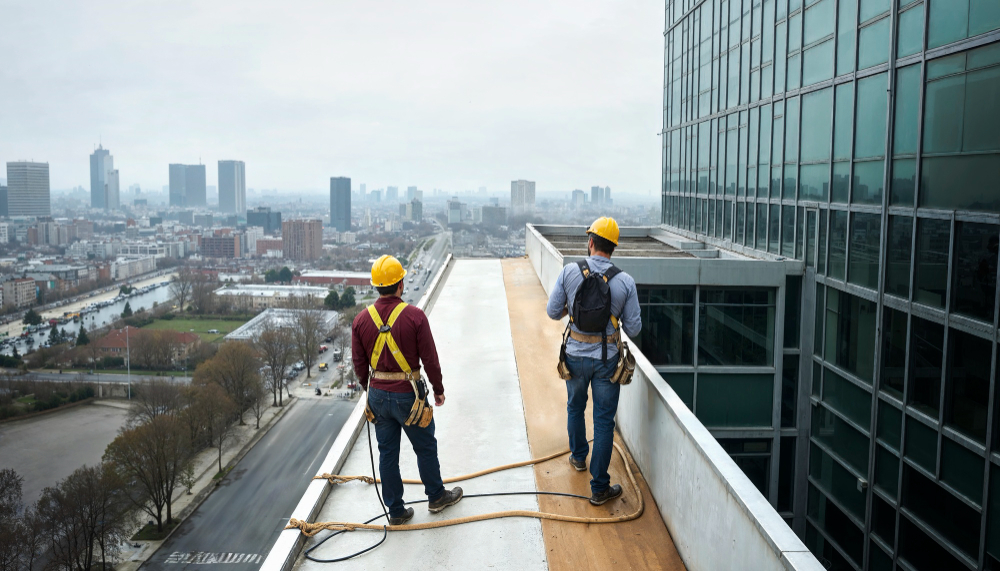
From scaffolding and rooftop installations to steel framework assembly, construction workers regularly perform tasks several metres above ground level. A properly selected Full Body Harness, combined with suitable anchorage and other protective measures, can help prevent a dangerous fall from becoming a life-threatening accident. For contractors across Saudi Arabia, investing in reliable fall protection should be a priority from the beginning of every project.
Why Are Falls a Serious Concern on Construction Sites?
Construction environments change constantly. One day, workers may be installing structural steel; the next, they could be working on an exposed roof or assembling scaffolding. Each activity introduces different hazards, particularly when workers operate near unprotected edges, floor openings, ladders, and elevated platforms.
Saudi Arabia’s demanding working conditions add another consideration. High temperatures, direct sunlight, and physically exhausting tasks can contribute to fatigue and reduced concentration. When workers become tired, even a familiar task can become dangerous.
International safety statistics highlight the seriousness of this issue. According to the US Occupational Safety and Health Administration (OSHA), 389 construction workers died from falls to a lower level in the United States in 2024, out of 1,034 construction fatalities. Although these figures are not specific to Saudi Arabia, they demonstrate why fall prevention deserves continuous attention across the global construction sector.
Source: OSHA Fall Prevention Campaign.
How Does Proper Fall Protection Protect Construction Workers?
Effective fall protection involves more than simply wearing a safety harness. It requires a complete approach that identifies hazards, prevents falls wherever possible, and minimises injury if a worker loses balance.
1. Prevents Serious Workplace Injuries
A fall from scaffolding, a rooftop, or an elevated working platform can cause severe injuries, including fractures, spinal damage, and head trauma. In some situations, the consequences can be fatal.
Guardrails, safety nets, properly secured platforms, and personal fall arrest systems provide different layers of protection. Using the right combination reduces workers’ exposure to dangerous situations and creates a safer working environment.
2. Builds Confidence Among Workers
Workers perform better when they know appropriate safety measures are in place. Imagine an employee installing electrical equipment on the exterior of a high-rise building. Without reliable fall protection, much of their attention may be focused on avoiding an accident rather than completing the installation accurately.
With suitable equipment, proper training, and secure anchor points, workers can approach elevated tasks with greater confidence. This is particularly important for activities such as facade maintenance, roofing, and structural installation.
For a closer look at working safely on building exteriors, read How to Carry Out Facade Cleaning in High-rise Buildings?
Essential Fall Protection Equipment for Saudi Construction Sites
Choosing suitable equipment depends on the working height, site conditions, task requirements, and available anchorage systems. Contractors should evaluate each activity instead of assuming that one protective solution will work everywhere.
Some essential fall protection equipment includes:
- Full Body Harnesses: Distribute arresting forces across the body when used as part of a compatible personal fall arrest system.
- Harnesses with Lanyards: Connect workers to suitable anchorage points and help restrict or arrest falls when correctly selected and configured.
- Safety Nets: Provide collective protection beneath elevated working areas where appropriate.
- Guardrails and Edge Protection: Reduce the possibility of workers accidentally stepping or falling over exposed edges.
- Anchor Points and Lifelines: Provide secure connections for compatible fall protection systems.
A Harness with Lanyard is particularly useful for certain elevated activities. However, the lanyard length, energy absorber, clearance distance, and anchorage strength must all be considered. A poorly configured system can create additional risks rather than prevent them.
Why Compliance and Worker Training Matter?
In Saudi Arabia, workplace safety is also an employer responsibility under the Labour Law. Articles 121–123 address occupational health and safety, requiring employers to take necessary precautions, communicate workplace hazards, and provide prescribed protective equipment without charging workers.
These responsibilities make safety planning an important part of construction management rather than an optional site activity.
Employers should establish practical safety procedures that include:
- Conducting working-at-height risk assessments before starting elevated activities.
- Providing equipment appropriate to the task and ensuring workers understand how to use it.
- Inspecting harnesses, lanyards, connectors, and anchorage systems before use.
- Training workers to recognise fall hazards and understand emergency rescue procedures.
- Stopping work when weather, visibility, or site conditions make elevated activities unsafe.
Saudi Arabia’s General Organization for Social Insurance (GOSI) also publishes basic occupational safety and health standards covering scaffolding, work platforms, and fall protection. Its guidance identifies 1.8 metres as a height at which fall protection systems must be applied under the stated standard.
Sources: Ministry of Human Resources and Social Development and GOSI Occupational Safety and Health Standards. Contractors should check applicable regulations and project-specific requirements before establishing their safety procedures.
How Does Fall Protection Improve Construction Productivity?
Workplace safety and project performance are closely connected. An accident can interrupt construction activities, delay project milestones, increase operational expenses, and affect the morale of an entire team.
Reliable fall protection helps contractors avoid preventable disruptions. Regular equipment inspections, organised work-at-height procedures, and employee training also make daily operations more predictable.
For construction companies working on major developments in Riyadh, Jeddah, Dammam, and other growing cities, consistent safety practices can support:
- Fewer preventable workplace accidents and associated interruptions.
- Better workforce confidence and employee retention.
- Improved project coordination and site management.
- Stronger relationships with clients, contractors, and project stakeholders.
Frequently Asked Questions
1. Why is fall protection important in construction?
Fall protection helps prevent serious injuries and fatalities when workers operate on rooftops, scaffolding, ladders, and elevated platforms. It also supports workplace safety compliance and uninterrupted project operations.
2. Which safety equipment is essential for working at height?
Essential equipment may include full body harnesses, lanyards, safety nets, guardrails, lifelines, and suitable anchor points. The correct combination depends on the task and site-specific risk assessment.
3. How often should fall protection equipment be inspected?
Equipment should be checked before each use, with additional inspections conducted according to manufacturer instructions and applicable safety requirements. Damaged equipment or equipment exposed to a fall should be removed from service until assessed by a competent person.
4. What is the recommended fall protection height in Saudi Arabia?
GOSI’s published basic occupational safety and health standards identify 1.8 metres (6 feet) as the threshold for applying fall protection systems under that guidance. Employers should also follow any stricter applicable regulations and project-specific requirements.
Final Thoughts
As Saudi Arabia continues to develop its construction and infrastructure sectors, protecting workers at height must remain a fundamental priority. The right equipment, practical training, regular inspections, and consistent safety procedures can make a meaningful difference. Ultimately, a successful construction project is not measured only by its completion date or architectural quality but also by how safely every worker returns home.