

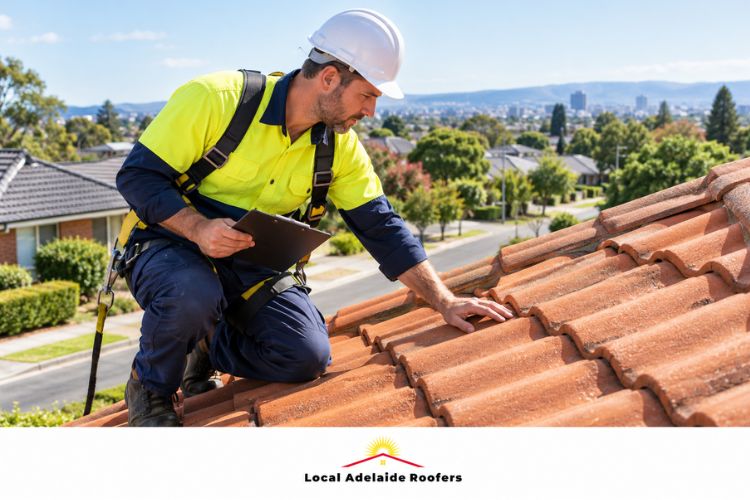
Choosing reliable Local Roofing Contractors means checking more than a price or a star rating. Adelaide homeowners should verify licensing, review relevant roofing experience, compare written quotations, ask about insurance and safety, and understand the proposed work before signing an agreement.
The right contractor should be able to explain what is wrong with your roof, why a particular repair or replacement is appropriate, and what the quoted price covers. A clear selection process can help you avoid unnecessary work, unexpected costs and disappointing results.
Also Read: How to Reduce Financial Stress When Your Roof Suddenly Fails
1. Verify the Contractor’s Licence
Start by checking whether the contractor holds the appropriate building work contractor’s licence for the work they intend to undertake. South Australia’s Consumer and Business Services (CBS) provides an official licence register for this purpose.
Do not rely solely on a website badge or verbal assurance. Check the business or licence holder’s details and confirm that the authorised work matches the job. If the project includes separately regulated plumbing, drainage or electrical work, establish whether additional trade licensing is required.
Also confirm the business name, written quotation and payment details are consistent. Understanding exactly which business you are engaging makes it easier to resolve questions about the work later.
2. Look for Experience with Your Roof Type
Roofing experience is most useful when it relates to your particular problem and roofing system. A contractor familiar with tiled roofs may regularly handle cracked tiles, deteriorating ridge caps and repointing. Metal roofing requires knowledge of sheets, fasteners, flashing, joints and corrosion-related issues.
Ask whether the contractor has completed similar projects and whether they can show relevant photographs or references. For Adelaide homes, it is also sensible to discuss the property’s exposure to coastal conditions, wind, surrounding trees and seasonal weather.
If an older roof may contain asbestos, do not disturb the material yourself. Ask how the contractor will identify and manage the risk. South Australian Government guidance advises that asbestos removal must be undertaken by a licensed professional.
3. Insist on a Proper Inspection and Clear Diagnosis
A trustworthy roofer should investigate the cause of a problem before recommending a solution. A ceiling stain, for example, does not necessarily mean the damaged section is directly above it. Water may travel along roof framing or enter through flashing, valleys, ridge caps, tiles or sheet joints.
Ask what the inspection found, which areas need attention and why the proposed work is suitable. Photographs and a plain-English explanation can make the recommendation easier to assess.
Be cautious if someone recommends a complete roof replacement without explaining why localised repairs or restoration would be unsuitable. A replacement may be justified when a roof has widespread deterioration, but the recommendation should be supported by its condition rather than pressure to buy a larger job.
4. Compare Written Quotes, Not Just Prices
Obtain multiple written quotations for substantial work where practical. South Australia’s Consumer and Business Services recommends getting at least three quotes in its homeowner guidance. The important point is to compare equivalent scopes rather than choosing whichever headline figure is lowest.
| What to compare | What to check |
|---|---|
| Scope of work | Which repairs, replacements or restoration tasks are included? |
| Materials | Are the roofing products, components and finishes clearly specified? |
| Access and safety | Are scaffolding, access equipment and relevant safety measures accounted for? |
| Removal and clean-up | Are disposal of old materials, site protection and rubbish removal included? |
| Exclusions and variations | What could incur additional charges, and how will changes be approved? |
| Timing and warranties | Are the expected schedule, completion arrangements and warranty terms documented? |
If one quote is substantially cheaper, ask the contractor to explain the difference. The quote may exclude materials, access equipment, damaged components or essential follow-up work. Equally, a more expensive quote is not automatically better. Assess the documented scope, technical reasoning and accountability behind the price.
5. Check Insurance, Contract Terms and Payment Conditions
Ask the contractor for evidence of relevant insurance, including public liability cover and workers compensation arrangements where applicable. Clarify who is responsible for subcontractors and whether their work is appropriately covered. Do not assume that a contractor’s insurance automatically covers every possible loss or defect.
South Australian Government guidance states that domestic building work valued at $20,000 or more requires a written contract. It also states that building indemnity insurance is required for domestic building work that needs council approval and costs $20,000 or more. Ask whether your proposed work requires approval and obtain any applicable certificate before work starts.
For contracts at this value, the government says the deposit should be no more than 5% of the total. Confirm the correct requirements for your project and avoid paying a large amount upfront without clear documentation.
Your agreement should identify the parties, scope, price, payment milestones, expected timeframe, exclusions, variation process and defect-resolution arrangements. Ask for written workmanship warranty terms and any applicable product warranties. These are separate from rights that may be available under Australian Consumer Law.
6. Ask How Roof Work Will Be Kept Safe
Roofing involves fall risks, fragile surfaces and the possibility of damage to people or property below. Ask how the contractor will manage roof access, prevent falls, protect skylights or other fragile areas, and keep occupants and visitors away from work zones.
SafeWork SA states that changes effective 1 July 2026 lowered the threshold for certain high-risk construction work involving falls from three metres to two metres. A Safe Work Method Statement (SWMS) must be in place before applicable high-risk construction work begins. The contractor should understand which safety requirements apply to the actual job.
A professional response should explain the relevant precautions, rather than dismissing safety questions as unnecessary.
7. Watch for Warning Signs
Pause before engaging a contractor who refuses to provide verifiable details, offers only a vague verbal estimate, demands substantial upfront cash without documentation, pressures you into an immediate decision, or recommends expensive work without a convincing explanation.
Other warning signs include unclear warranty terms, unexplained quote exclusions, unwillingness to document changes, and promises that sound guaranteed regardless of the roof’s condition.
Positive reviews can help you create a shortlist, but read them critically. Look for specific feedback about communication, punctuality, problem-solving, cleanliness and how the contractor handled issues—not just general praise.
8. Make Your Final Decision with a Checklist
Before accepting a quotation, check that you can answer yes to these questions:
- Have I verified the contractor’s licence and business details?
- Have I seen evidence of relevant experience and appropriate insurance?
- Has the roofer explained the underlying problem and proposed solution?
- Can I compare the written quote with other offers on the same basis?
- Are materials, exclusions, payment terms and variations clear?
- Have safety arrangements, timelines and warranties been discussed?
- Do I understand the approval and contract requirements that apply?
If several answers are no, seek clarification before proceeding. If the explanations remain vague, obtain another assessment rather than committing under pressure.
Frequently Asked Questions
How many quotes should I get for roof work?
For substantial work, obtaining three written quotes is a useful comparison method and is recommended in South Australian Consumer and Business Services homeowner guidance. Compare the scope and exclusions, not just the price.
How can I check if a roofer is licensed in Adelaide?
Use the South Australian CBS public licensing register to search for the contractor and verify the licence details. Check that the authorised work is appropriate for the job being quoted.
What should a roofing quote include?
It should clearly explain the work, materials, price, exclusions, access requirements, disposal arrangements, payment terms, anticipated timing and how additional work will be approved.
Should I always choose the cheapest roofer?
No. Choose the contractor whose documented scope, relevant experience, credentials and proposed solution provide the strongest overall value. A lower price is not useful if important work or protections are missing.
Choose a Roofer with a Clear, Practical Approach
Finding the right contractor comes down to verifiable credentials, a sound diagnosis, transparent pricing, appropriate safety practices and clear written terms. Taking these steps before work begins can help you make a more confident decision and protect your home.
If a leak is your immediate concern, explore Roof Leak Repairs Adelaide to learn about inspection and repair options. For other roofing concerns, Local Adelaide Roofers provides services for tile and metal roofs, restoration, gutters and roof replacement across Adelaide.
Ready to assess your roof? Contact Local Adelaide Roofers to discuss your property’s condition and request a clear, property-specific quotation.
Also Read: Emergency Roof Leak Repair: Solutions to Prevent Water Damage
Blog Development Credits
This blog was a team effort fueled by smart ideas. Local Adelaide Roofers picked the topic. Most content was crafted using tools like ChatGPT and Google Gemini.


