

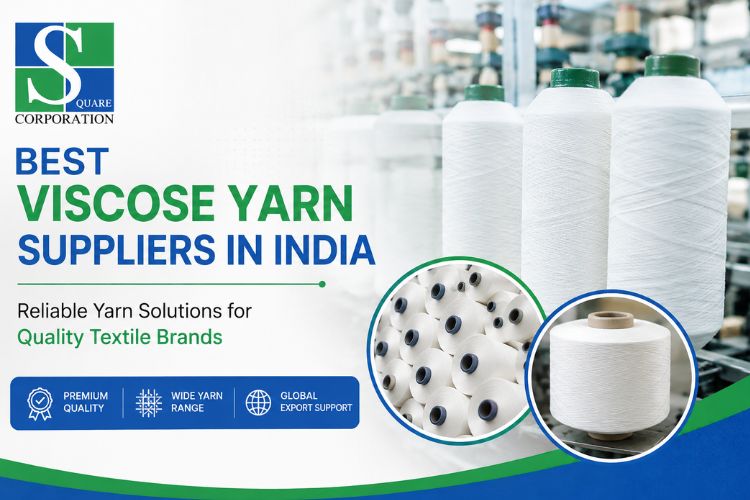
Finding the right viscose yarn supplier can have a direct impact on fabric quality, production consistency and delivery performance. For textile brands sourcing at scale, the decision involves much more than comparing prices. The best Viscose Yarn Suppliers in India should be able to understand technical specifications, maintain reliable quality and support the practical requirements of modern textile production.
India has a large and diverse textile ecosystem, making it an important sourcing destination for yarn buyers worldwide. The country’s man-made yarn, fabrics and made-ups exports reached ₹42,687.8 crore in FY 2025–26, according to the Ministry of Textiles, reflecting continued activity across the broader man-made textile value chain.
Also Read: Moisture-Wicking Fabrics: A Must-Have for Modern Sportswear
Why India Is an Important Market for Viscose Yarn Sourcing
India offers textile brands access to an established network of fibre producers, spinning operations, textile manufacturers, traders and export-oriented sourcing companies. This ecosystem can give buyers more flexibility when selecting yarn specifications, quantities and supply arrangements.
The country also has an established viscose filament yarn manufacturing base. Official information from Grasim Industries identifies the company as India’s largest producer of viscose filament yarn, demonstrating the scale of India’s capabilities in regenerated-cellulosic textile materials.
Viscose Filament Yarn vs Viscose Spun Yarn
Before choosing a supplier, buyers should clearly identify the type of viscose yarn required for their product.
Viscose Filament Yarn
Viscose filament yarn consists of continuous filaments and is often selected where drape, lustre and a smooth appearance are important. It is commonly associated with applications requiring elegant fabric characteristics.
Viscose Spun Yarn
Viscose spun yarn is produced from staple fibres and can be used across a broad range of knitting and weaving applications. The required count, twist, strength and blend composition can vary according to the intended textile product.
This distinction matters because a supplier that performs well for one yarn category may not necessarily be the ideal sourcing partner for another.
How to Identify the Best Viscose Yarn Suppliers in India
The strongest suppliers are not simply those offering the lowest quotation. Textile brands should evaluate suppliers across several practical criteria.
1. Product Specification Capability
Start with the technical requirements. Confirm whether the supplier can provide the required yarn count, construction, application suitability and other relevant specifications.
2. Consistent Quality
Consistency is especially important for brands producing fabrics over multiple batches. Variations in yarn characteristics can affect knitting, weaving, dyeing and the appearance of the finished textile.
3. Quality Assurance Process
Ask suppliers how quality is monitored before dispatch. A serious sourcing process should consider physical inspection, packaging checks and appropriate quality controls based on the product and application.
4. Sampling Before Bulk Orders
Textile brands should avoid making large purchasing decisions based only on photographs or written specifications. Requesting samples and evaluating them in the intended production process can reduce procurement risk.
5. Supply Reliability
A supplier relationship should be evaluated over more than a single order. Consider production availability, communication, lead times and the supplier’s ability to support repeat procurement.
Manufacturer or Sourcing Partner: Which Is Better?
The answer depends on the buyer’s requirements.
- Direct manufacturers may be suitable for buyers with highly specific requirements and substantial volume commitments.
- Sourcing partners can be useful for brands seeking access to multiple yarn options, supplier networks and broader procurement support.
- Export-oriented suppliers may be particularly valuable for international buyers requiring coordination and documentation support.
The most suitable option depends on whether your priority is a single specialised product or a flexible long-term sourcing relationship.
Questions Textile Brands Should Ask Before Buying
- What type of viscose yarn is being supplied?
- What specifications are available?
- Can samples be approved before bulk production?
- How is quality checked?
- Can the supplier support repeat orders?
- What is the expected production and delivery timeline?
- Can the supplier support export requirements where necessary?
Square Corporation for Yarn Sourcing in India
For buyers looking for a broader yarn sourcing relationship, Square Corporation offers conventional, value-added, melange and blended yarn options, including viscose yarn. Its yarn portfolio is designed to serve textile manufacturing and sourcing requirements across different applications.
Square Corporation also works across yarn, fabrics and organic cotton sourcing, which can be useful for textile businesses that prefer a broader sourcing relationship rather than managing multiple disconnected suppliers.
Brands exploring sustainable raw-material options may also consider related sourcing requirements such as supima cotton suppliers in india when building a diversified textile material strategy.
Expert Sourcing Recommendation
For most textile brands, the best supplier selection process begins with specifications rather than a company name. Define the yarn type, application, quality expectations and purchasing volume first. Then compare potential suppliers based on their ability to consistently meet those requirements.
Price should remain an important factor, but it should be evaluated alongside quality consistency, sampling, communication and supply reliability. A slightly cheaper yarn can become expensive if inconsistency causes production problems later.
Frequently Asked Questions
What should I check before choosing a viscose yarn supplier in India?
Check the supplier’s product specifications, quality-control process, sampling options, supply reliability, communication and ability to support repeat orders.
What is the difference between viscose filament yarn and viscose spun yarn?
Viscose filament yarn uses continuous filaments, while viscose spun yarn is made from staple fibres. Their properties and applications can differ, so buyers should select the yarn according to the intended textile product.
Should textile brands choose suppliers based only on price?
No. Price should be evaluated together with quality consistency, technical suitability, delivery reliability and long-term sourcing capability.
Can a yarn sourcing company help international textile buyers?
Yes. A sourcing partner may help buyers access suitable product options and coordinate procurement requirements, depending on its services and export capabilities.
Also Read: Textile Exporter Ludhiana for Premium Fabrics
Conclusion
India remains an important sourcing market for textile brands looking for viscose yarn and other textile raw materials. However, finding the right supplier requires a structured evaluation of product capability, quality assurance, supply consistency and commercial reliability.
For brands seeking a sourcing partner with access to a broad yarn portfolio and experience across textile supply and exports, Square Corporation provides a practical starting point for exploring suitable yarn solutions. The right sourcing relationship can help textile businesses move from one-time purchasing decisions toward a more reliable and scalable supply chain.
Blog development Credits:
This article was thoughtfully developed by Square Corporation, supported by modern AI research platforms including ChatGPT, Google Gemini, and Copilot, then carefully refined and SEO-optimized by Square Corporation.