

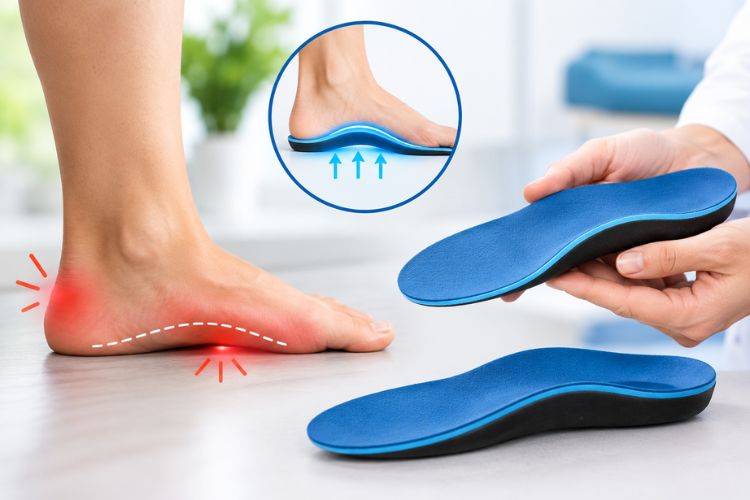
Heel and arch pain can make everyday activities such as walking, standing, exercising, and working uncomfortable. For people with flat feet, inadequate foot support may contribute to uneven pressure distribution and additional strain during movement. Customized insoles for flat foot are designed to provide personalized support, improve comfort, and help manage symptoms associated with certain foot conditions.
But can they genuinely reduce heel and arch pain? The answer depends on the cause of the discomfort, foot structure, and the suitability of the insole. Exploring customized insoles for flat foot through a professional assessment can help determine whether this approach is appropriate for your needs.
Understanding Flat Feet and Associated Pain
Flat feet, also called pes planus, occur when the arches of the feet are lower than usual or appear to disappear when standing. Some people naturally have flat feet without experiencing pain or mobility problems. Others may develop discomfort because of changes in foot mechanics, prolonged standing, tendon problems, or other underlying conditions.
When the foot rolls excessively inward during walking, a movement known as overpronation, the distribution of pressure across the foot may change. Depending on the individual, this can contribute to discomfort around the heel, arch, ankle, or other parts of the lower limb.
However, flat feet are not automatically the cause of heel pain. Plantar fasciitis, tendon injuries, footwear problems, and other conditions can produce similar symptoms. Identifying the underlying cause is therefore important before choosing a treatment.
How Can Customized Insoles Help Reduce Heel and Arch Pain?
Customized insoles are shoe inserts designed around an individual’s foot shape, support requirements, and movement patterns. Depending on their design, they may help redistribute pressure, support the arch, and influence how the foot moves during everyday activities.
1. Providing Personalized Arch Support
People with flat feet may benefit from an insole that supports the arch without creating excessive pressure. A properly fitted design can provide a more comfortable platform for standing and walking, particularly when ordinary footwear does not offer sufficient support.
The ideal level of support varies from person to person. An insole that feels comfortable for one individual may cause discomfort for another if its shape, firmness, or positioning is unsuitable.
2. Redistributing Pressure Across the Foot
When pressure is concentrated around sensitive areas, walking and standing may become painful. Orthotic insoles can change how forces are distributed across the sole, potentially reducing excessive loading on particular areas.
Research supports the pressure-redistribution role of foot orthoses, although evidence that this consistently translates into meaningful pain relief for everyone with flexible flat feet remains limited. A 2026 systematic review highlighted substantial uncertainty in the available clinical evidence.
3. Supporting More Comfortable Movement
Some customized insoles are designed to improve foot stability during walking, running, or prolonged standing. By providing support suited to the individual’s foot mechanics, they may help make daily movement more comfortable.
Nevertheless, customized insoles do not permanently rebuild the arch or guarantee that heel pain will disappear. Their primary purpose is to manage symptoms and support function when appropriate.
Are Customized Insoles Better Than Regular Shoe Inserts?
Regular insoles generally provide cushioning and basic support using standardized shapes and sizes. Customized insoles are designed to address individual requirements following an assessment of the feet and, when appropriate, walking mechanics or pressure patterns.
For mild discomfort, an over-the-counter supportive insole may be a reasonable starting point. Customized options may be worth considering when pain persists, standard inserts do not fit comfortably, or a specific foot condition requires more individualized support.
However, custom-made products are not automatically superior for every person. The right choice depends on the diagnosis, comfort, activity level, footwear, and response to treatment. Cost alone is not a reliable indicator of effectiveness.
What Should You Look for in Customized Insoles?
Choosing the right insole involves more than finding a product labelled for flat feet. Consider these important factors before making a decision:
- Professional assessment: A qualified foot-care professional can evaluate your symptoms, foot structure, and movement to identify suitable support.
- Comfortable arch support: The insole should support the foot without causing excessive pressure, rubbing, or a feeling of forced alignment.
- Appropriate cushioning: Material firmness and cushioning should match your comfort needs, footwear, and daily activities.
- Proper shoe fit: The insole should fit securely without making the shoe tight or compressing the toes.
- Follow-up and adjustments: Check whether the provider offers guidance on wearing the insoles and adjusting them if discomfort develops.
At CuraFoot, customized foot support is part of a broader approach to assessing foot structure and individual mobility needs. Explore the available custom insoles to learn more about personalized foot support and assessment.
Why Footwear Matters Alongside Insoles
Even well-designed insoles may not feel comfortable when used with unsuitable shoes. Footwear should provide adequate room for the toes, a secure fit, and enough depth to accommodate the insert without creating pressure points.
People who spend long hours standing or walking should pay particular attention to cushioning, stability, and shoe fit. If you have diabetes, footwear selection deserves additional care because reduced sensation or circulation problems may increase the risk of unnoticed skin damage.
For practical footwear guidance, read CuraFoot’s article, Tips to Choose Comfortable Shoes If You Have Diabetes.
How to Start Using Customized Insoles Safely?
When a professional recommends customized insoles, follow the provider’s instructions for wearing and adjusting them. A gradual introduction may help you assess comfort, particularly if the support feels unfamiliar at first.
- Begin with the recommended wearing schedule rather than immediately using the insoles throughout the day.
- Check your feet for redness, rubbing, blisters, or pressure-related discomfort.
- Stop using the insoles and seek advice if pain increases significantly or new symptoms appear.
- Combine appropriate footwear with any recommended stretching, strengthening, activity modification, or other treatment.
Seek medical assessment if heel or arch pain persists, worsens, or interferes with walking. Sudden severe pain, substantial swelling, an inability to bear weight, or a foot wound requires prompt medical attention. People with diabetes or reduced foot sensation should seek professional advice before experimenting with new insoles.
Frequently Asked Questions
1. Can customized insoles completely cure flat feet?
No. Customized insoles can provide support and help manage symptoms, but they generally do not permanently change the underlying structure of the foot.
2. How long does it take for customized insoles to reduce heel pain?
The timeframe varies according to the cause of pain, the insole design, and individual response. Some people notice improved comfort relatively quickly, while others need a longer adjustment period or additional treatment. There is no guaranteed timeline.
3. Can customized insoles help with plantar fasciitis?
They may help some people with plantar fasciitis by supporting the foot and redistributing pressure. However, treatment should be based on an appropriate assessment and may also include stretching, activity modification, footwear changes, or other interventions.
4. Are customized insoles suitable for everyone with flat feet?
No. Many people with flat feet do not need treatment if they have no symptoms. Insoles are more relevant when discomfort, functional limitations, or specific clinical needs justify additional support.
5. Should I choose customized insoles or regular arch supports?
Regular arch supports may be sufficient for mild discomfort. Customized insoles may be useful when symptoms persist or individual foot mechanics require more specific support. A qualified professional can help determine which option is appropriate.
FINAL THOUGHTS
Customized insoles for flat foot can help reduce heel and arch discomfort for some people by supporting the arch, redistributing pressure, and improving comfort during movement. However, results depend on the cause of pain, proper fitting, and the individual’s response to treatment.
Rather than relying on insoles alone, consider your footwear, activity levels, and any other symptoms you may be experiencing. A professional foot assessment can help identify the source of discomfort and determine whether customized support is suitable. CuraFoot offers personalized foot-care services to help individuals explore appropriate options for improved comfort and mobility.