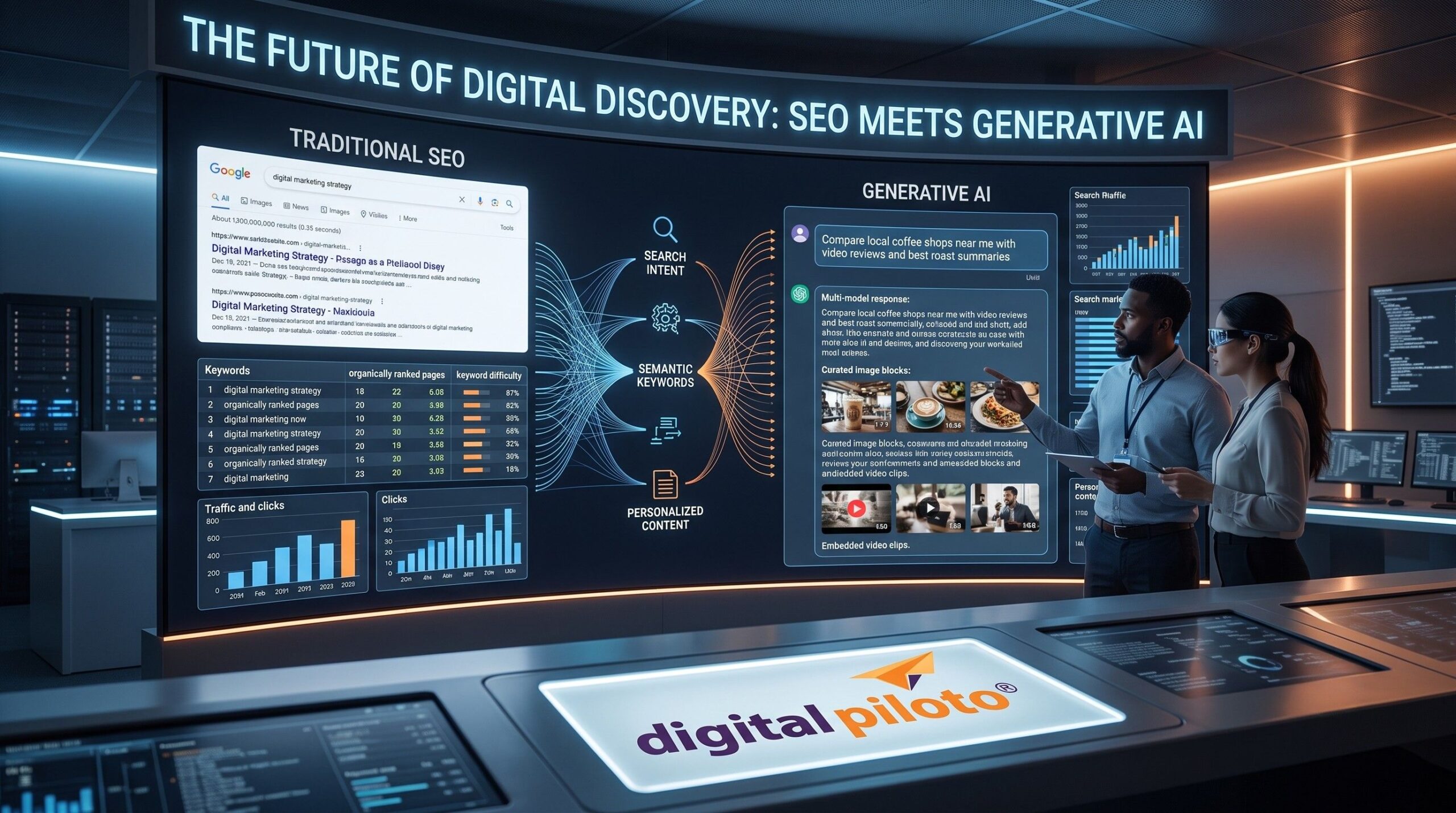


Search engines are no longer simply matching words on a page with words in a query. They are getting better at understanding context, relationships, and the meaning behind a question. For businesses, this changes the goal of SEO: visibility increasingly depends on explaining a subject clearly, demonstrating expertise, and connecting information in ways people and machines can understand.
For any digital marketing company, semantic SEO is becoming an important part of building sustainable online visibility. Instead of creating separate pages for every keyword variation, marketers can develop useful topic ecosystems that answer related questions, establish brand relevance, and support discovery across traditional search engines and AI-powered platforms.
What Is Semantic SEO?
Semantic SEO is the practice of organizing and optimizing website content around meaning, search intent, entities, and relationships between concepts. It helps search systems interpret what a page actually discusses rather than relying exclusively on exact keyword matches.
Imagine searching for “the best laptop for graphic design.” You probably want information about processing power, memory, display accuracy, software compatibility, and price. A useful page understands these connected needs instead of repeating “best laptop for graphic design” in every paragraph.
This is the central idea behind semantic search optimization: answer the real question, explain the surrounding concepts, and give readers enough context to make an informed decision.
Semantic SEO commonly involves:
- Search intent: Understanding whether someone wants information, comparisons, a product, or a service.
- Entities: Identifying recognizable people, organizations, products, places, and concepts.
- Topic relationships: Explaining how related ideas connect instead of treating every subject as an isolated keyword.
- Content structure: Using descriptive headings, contextual links, and clear explanations to make information easier to navigate.
- Topical authority: Demonstrating meaningful expertise across the important questions within a subject area.
Why Semantic SEO Matters in AI-Powered Search
AI-assisted search experiences can interpret longer questions, consider context, and assemble answers using information from multiple sources. People might ask a conversational question such as, “Which accounting software works best for a small manufacturing company with multiple warehouses?” rather than searching for a short phrase like “manufacturing accounting software.”
To serve these more detailed needs, search systems must interpret relationships between business size, industry, inventory management, accounting functions, and software capabilities.
Google’s official guide to optimizing websites for generative AI features explains that established SEO practices remain important for AI-powered search. Its guidance emphasizes useful, distinctive content, sound technical foundations, and information that genuinely serves the reader. It also makes clear that special AI-only markup or a prescribed writing format is not required for inclusion in Google’s AI search experiences.
That distinction matters. Semantic SEO is not about discovering a secret formula for AI citations. It is about making a website’s expertise, information, and purpose easier to understand while giving users a genuinely useful experience.
Entities: The Building Blocks of Semantic Search
An entity is a distinct thing or concept that can be identified and understood in context. Examples include a company, a person, a city, a software platform, or a specific service.
Consider a digital marketing agency that offers technical SEO, content strategy, local SEO, and generative engine optimization. If its website explains these services clearly, identifies the business consistently, connects its service pages, and publishes relevant educational content, it creates a coherent picture of what the organization does.
By contrast, a website with vague service descriptions, inconsistent company details, and disconnected articles makes that picture harder to interpret.
How businesses can strengthen entity clarity
- Use the same accurate business name, contact details, and core descriptions across relevant platforms.
- Publish detailed service pages that explain what each service includes, whom it helps, and which problems it solves.
- Provide clear author information and demonstrate relevant professional experience.
- Link related articles and service pages using descriptive anchor text.
- Use appropriate structured data to describe eligible content and entities without adding unsupported claims.
These practices do not guarantee rankings or AI citations. They create a more consistent, understandable digital presence that supports users and search systems alike.
Build Topic Clusters Instead of Isolated Articles
One of the most practical applications of semantic SEO is topic clustering. Rather than publishing unrelated posts whenever a keyword looks attractive, businesses organize content around a central subject and its supporting questions.
Suppose a company wants to become a useful resource for ecommerce SEO. Its main guide could cover the fundamentals, while supporting articles explore product-page optimization, technical crawlability, category architecture, structured data, image optimization, and conversion measurement.
Each supporting page serves a specific purpose. Internal links connect those pages to the main guide and to other relevant resources where the connection helps readers.
A well-planned topic cluster offers three advantages:
- Better coverage: Customers can explore a subject from introductory questions to more advanced decisions.
- Clearer site architecture: Related pages become easier to discover through meaningful internal links.
- Less keyword cannibalization: Each page has a defined role instead of competing with several nearly identical articles.
However, more content does not automatically create greater authority. Ten useful pages with distinct purposes can be more valuable than fifty repetitive articles that barely expand on the same idea.
Writing for Meaning, Not Just Keywords
Keywords still matter. They help marketers understand the language customers use and identify the questions worth answering. The mistake is treating keyword inclusion as the primary measure of relevance.
A page about local SEO, for example, may naturally discuss Google Business Profile optimization, location pages, customer reviews, local citations, and service-area relevance. These concepts belong because they explain the subject, not because every related phrase must be inserted for ranking purposes.
A practical semantic content workflow
- Start with the audience’s problem. Identify what the reader wants to understand or accomplish before selecting a primary keyword.
- Group related queries by intent. Separate informational questions from comparison searches and service-related queries.
- Identify missing context. Determine which definitions, examples, limitations, and supporting concepts are necessary for a complete answer.
- Organize the explanation logically. Use descriptive headings and put the direct answer before lengthy background where appropriate.
- Add original value. Include practical examples, expert observations, original research, or useful decision-making guidance.
- Connect relevant pages. Add internal links where they help readers continue learning or take the next step.
Google’s SEO Starter Guide similarly explains that search systems can understand related language and that descriptive links help people and search engines interpret linked pages. There is no need to force every possible keyword variation into an article.
Semantic SEO and Generative Engine Optimization
Semantic SEO and generative engine optimization overlap, but they are not identical. Semantic SEO focuses on meaning, intent, and relationships across website content. Generative engine optimization, often called GEO, focuses on improving the discoverability and usefulness of brand information in AI-powered discovery experiences.
A generative engine optimization agency can help businesses align content planning, technical SEO, brand information, and expertise signals with the way people research products and services through AI-assisted search.
Imagine someone asking an AI assistant to compare three website development providers. A useful brand presence requires more than repeating “website development company” throughout a service page. The website should explain its capabilities, project process, technology expertise, limitations, and intended customer base. Publicly available information should also be accurate and consistent.
Even then, a business cannot control which brands an AI system mentions. Different tools may use different retrieval methods, sources, and ranking systems. The practical goal is to publish credible information that can be discovered and evaluated, not to promise a guaranteed citation.
The Role of Structured Data and Technical SEO
Structured data provides information about page content in a standardized format. Depending on the page, appropriate Schema.org vocabulary may describe an organization, an article, a product, or a breadcrumb trail.
For example, Article markup can help identify an article’s headline, author, and publication details. Organization markup can describe a business using accurate, supported information. The markup should reflect what visitors can actually find on the page.
Structured data is useful, but it is not a shortcut to semantic relevance. It cannot turn a thin article into an authoritative resource or compensate for confusing content.
Technical foundations remain equally important:
- Ensure important pages are crawlable and eligible for indexing.
- Use descriptive page titles, headings, and URLs.
- Make essential content available as readable text.
- Maintain useful internal links and a logical navigation structure.
- Improve mobile usability, page performance, and accessibility.
- Check structured data for accuracy and relevant search feature eligibility.
These fundamentals help create a reliable foundation for semantic SEO and AI-assisted discovery. No technical enhancement guarantees that a search engine will index a page or display it in a particular feature.
How to Measure Semantic SEO Performance
Semantic SEO should be evaluated through a combination of visibility, engagement, and business outcomes. Rankings for one target phrase provide only a partial view of performance.
Useful indicators include:
- Query diversity: Whether relevant pages appear for a broader range of closely related searches.
- Organic impressions and clicks: Whether the right pages are becoming more visible and attracting qualified visitors.
- Internal-link engagement: Whether readers discover useful supporting content and service pages.
- Conversions: Whether organic visitors submit inquiries, request demonstrations, or complete purchases.
- AI search visibility: Whether the brand appears in relevant AI-generated answers, where the platform and available measurement methods allow monitoring.
Use Google Search Console to examine query patterns, landing-page performance, and changes in organic visibility. Combine these findings with analytics and conversion data. If a page attracts more impressions but few qualified visits, revisit its intent alignment, title, and usefulness before simply publishing more content.
Frequently Asked Questions
1. What is the difference between semantic SEO and traditional SEO?
Traditional SEO includes technical optimization, links, content relevance, and keyword research. Semantic SEO places particular emphasis on meaning, search intent, entities, and relationships between concepts. It complements rather than replaces established SEO practices.
2. Does semantic SEO improve visibility in AI search?
It can support AI search visibility by making information clearer, more relevant, and easier to connect with user questions. However, no semantic SEO technique guarantees inclusion in AI-generated answers or citations.
3. Is structured data necessary for semantic SEO?
No. Structured data can help describe eligible content and clarify certain entities, but semantic SEO also depends on useful writing, logical site architecture, accurate information, and strong technical foundations.
4. How long does semantic SEO take to show results?
There is no universal timeline. Results depend on competition, website history, technical health, content quality, and search demand. Track changes over time and assess whether visibility improvements lead to meaningful audience engagement and conversions.
Final Thoughts
The next frontier of semantic SEO is not about making websites sound more technical or filling pages with related keywords. It is about building a clear, credible body of information that explains what a brand does, how its expertise connects to customer needs, and why its content deserves attention. As AI-powered search continues to evolve, businesses that invest in meaningful content, connected topics, and reliable technical foundations will be better prepared to adapt.
Blog Development Credits
The article was conceived by Amlan Maiti, shaped through research and AI-assisted drafting, and given its final editorial and SEO refinements by Digital Piloto Private Limited.