
A digital marketing funnel is a framework that explains how potential customers move from discovering a business to becoming paying customers and, eventually, loyal advocates. It helps businesses understand what their audiences need at each stage and deliver the right message at the right time. For companies that want to improve online visibility, working with an experienced SEO Agency in Durgapur can support the discovery stage by helping potential customers find relevant services through search engines.
In today’s competitive online marketplace, simply attracting website visitors is not enough. Businesses need a structured strategy that connects search engine optimization (SEO), content marketing, social media, email marketing, paid advertising, and conversion optimization. Understanding the digital marketing funnel helps beginners build this strategy step by step and turn more prospects into customers.
What Is a Digital Marketing Funnel?
A digital marketing funnel represents the customer journey from the first interaction with a brand to a purchase and beyond. It is called a funnel because many people may initially discover a business, but only a portion will become customers.
For example, imagine someone searching online for a website development service. They discover a company’s blog, read a service page, compare providers, request a quotation, and eventually purchase a service. Each interaction moves the person closer to making a decision.
A marketing funnel helps businesses identify what customers need at each point, choose suitable marketing channels, and measure where potential buyers lose interest.
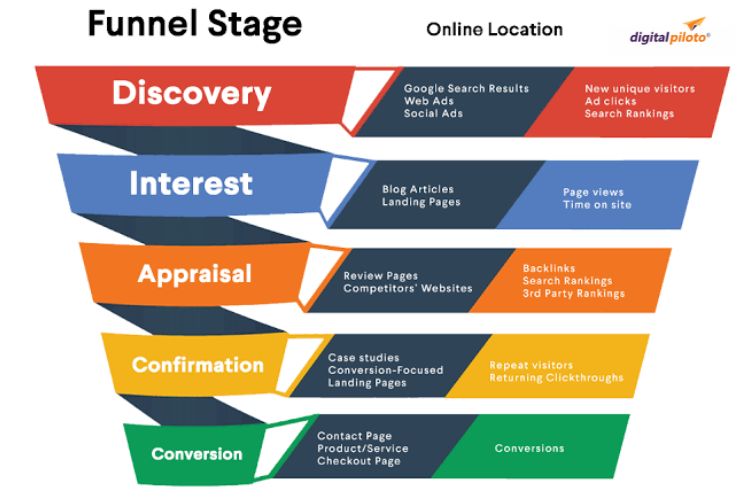
The Four Main Stages of a Digital Marketing Funnel
1. Awareness: Attract the Right Audience
The awareness stage is the top of the funnel. At this point, people are discovering a problem, researching a topic, or learning that a business exists. They may not be ready to purchase immediately.
The main objective is to reach relevant people and introduce your brand without overwhelming them with sales messages.
- SEO: Publish useful pages and blog articles that answer questions people search for.
- Social media marketing: Share educational posts, short videos, and industry insights.
- Content marketing: Create beginner-friendly guides, infographics, and practical resources.
- Paid advertising: Reach selected audiences through search and social advertising.
- Video marketing: Explain common problems and demonstrate helpful solutions.
For instance, a company offering digital marketing services might publish an article explaining how small businesses can improve online visibility. Readers who find that article may later explore the company’s services.
Measure this stage through relevant website traffic, search impressions, reach, engagement, and new visitors. Focus on attracting the right audience rather than increasing traffic without considering its quality.
2. Interest and Consideration: Build Trust
After discovering a business, potential customers begin evaluating whether its products or services meet their needs. They may compare alternatives, read reviews, explore service pages, or look for evidence of expertise.
At this stage, your content should answer practical questions and reduce uncertainty.
- Detailed service pages and product descriptions.
- Case studies with verified results and clear context.
- Customer testimonials and reviews.
- Comparison guides and educational videos.
- Email newsletters and downloadable resources.
- Retargeting campaigns, where appropriate and subject to applicable consent and privacy requirements.
Suppose a business owner reads your article about SEO. They may next want to understand your process, pricing factors, expected timelines, and the types of businesses you support. Providing clear answers makes it easier for them to assess your offering.
Track engagement with relevant pages, returning visitors, resource downloads, qualified enquiries, and email sign-ups. These indicators help reveal whether people are moving beyond initial awareness.
3. Conversion: Turn Prospects into Customers
The conversion stage is where an interested prospect takes a meaningful action. Depending on the business, that action could be purchasing a product, booking a consultation, requesting a quotation, or signing up for a paid service.
Even highly interested visitors may leave if the buying process is confusing or inconvenient.
To improve conversions, businesses should:
- Create clear calls to action (CTAs).
- Make contact forms short and easy to complete.
- Display pricing or explain how quotations work.
- Provide relevant trust signals, such as authentic reviews and transparent policies.
- Ensure pages load quickly and work well on mobile devices.
- Explain the next step after someone submits an enquiry.
- Test different page layouts and messages using actual performance data.
For example, a digital marketing company can guide a visitor from an educational blog to a relevant service page and then offer a consultation. A well-placed CTA makes the next step clear without pressuring the reader.
Track completed purchases, qualified leads, landing-page conversion rates, and cost per acquisition. A high number of enquiries is not necessarily a success if those enquiries rarely become customers.
4. Retention and Advocacy: Encourage Repeat Business
The funnel does not end when a customer purchases. Retaining customers can create opportunities for repeat purchases, renewals, referrals, and positive reviews.
Businesses can support retention through onboarding emails, helpful product guidance, responsive customer service, loyalty programmes, personalised recommendations, and regular communication.
For service-based businesses, consistent reporting and clear communication can help customers understand the work being delivered and the progress being made. A satisfied customer may recommend the business to colleagues or return when another need arises.
Useful metrics include customer retention rate, repeat purchase rate, customer lifetime value, renewal rate, and referral enquiries.
How to Build a Digital Marketing Funnel Step by Step
Creating a funnel does not require a complicated technology stack. Start with a clear understanding of your customers and build a measurable journey around their needs.
- Define your target audience. Identify your ideal customers, their problems, their budgets, and the questions they ask before buying. Different audience groups may require different journeys.
- Set a clear goal. Decide whether the funnel should generate leads, sell products, book appointments, or encourage subscriptions. A specific goal makes measurement easier.
- Map the customer journey. List the main stages from discovery to purchase and retention. Identify the information or reassurance customers need before moving to the next stage.
- Match content to each stage. Use educational blogs and videos for awareness, detailed service pages and comparisons for consideration, clear offers and simple forms for conversion, and useful follow-up communication for retention.
- Connect your marketing channels. SEO, social media, email, paid advertising, and landing pages should work together. For example, a visitor may discover your blog through search, revisit through social media, and later submit an enquiry after reading a service page.
- Measure and improve. Review performance regularly, identify where people leave the journey, and test practical improvements. Change one important element at a time where possible so you can better understand what influences results.
The Role of SEO, AI Search, and Digital Marketing
SEO helps potential customers discover useful information when they search for solutions. A well-planned SEO strategy can attract relevant visitors through informative articles, optimised service pages, and technically sound website experiences.
However, discovery is only the beginning. Content must also answer customer questions, establish credibility, and guide readers toward a suitable next step. Businesses should connect organic search with conversion-focused landing pages, relevant CTAs, and follow-up communication.
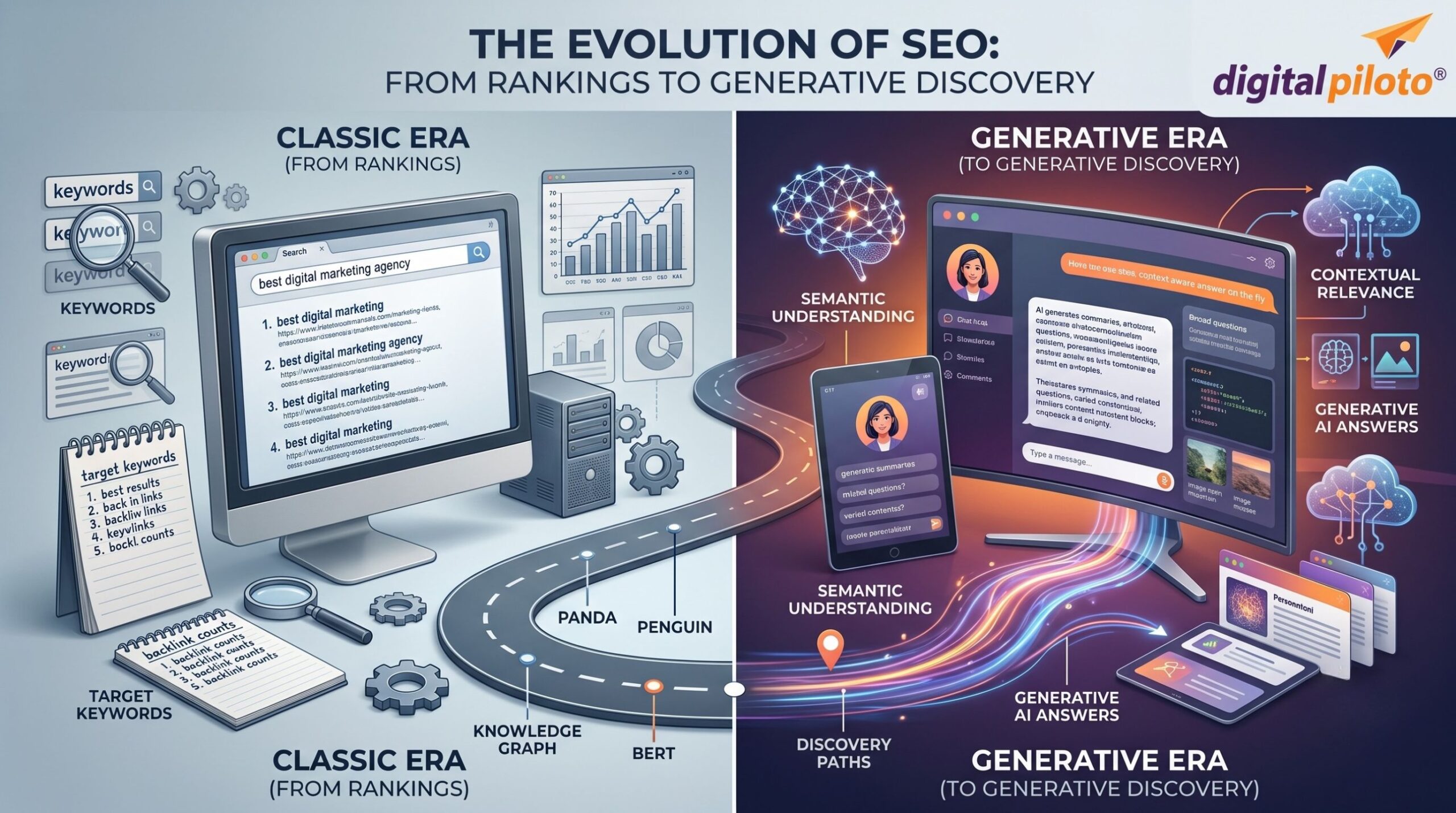
Search behaviour is also evolving as people use AI-powered search experiences and conversational tools to explore products and services. A generative AI seo agency can help businesses consider how their information is presented for discovery across traditional search and emerging answer engines. Clear explanations, consistent business information, useful original content, and trustworthy supporting evidence can improve content usefulness, although no agency can guarantee visibility in AI-generated answers.
A coordinated approach from a Digital Marketing Agency in Durgapur can also help businesses align SEO, paid campaigns, social media, and conversion activities with their commercial objectives.
Common Digital Marketing Funnel Mistakes to Avoid
A funnel can underperform even when a business invests in several marketing channels. Common mistakes include:
- Focusing only on traffic: Visitors have little business value if they are not relevant to your offering.
- Using the same message everywhere: People discovering a brand need different information from those ready to purchase.
- Ignoring mobile users: Difficult navigation, slow pages, and complicated forms can discourage conversions.
- Failing to follow up: Timely, relevant communication can help prospects who need more information before deciding.
- Measuring the wrong metrics: Likes and impressions do not automatically translate into revenue.
- Neglecting existing customers: Retention, customer satisfaction, and referrals deserve attention alongside new customer acquisition.
The solution is to connect each marketing activity to a clear purpose and evaluate how it contributes to the overall customer journey.
Frequently Asked Questions
1. What are the main stages of a digital marketing funnel?
The main stages are awareness, consideration, conversion, and retention or advocacy. Some frameworks separate interest and consideration or include additional stages, but the core purpose remains the same: guide potential customers from discovery toward purchase and long-term engagement.
2. Why is a digital marketing funnel important?
A digital marketing funnel helps businesses understand customer behaviour, deliver relevant content, identify barriers to conversion, and measure marketing performance. It also helps teams coordinate channels instead of treating every campaign as an isolated activity.
3. Which marketing channels work best for a digital marketing funnel?
The best channels depend on the audience, industry, budget, and buying process. SEO and content marketing can support discovery, email and detailed resources can nurture interest, paid campaigns can reach selected audiences, and landing pages can encourage conversions. A coordinated mix is often more useful than relying on a single channel.
4. How do you measure the success of a marketing funnel?
Measure relevant indicators at each stage. These can include qualified traffic, engagement, lead conversion rate, cost per acquisition, sales, retention, and customer lifetime value. Connect these metrics to business goals rather than judging performance by traffic or social engagement alone.
5. How long does it take to see results from a digital marketing funnel?
The timeline varies by channel, industry, competition, sales cycle, and budget. Paid advertising may generate initial visits quickly, while SEO often requires sustained work before meaningful organic growth becomes visible. Improving the complete funnel also depends on collecting enough data to identify and fix weaknesses.
Final Thoughts
A digital marketing funnel gives businesses a practical way to understand how people discover, evaluate, purchase from, and return to a brand. Its value comes from connecting every stage of the customer journey—not simply attracting visitors or generating leads.
Start by understanding your audience, creating useful content, building trust, simplifying conversions, and supporting customers after purchase. Then measure performance and improve the areas where prospects lose interest. By aligning SEO, content marketing, social media, email, paid campaigns, and conversion optimisation, businesses can develop a more consistent and measurable path from online discovery to lasting customer relationships.
About the Author: Amlan Maiti is the Founder and Director of Digital Piloto Pvt. Ltd. Connect with him on LinkedIn.
SEO Credits: SEO, GEO & Digital Marketing Team at Digital Piloto.