
Modern buildings depend on drainage systems that work quietly, efficiently, and reliably beneath the visible structure. From residential developments and commercial complexes to industrial facilities, soil piping plays a critical role in moving wastewater safely away from occupied spaces. As construction standards evolve, the focus is increasingly shifting toward durable materials, precise engineering, easy installation, and long-term performance.
This is where experienced cast iron soil pipe manufacturers have an important role to play. Modern cast iron soil piping is no longer viewed simply as a traditional drainage component. With improved manufacturing techniques and system designs, it has become a practical solution for projects where strength, dimensional stability, acoustic performance, and durability matter.
Why Cast Iron Remains Relevant in Modern Drainage
A drainage system is expected to perform for years under changing operating conditions. Cast iron offers a combination of mechanical strength and durability that makes it suitable for soil, waste, and drainage applications.
Unlike lightweight materials that can be more susceptible to movement or physical impact, cast iron provides a solid and stable piping structure. This makes it useful in multi-storey buildings, commercial projects, institutional facilities, and other demanding environments.
Another advantage is its resistance to the everyday challenges faced by drainage infrastructure. Properly designed and installed cast iron systems can provide dependable service while reducing the need for frequent replacement.
The Shift Toward Smarter Pipe Connections
Modern drainage design is also changing the way pipes are installed. Traditional jointing methods have increasingly been complemented by connection systems designed to improve installation efficiency and system consistency.
A hubless pipe system is one such approach. Instead of relying on traditional hubs, hubless cast iron pipes are connected using suitable couplings. This can provide a compact installation arrangement while making alignment and maintenance more convenient.
For modern construction projects, this design approach can be particularly useful where installation space is limited or where contractors need a streamlined connection process. The right coupling and installation procedure remain essential for achieving a reliable joint.
Engineering Matters More Than Material Alone
Choosing cast iron is only one part of creating a dependable drainage system. Product quality, dimensional accuracy, manufacturing consistency, joint compatibility, and installation practices all influence the final performance.
Reliable cast iron soil pipe manufacturers therefore need to focus beyond basic production. Modern manufacturing requires controlled processes that help maintain consistent dimensions and dependable product quality across different batches.
For project planners and procurement teams, this means evaluating the complete supply capability rather than selecting a product based only on its initial price. Specifications, application requirements, connection systems, testing, and technical support should all be considered before final selection.
Connecting Soil Piping with the Bigger Infrastructure
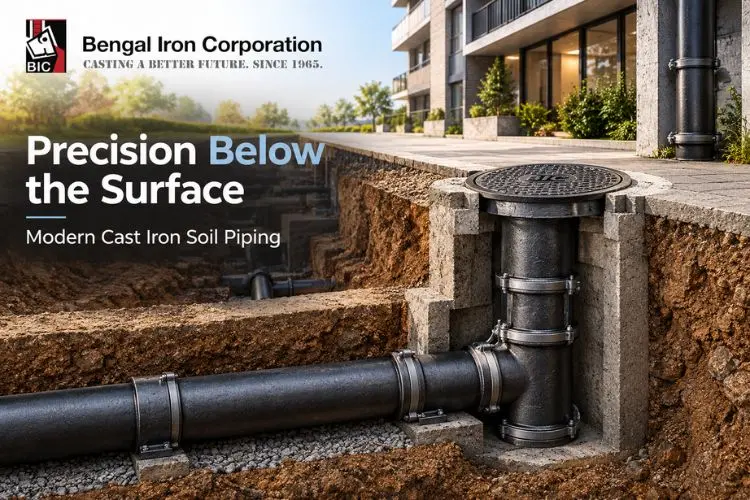
Underground drainage does not operate independently. It forms part of a wider infrastructure network that includes inspection points, access systems, drainage channels, and manholes.
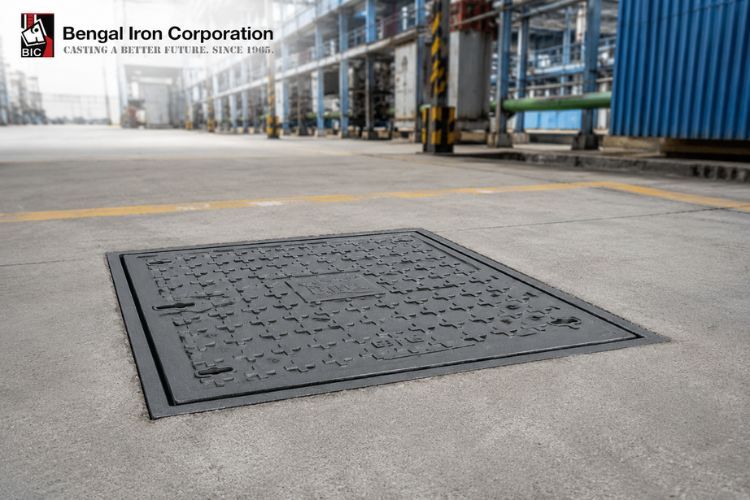
This is where components such as a ci manhole cover become important. A strong and properly fitted access cover provides a secure point for inspection and maintenance while protecting underground chambers from external loads and environmental exposure.
When soil piping, drainage chambers, access covers, and related infrastructure are considered as one integrated system, designers can create solutions that are easier to maintain and better suited to long-term operational requirements.
Designing for Long-Term Performance
Modern infrastructure is increasingly focused on lifecycle performance rather than simply meeting immediate installation requirements. A drainage system should be selected with its future maintenance, accessibility, operating environment, and expected service life in mind.
Cast iron can contribute to this approach through its robust construction and established use in drainage applications. Its relatively substantial structure can also help provide stability within building drainage networks.
However, performance ultimately depends on correct specification and installation. Pipe dimensions, jointing components, support arrangements, gradients, and project-specific requirements should be reviewed carefully before installation.
What Should Buyers Look for in a Manufacturer?
When selecting cast iron soil pipe manufacturers, buyers should consider several factors:
- Consistency in product dimensions and manufacturing quality
- Suitable pipe and fitting configurations for the intended application
- Compatible hubless connection solutions where required
- Quality control and inspection procedures
- Ability to supply projects at the required scale
- Technical documentation and product specifications
- Experience with infrastructure and building drainage applications
- Reliable after-sales and technical support
A manufacturer that understands both the product and its application can provide greater value throughout the project lifecycle.
Building the Next Generation of Drainage Systems
The future of building drainage is moving toward systems that combine proven materials with more efficient engineering and installation practices. Cast iron continues to have a place in this changing environment because it can provide a strong foundation for durable drainage infrastructure.
For modern projects, the goal is not simply to install a pipe. It is to develop a coordinated drainage network where pipes, fittings, joints, inspection points, and access covers work together.
Bengal Iron Corporation focuses on cast iron solutions designed for demanding infrastructure and drainage applications. By combining established cast iron engineering with modern manufacturing approaches, the company supports projects seeking dependable piping and access solutions.
As construction moves toward smarter and more durable infrastructure, precision beneath the surface will remain just as important as design above it.
FAQs
Q. What are cast iron soil pipes used for?
A. Cast iron soil pipes are commonly used in building drainage systems to carry wastewater and discharge from sanitary fixtures toward the drainage network.
Q. Why choose cast iron for soil piping?
A. Cast iron is known for its strength, durability, stability, and suitability for demanding drainage applications when properly specified and installed.
Q. What is a hubless pipe?
A. A hubless pipe is a cast iron pipe designed without traditional enlarged hubs. It is typically joined using mechanical couplings, providing a compact and practical connection arrangement.
Q. What should I consider when selecting cast iron soil pipe manufacturers?
A. Consider manufacturing consistency, product specifications, quality control, connection compatibility, supply capacity, technical support, and experience with similar applications.
Q. How does a CI Manhole Cover support drainage infrastructure?
A. A CI Manhole Cover provides secure access to underground chambers for inspection and maintenance while helping protect the chamber opening from external loads.
Q. Can cast iron soil piping be used in modern buildings?
A. Yes. Cast iron soil piping can be used in residential, commercial, institutional, and industrial building drainage applications when the system is appropriately designed and installed.
Blog Development Credit
This article was crafted using insights from advanced AI research platforms such as ChatGPT and Google Gemini to ensure up-to-date industry knowledge and valuable perspectives. The content strategy, optimization, and final publishing were managed by Bengal Iron Corporation.