
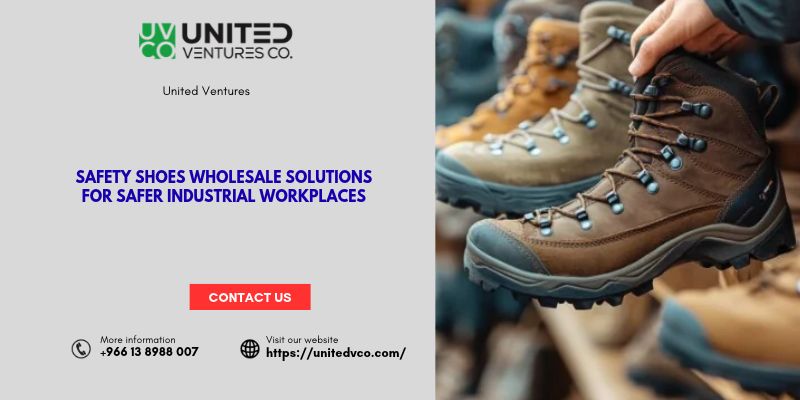
Industrial workplaces expose employees to several foot-related hazards, including falling objects, sharp materials, slippery surfaces, electrical risks and heavy machinery. Choosing suitable protective footwear is essential for reducing workplace injuries and supporting employee comfort. Businesses searching for dependable Safety Shoes Wholesale solutions should consider product quality, protective features, workplace requirements and long-term usability before making bulk purchasing decisions. United Ventures Co. provides a diverse selection of industrial safety footwear to support different workplace protection needs.
Why Are Safety Shoes Important in Industrial Workplaces?
Safety shoes are specially designed protective footwear that helps reduce the risk of foot injuries in hazardous working environments. Depending on their construction and certification, they can provide protection against impact, compression, punctures, slipping and certain electrical hazards.
Construction sites, manufacturing facilities, warehouses, oil and gas plants and engineering workshops frequently require employees to wear appropriate protective footwear. A suitable pair can help protect workers from dropped equipment, sharp debris, uneven surfaces and accidental contact with hazardous materials.
Employers should conduct workplace hazard assessments before selecting footwear. The US Occupational Safety and Health Administration (OSHA), under 29 CFR 1910.136, identifies situations involving falling or rolling objects, objects piercing the sole and certain electrical hazards where protective footwear is required.
Different Types of Safety Shoes for Industrial Applications
Not every industrial environment requires the same type of footwear. Understanding the available options helps procurement teams select products according to specific workplace risks.
1. Steel Toe Safety Shoes
Steel toe safety shoes feature reinforced toe caps designed to protect against impact and compression hazards. They are commonly considered for construction, manufacturing, fabrication and material-handling environments where heavy objects may fall or roll onto workers’ feet.
2. Composite Toe Safety Shoes
Composite toe footwear uses non-metallic protective materials instead of conventional steel toe caps. Depending on the product design, these shoes can offer a lighter alternative and may be useful in workplaces with specific metal-detection or electrical considerations. Their actual protective performance must be verified through product certification.
3. Anti-Slip Safety Shoes
Anti-slip footwear features specially designed outsole patterns and materials intended to improve traction. These shoes are useful in warehouses, production facilities, workshops and other environments where wet, oily or smooth floors may increase slipping risks. Slip resistance depends on the tested footwear and surface conditions.
4. High-Ankle Safety Boots
High-ankle safety boots provide additional coverage around the ankle and may offer useful support in demanding working environments. They are often considered for construction, outdoor industrial operations and rough-terrain applications.
5. Electrical Hazard and ESD Footwear
Electrical hazard footwear and electrostatic discharge (ESD) footwear serve different purposes. Electrical hazard-rated footwear is designed to provide a specified level of protection under defined test conditions. ESD footwear helps control static electricity in sensitive environments. Neither should be selected without checking the relevant certification and workplace requirements.
Important Safety Shoe Standards Buyers Should Understand
Safety certifications help buyers evaluate whether footwear has been tested against recognised performance requirements. One important international reference is ISO 20345:2021, which specifies basic and additional requirements for general-purpose safety footwear.
The standard addresses areas such as mechanical risks, slip resistance, thermal risks and ergonomic behaviour. It also includes additional requirements for specialised applications. ISO 20345 received Amendment 1 in 2024, making it important for procurement teams to check the applicable edition and documentation.
Other commonly encountered references include ASTM F2413 in the United States and related testing requirements under ASTM F2412. Buyers should confirm which standard applies to their location and workplace rather than assuming that every safety shoe provides identical protection.
How to Choose the Right Safety Shoes for Your Workforce?
Selecting suitable footwear requires evaluating both workplace hazards and employee requirements. Businesses purchasing in bulk should consider the following factors:
- Workplace hazard assessment: Identify impact, compression, puncture, slipping, electrical and environmental risks.
- Protective toe construction: Choose appropriate steel or composite toe protection based on the required performance.
- Outsole performance: Consider slip resistance, oil resistance, heat resistance and terrain suitability where relevant.
- Comfort and fit: Check sizing, cushioning, breathability, weight and ankle support for extended working hours.
- Material durability: Evaluate upper materials, stitching, sole construction and resistance to expected workplace conditions.
- Certification: Request relevant test reports, certificates and manufacturer documentation.
- Maintenance requirements: Consider cleaning instructions, inspection frequency and replacement availability.
Benefits of Buying Safety Shoes Wholesale
Wholesale procurement can help businesses manage large workforce requirements while maintaining greater consistency in their protective footwear programmes.
Purchasing through a reliable supplier can simplify bulk ordering, product selection and inventory planning. It may also help procurement teams coordinate footwear specifications across departments and reduce the complexity of dealing with multiple suppliers.
However, businesses should not select products based on price alone. A lower purchase price may not provide the best overall value if footwear has unsuitable protective features, poor fit or limited durability. Comparing product specifications, quality documentation and replacement availability can support better purchasing decisions.
Why Choose United Ventures Co. for Industrial Footwear?
United Ventures Co. provides industrial equipment and personal protective equipment for businesses across different sectors. Its foot protection range includes Roadmate shoes alongside various recognised footwear options for industrial and workplace applications.
Companies seeking dependable Industrial Equipment Solutions can explore the company’s broader product portfolio, which includes safety equipment, protective clothing, hand protection, head protection and other workplace essentials.
When evaluating footwear requirements, businesses should communicate their industry, workplace hazards, required standards, sizes and expected order quantities. This helps procurement teams identify products that better match their operational requirements.
Building a Better Workplace Footwear Procurement Strategy
Effective safety footwear procurement should be part of an organised workplace safety programme. Employers can begin by identifying job-specific risks, consulting safety personnel and selecting appropriate footwear specifications.
They should also maintain employee sizing records, inspect footwear periodically and establish clear replacement procedures. Damaged toe caps, worn-out soles, damaged stitching and deteriorating protective features are potential warning signs that footwear requires replacement.
Most importantly, workers should receive guidance on correct footwear use, cleaning and maintenance. Even certified safety shoes cannot provide their intended protection if they are incorrectly fitted, damaged or unsuitable for the hazards present.
Frequently Asked Questions (FAQs)
1. What are safety shoes used for?
Safety shoes help protect workers against workplace foot hazards such as falling objects, compression, sharp materials and slipping. Specific protection depends on the footwear’s design and certification.
2. Which safety shoes are best for industrial workers?
The best option depends on workplace hazards. Steel toe, composite toe, anti-slip and high-ankle footwear may suit different applications. A workplace risk assessment should guide selection.
3. What is the difference between steel toe and composite toe safety shoes?
Steel toe shoes use metal protective caps, while composite toe shoes use non-metallic materials. Both can provide certified impact and compression protection when tested to the applicable standard.
4. Why should businesses buy safety shoes wholesale?
Wholesale purchasing can simplify bulk procurement, improve inventory coordination and help standardise footwear specifications across large workforces.
5. What does ISO 20345 mean for safety footwear?
ISO 20345 is an international standard specifying basic and additional performance requirements for general-purpose safety footwear, including protection against selected mechanical and environmental risks.
6. How often should industrial safety shoes be replaced?
Replacement depends on usage, workplace conditions, manufacturer recommendations and visible damage. Footwear should be inspected regularly and replaced when its protective performance may be compromised.
7. Where can businesses find Safety Shoes Wholesale solutions?
Businesses can explore the foot protection range offered by United Ventures Co., including Roadmate and other industrial safety footwear options, and enquire about products matching their requirements.
Final Thoughts
Choosing appropriate safety footwear is an important investment in workplace protection, employee comfort and operational continuity. From steel toe and composite toe shoes to anti-slip footwear and protective boots, every product should match the specific hazards employees encounter during their daily activities.
For businesses managing large workforces, reliable wholesale procurement makes it easier to coordinate footwear requirements and maintain consistent safety practices. United Ventures Co. offers a range of industrial footwear and PPE solutions to support different workplace needs.
Explore United Ventures’ safety footwear collection to discover suitable options for your workforce and discuss your bulk purchasing requirements.
Full Audio Version:- Click Here