
Organic search still drives more trackable website traffic than any other channel—roughly 53%, compared with about 15% from paid search and 5% from social media, according to BrightEdge’s enterprise panel. Yet in early 2026, 68.01% of U.S. Google searches ended without a click at all, up from 60.45% in 2024. Both facts are true. The businesses that grow are the ones whose SEO partners understand how to operate in the space between them.
That is the new job of a seo services company. It is no longer enough to rank a page and wait for the visit. Modern search engine optimization services must earn visibility in traditional results and inside AI-generated answers, while proving contribution to pipeline rather than merely reporting keyword positions. This guide explains what has changed, what a credible partner does differently in 2026, and how to evaluate one without relying on vanity metrics.
Also Read: Digital Marketing Company Kolkata for SEO & Business Growth
What an SEO Services Company Actually Does in 2026
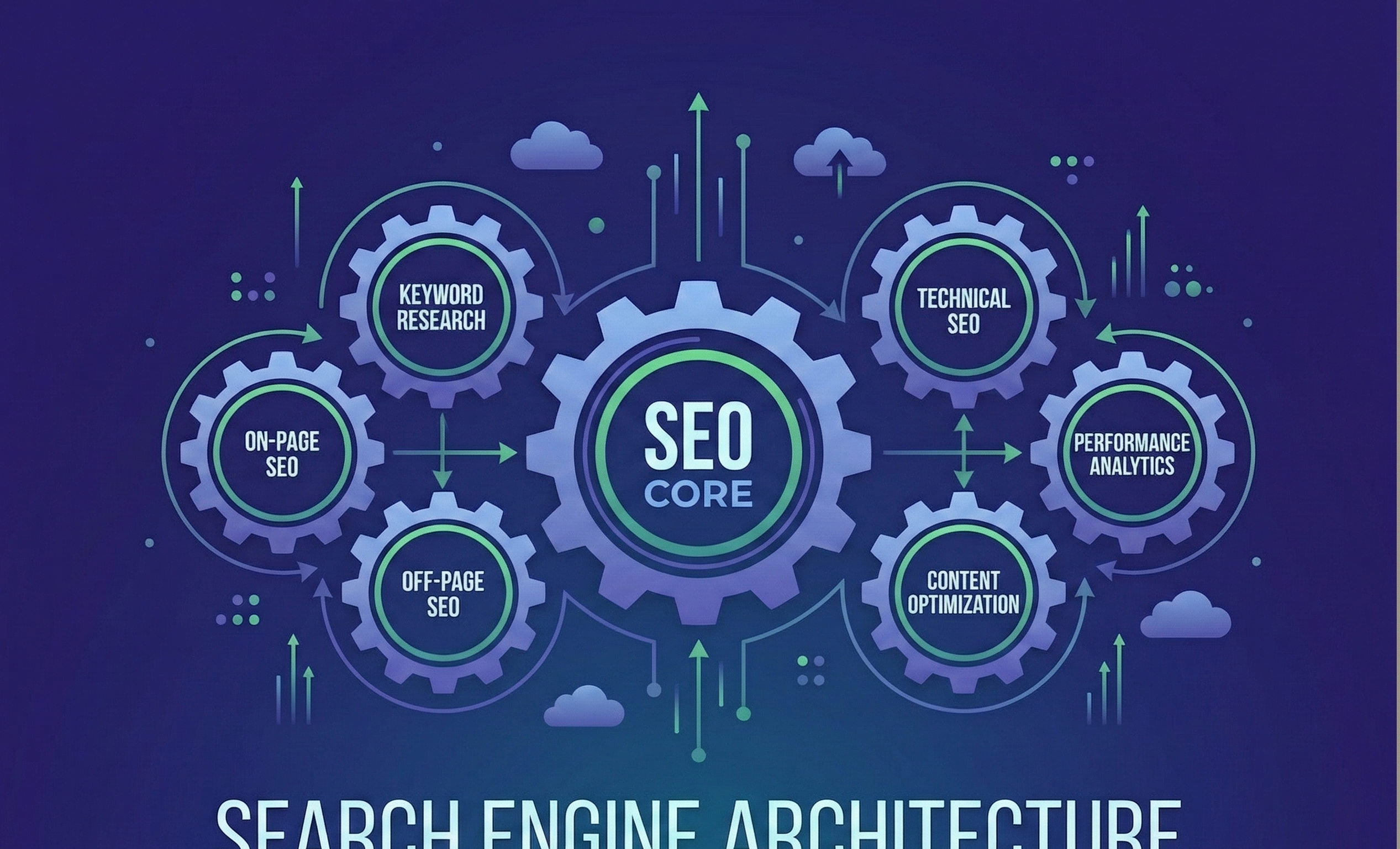
A modern SEO services company is a visibility and revenue engineering partner. It combines four disciplines that used to be sold separately: technical search infrastructure, content and entity authority, AI-search optimization (GEO/AEO), and conversion measurement.
The legacy checklist—keyword research, meta tags, backlinks, monthly rank report—still exists, but it is the floor, not the differentiator. The 2026 scope typically includes:
- Technical search infrastructure: crawlability, indexation, site architecture, structured data, Core Web Vitals (including Interaction to Next Paint), and rendering strategy.
- Content and topical authority: entity-rich content, original evidence, author expertise signals, and internal-link architecture that helps both humans and AI systems understand relationships.
- Generative Engine Optimization (GEO): structuring claims, statistics, and citations so AI systems can extract and attribute them accurately.
- Measurement and conversion intelligence: tracking visibility, citations, assisted conversions, and pipeline influence in a zero-click environment.
The market itself reflects this expansion. The global SEO services market grew from $92.74 billion in 2025 to an estimated $108.28 billion in 2026, a 16.8% increase, and is projected to reach $203.83 billion by 2030. Growth is being driven partly by AI-powered search forcing businesses to restructure content around entities, conversational queries, and authoritative answers.
The 2026 Search Landscape: Three Shifts That Change the Brief
Shift 1: AI Overviews are now the default commercial interface
Google showed an AI Overview for 88% of tracked commercial keywords in August 2026, up from 45.75% in September 2025; when weighted by search volume, coverage reached 97.08%. These are the queries people run immediately before buying—“X vs Y,” “best X for Y,” “X review,” “X pricing”. The first thing a buyer reads about a product is increasingly a Google-generated summary assembled from multiple sources, not the brand’s own page.
Shift 2: Rankings and citations have decoupled
In July 2025, 76% of pages cited in Google AI Overviews also ranked in the top 10 for the same query. By February 2026, that overlap had fallen to 38%. Ranking well still helps—it is not irrelevant—but it is no longer a reliable proxy for being cited. AI systems select sources based on semantic depth, entity clarity, and structural extractability, not rank position alone.
Shift 3: The click is optional; the impression is not
Ahrefs’ initial analysis found a 34.5% lower CTR for the top-ranking page when an AI Overview was present. A re-run for December 2025 found the gap had widened to 58%. Gartner’s widely cited forecast—that traditional search engine volume could decline 25% by 2026 as consumers shift to AI chatbots and agents—captures the directional risk, though later traffic analyses suggest the decline has been uneven by sector and query type. The practical implication is not “abandon SEO.” It is “stop measuring SEO only by clicks.”
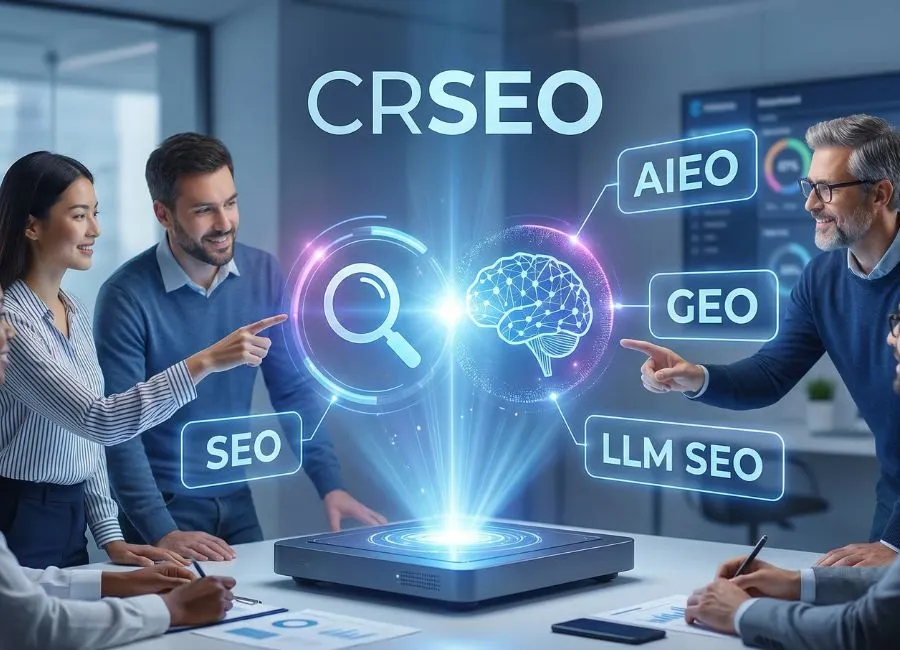
SEO, GEO, and AEO: One System, Not Three Silos
Three terms now dominate agency proposals. They describe overlapping layers of the same visibility problem.
| Discipline | Primary Goal | Core Levers | What It Measures |
|---|---|---|---|
| SEO (Search Engine Optimization) | Rank in traditional search results | Technical health, keywords, content, links, page experience | Rankings, impressions, organic sessions |
| GEO (Generative Engine Optimization) | Be cited inside AI-generated answers | Entity clarity, claim-level structure, statistics, quotations, citations, third-party corroboration | AI citation share, answer inclusion, share of voice in AI responses |
| AEO (Answer Engine Optimization) | Win direct-answer surfaces (featured snippets, PAA, voice, AI Mode) | Question-first formatting, concise definitions, structured data | Snippet ownership, answer-box presence, voice-result inclusion |
The evidence supports integration rather than replacement. The foundational GEO research published at KDD 2024 (Aggarwal et al., Princeton/IIT Delhi) found that adding statistics, quotations, and source citations improved visibility in generative engine responses by up to 40%, with quotations performing highest. These are editorial and structural techniques—not a separate technology stack. A competent SEO services company applies them inside its existing content and technical workflow.
Similarly, Google’s own guidance is that succeeding in AI Overviews and AI Mode starts with succeeding in search. There is no independent “AI SEO” channel that bypasses crawlability, indexation, and page quality. GEO is an additional optimization layer, not a replacement foundation.
Seven Modern Strategies for Sustainable Growth
1. Build entity authority before chasing keywords
AI systems resolve brands as entities—people, organizations, products, and concepts with defined relationships—not just as sets of keywords. Entity authority is built through consistent naming, clear About and author pages, structured data, third-party mentions, and content that explicitly connects your brand to the problems it solves. This is the layer that makes a brand eligible for citation even when a specific page does not rank in the top three.
2. Engineer content at the claim level, not the page level
Generative engines evaluate individual statements—claims—rather than whole pages. Each important sentence should be self-contained, specific, and verifiable. Replace “many businesses struggle with SEO” with a dated, sourced statement such as “68.01% of U.S. Google searches ended without a click in early 2026”. Specificity is not just good writing; it is the unit of AI extractability.
3. Treat technical performance as a visibility prerequisite
Core Web Vitals remain part of the page-experience signal set. Interaction to Next Paint (INP) replaced First Input Delay as the interactivity metric in March 2024; a good INP is 200 milliseconds or less, and scores above 500ms are classified poor. Slow, unstable, or hard-to-render pages degrade both user experience and crawl efficiency. AI search does not create an exemption from performance—it raises the cost of poor performance because AI crawlers and users both encounter the same friction.
4. Win the sub-questions around your core query
AI Overviews and AI Mode synthesize answers from multiple sources and often cite pages that address the sub-questions around a query rather than the head term alone. A page targeting “ecommerce SEO” should also answer “how long does ecommerce SEO take,” “what is the difference between technical and on-page ecommerce SEO,” and “how do you measure ecommerce SEO ROI.” This is classic topical coverage, but the payoff is now citation inclusion, not only long-tail rankings.
5. Build corroboration, not just backlinks
Link authority still matters, but AI systems also weigh third-party corroboration: reviews, community discussions, expert quotations, and independent mentions. A brand mentioned favorably across multiple trusted sources is more likely to be cited than a brand with a single high-authority link and no broader corroboration. Digital PR, review generation, and expert commentary are therefore SEO activities, not separate PR line items.
6. Make local and entity data machine-readable
Google Business Profile signals remain the single largest local ranking factor category—estimated at roughly 32% weight in 2026, ahead of proximity (19%), reviews (16%), on-page signals (13%), and citations (8%). For businesses with physical locations or service areas, consistent NAP data, accurate categories, review velocity, and structured local business schema are non-negotiable. AI assistants increasingly answer “near me” and “best in [city]” queries from the same entity data.
7. Redesign measurement around influence, not last-click
When 68% of searches end without a click, last-click attribution systematically undercounts SEO’s contribution. Modern reporting should include:
- AI citation share: how often the brand is cited or mentioned in AI Overviews and AI Mode answers for target queries.
- Branded search lift: increases in direct and branded queries correlated with content and visibility campaigns.
- Assisted conversions: upper-funnel organic sessions that precede conversion through another channel.
- Pipeline influence: for B2B, the share of closed-won opportunities that touched organic content before conversion.
- Non-branded impression share and ranking distribution: leading indicators of future citation eligibility.
What Modern SEO Services Cost—and What You Are Paying For
Pricing transparency is a reliable signal of a professional SEO services company. Across 2026 agency analyses, most legitimate small-to-midsize retainers fall between $1,500 and $5,000 per month; agency averages sit around $3,200 per month, while freelancer averages are closer to $1,349. Local campaigns can start lower, and enterprise programs frequently exceed $10,000 per month.
| Engagement Model | Typical Monthly Range | Best Fit | Primary Risk |
|---|---|---|---|
| Freelancer / consultant | $500–$2,000 | Focused technical fixes or content strategy | Limited capacity; single point of failure |
| SMB agency retainer | $1,500–$5,000 | Ongoing SEO, content, and local visibility | Scope creep; junior execution without senior oversight |
| Enterprise / integrated retainer | $5,000–$15,000+ | Multi-market, ecommerce, or GEO-integrated programs | Paying for activity rather than outcomes if reporting is weak |
| Project-based audit / sprint | Fixed fee | Diagnostic before a retainer decision | Recommendations not implemented; no accountability loop |
Beneath the headline fee, what matters is the scope-to-outcome ratio: how many senior strategist hours are included, whether content production and technical implementation are in scope or billed separately, and whether reporting connects to business KPIs. A $2,000 retainer with clear deliverables and senior oversight frequently outperforms a $5,000 retainer that is mostly account management and recycled reports.
How to Choose the Right SEO Services Company
Use a structured evaluation rather than relying on portfolio aesthetics or ranking screenshots.
1. Ask how they handle AI search—specifically
A credible partner should be able to explain the difference between ranking and citation, describe how they structure claims and evidence for AI extractability, and show how they measure AI visibility. Vague references to “AI-powered SEO” are insufficient. Ask for a sample AI visibility audit or citation report.
2. Separate activity metrics from outcome metrics
Good partners report both. Activity metrics (pages optimized, technical issues resolved, content published) explain effort. Outcome metrics (non-branded visibility, qualified organic conversions, assisted pipeline, AI citation share) explain impact. Be wary of proposals that promise rankings without discussing conversion or measurement.
3. Check for technical depth, not just content production
Ask about crawl budget, JavaScript rendering, log-file analysis, structured data validation, INP remediation, and indexation diagnostics. A content-only agency will struggle when the bottleneck is technical; a technical-only agency will struggle to build authority. Most sustainable programs require both.
4. Demand a diagnostic before a long contract
A short, paid audit or discovery sprint is a reasonable risk-control mechanism. It forces the agency to demonstrate analytical rigor, communication quality, and prioritization before you commit to a 6–12 month retainer.
5. Verify authorship and E-E-A-T signals
Google’s Quality Rater Guidelines emphasize experience, expertise, authoritativeness, and trustworthiness. The same standard applies to the agency’s own content. Check whether named experts author their articles, whether claims are sourced, and whether the agency’s own site demonstrates the technical and editorial quality it promises clients.
6. Clarify reporting cadence and ownership
You should own your analytics, Search Console, and content assets. Reporting should be frequent enough to inform decisions (monthly minimum, ideally with a live dashboard) and candid enough to include what is not working. An agency that only reports wins is not giving you decision-grade information.
For businesses that need an integrated partner across SEO, AI search optimization, content, and conversion, digital marketing consulting services can provide the strategic layer that connects organic visibility to broader growth programs. For organizations whose bottleneck is site speed, architecture, or platform limitations, working alongside experienced website developers is often the fastest route to technical SEO gains.
The Zero-Click Reality: Why Some Businesses Still Grow
The click-loss narrative is real, but it is not the whole story. AI referral traffic behaves differently from traditional organic traffic. An analysis of 94 ecommerce brands in 2025 found that ChatGPT referral traffic converted at 1.81%, compared with 1.39% for non-branded organic search—a 31% higher conversion rate—though average order value was lower ($204 versus $238). This suggests that AI citations can attract high-intent, research-complete users, even if the total volume is smaller than legacy organic sessions.
The strategic conclusion is not to chase AI traffic at the expense of SEO. It is to build a visibility system that generates both clicks and citations, then measure which queries and pages produce assisted conversions across channels. Businesses that treat SEO, GEO, and conversion optimization as one program are better positioned to capture value from whichever surface—traditional results or AI answers—ultimately influences the buyer.
What We Would Prioritize in the First 90 Days
Strategy note from Digital Piloto’s SEO, GEO, and digital marketing team:
- Weeks 1–2: Diagnostic. Technical crawl and indexation audit, Core Web Vitals assessment (especially INP), content inventory, and AI visibility baseline across target queries.
- Weeks 3–4: Fix the floor. Resolve critical crawl, indexation, and performance issues. Implement or correct structured data. Ensure Google Business Profile and local entity data are accurate.
- Weeks 5–8: Build entity and claim clarity. Rewrite priority pages around self-contained, evidence-backed claims. Add author expertise signals and source citations. Map sub-questions to supporting content.
- Weeks 9–12: Corroborate and measure. Launch digital PR and expert commentary activities. Set up AI citation tracking, branded search monitoring, and assisted-conversion reporting. Review leading indicators and adjust priorities.
This sequence prioritizes foundation before scale. Publishing more content on a technically broken site or an unclear entity profile produces diminishing returns in both traditional and AI search.
Also Read: AI-Powered SEO: SEO Agency in Kolkata Trends for 2026
The Bottom Line
An SEO services company in 2026 is not a ranking vendor. It is a visibility partner responsible for making a business understandable, trustworthy, and citable across traditional search results and AI-generated answers—and for proving that this visibility contributes to revenue. The market is growing, the tactics are becoming more evidence-based, and the measurement model is being rebuilt. Businesses that choose partners capable of operating across SEO, GEO, technical performance, and conversion intelligence will be better positioned to grow sustainably, even as the interface of search continues to change.
Blog Development Credits:
This blog is the result of collaborative creativity. The initial concept was thoughtfully envisioned by Amlan Maiti, while the core content was crafted using advanced AI tools such as ChatGPT and Google Gemini. To ensure maximum readability, SEO performance, and audience engagement, the expert digital marketing team at Digital Piloto Private Limited refined and optimized the final draft.