

Industrial piping systems rarely stay still. Temperature changes, pressure fluctuations, equipment vibration, and continuous operation all place demands on pipelines. In smart industries, where reliability and efficiency matter more than ever, managing these challenges starts with the right components. Pipe expansion joints offer a practical way to accommodate movement, protect connected equipment, and support dependable industrial operations.
Why Smart Industries Need Advanced Expansion Joints?
Modern industrial facilities operate under demanding conditions. Refineries, power plants, chemical processing units, and manufacturing facilities often transport fluids or gases through extensive piping networks. When operating temperatures change, metal pipes expand or contract. If the resulting movement is not properly accommodated, excessive loads can develop around anchors, supports, flanges, and connected equipment.
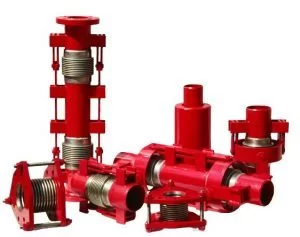
Expansion joints are designed to accommodate specified movements within a piping system. Depending on the application, engineers may select metallic bellows, rubber expansion joints, or other suitable designs. Each option has different operating limits and is intended for particular combinations of temperature, pressure, movement, and media.
The shift toward smart manufacturing makes this design decision even more important. Predictive maintenance programs and digital monitoring tools can help teams identify abnormal operating conditions earlier, but technology cannot compensate for an incorrectly selected component. Reliable performance begins with sound engineering and continues through inspection and maintenance.
Key Technologies Shaping Modern Pipe Expansion Joints
Industrial expansion joint design continues to evolve as manufacturers respond to increasingly demanding operating conditions. The goal is not simply to create a flexible connection. It is to develop a component that accommodates the required movement while maintaining structural integrity throughout its intended service life.
1. High-performance metallic bellows
Metallic bellows are widely used when piping systems require controlled flexibility under demanding conditions. Their corrugated construction allows movement while helping maintain a pressure boundary. Material selection depends on factors such as operating temperature, corrosion exposure, pressure, and the fluid being transported.
2. Application-specific engineering
Universal, hinged, gimbal, and axial expansion joints serve different movement requirements. For example, a universal arrangement can accommodate substantial lateral movement when properly designed, while a hinged joint primarily permits angular movement. Selecting the correct configuration helps prevent unwanted loads from transferring to adjacent equipment.
3. Smarter inspection and monitoring
Digital maintenance systems can record vibration, temperature, pressure, and other operating parameters. When used alongside scheduled inspections, this information may help maintenance teams identify changing conditions before they lead to unplanned shutdowns. However, monitoring equipment should complement—not replace—engineering assessments and manufacturer-recommended inspection procedures.
How to Choose Expansion Joints for Industrial Reliability?
Choosing an expansion joint involves more than matching a pipe diameter. A component that works well in one facility may be unsuitable for another, even when both systems appear similar. Engineers need to evaluate the complete operating environment before finalizing a design.
When assessing a solution, pay particular attention to these practical considerations:
- Operating conditions: Confirm the design pressure, temperature range, flow medium, and potential pressure fluctuations.
- Movement requirements: Calculate expected axial, lateral, and angular movements, including installation tolerances and thermal cycles.
- Material compatibility: Select materials that can withstand corrosion, chemical exposure, and the required operating temperature.
- Support arrangements: Review anchors, guides, and pipe supports to ensure the joint can operate as intended.
- Maintenance access: Consider inspection requirements, accessibility, and the consequences of replacing a component during operation.
These checks are especially important in high-temperature and specialized applications. For further technical context, explore Stainless Steel Bellows for Cryogenic Systems: Key Design Factors, which discusses considerations relevant to demanding low-temperature environments.
The Role of Manufacturers in Future-Ready Piping
Even a carefully planned piping system depends on the quality and suitability of its individual components. Working with an experienced pipe expansion joints manufacturer can help project teams evaluate design requirements, material options, movement capacity, and application-specific constraints.
Before placing an order, industrial buyers should request relevant technical documentation and confirm that the proposed design meets the project’s applicable specifications. Depending on the application, this may include pressure and temperature ratings, material certificates, dimensional drawings, inspection records, and information about testing or applicable design standards.
A dependable supplier relationship also helps when operating conditions change or replacement components are required. Clear documentation makes it easier to identify the installed design and assess whether a proposed replacement is suitable.
Industry Standards and Preventive Maintenance
Future-ready piping is not only about adopting new technology. It also means following established engineering practices. The ASME Codes and Standards provide resources covering pressure technology and piping design. The appropriate requirements depend on the facility, jurisdiction, and application, so engineers should identify the standards relevant to their particular installation.
Alongside compliant design, routine maintenance helps preserve system reliability. A practical inspection program may include:
- Checking for corrosion, visible damage, leakage, or unusual deformation.
- Inspecting nearby anchors, guides, supports, and connected equipment.
- Reviewing operating records for unexpected pressure or temperature changes.
- Documenting findings and arranging professional assessment when abnormalities appear.
Expansion joints should never be treated as maintenance-free components. Inspection intervals and replacement decisions should follow the manufacturer’s recommendations, applicable standards, and the actual severity of operating conditions.
Frequently Asked Questions
1. What is the main purpose of pipe expansion joints?
Pipe expansion joints accommodate specified thermal expansion, contraction, and other movements in piping systems. They help control movement-related loads and protect connected equipment when correctly selected and installed.
2. Which type of expansion joint is best for industrial applications?
The appropriate type depends on operating pressure, temperature, media, movement direction, and installation layout. Metallic bellows, rubber joints, and hinged or universal designs serve different purposes, so selection should be based on engineering calculations.
3. Can smart monitoring improve expansion joint maintenance?
Yes. Monitoring operating conditions can help maintenance teams identify unusual changes and investigate potential problems earlier. However, digital monitoring should be combined with physical inspections and manufacturer-recommended maintenance practices.
4. How can I extend the service life of pipe expansion joints?
Use the correct design and materials, follow installation instructions, maintain suitable pipe supports and anchors, and inspect the assembly regularly. Avoid operating beyond specified limits and investigate visible damage or unexpected movement promptly.
Final Thoughts:
As industries become more automated and interconnected, dependable piping infrastructure remains essential. Properly engineered pipe expansion joints help accommodate movement, manage mechanical stress, and support safer, more reliable operations. By combining sound component selection, qualified manufacturing, applicable engineering standards, and preventive maintenance, industrial facilities can build piping systems ready to meet tomorrow’s demands.
Listen Here: Click Now