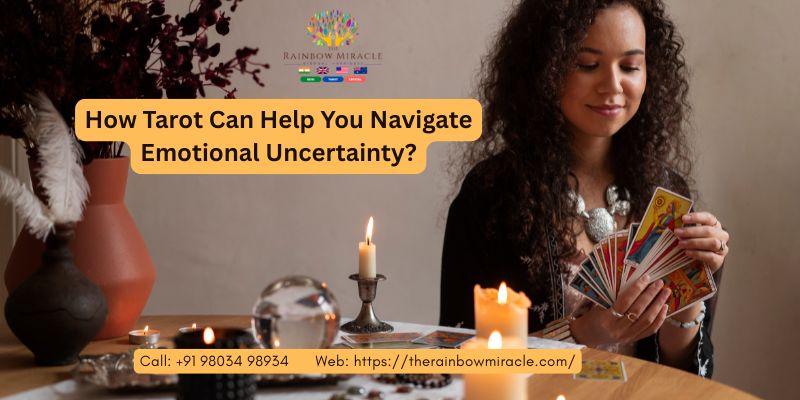

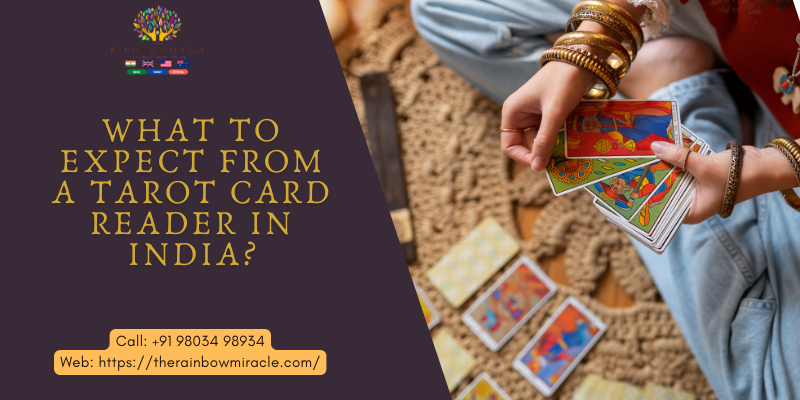
A tarot card reading in India is typically a guided conversation that uses tarot symbolism to explore questions, emotions, patterns, and possible directions. A professional tarot card reader in India should help you reflect on your situation rather than simply make dramatic predictions about your future.
That distinction matters. A meaningful reading is less about hearing a fixed fate and more about gaining perspective on what you are experiencing and the choices in front of you.
What Is a Tarot Card Reading?
Definition: Tarot reading is a reflective practice in which a reader interprets cards drawn from a tarot deck to explore a person’s question or situation. Each card has established symbolism, but its meaning can change depending on the question, surrounding cards, and reading context.
In practical terms, a tarot session may feel surprisingly conversational. You explain what you want to understand, the reader selects or asks you to select cards, and the discussion develops around the patterns appearing in the spread.
A responsible reader should also make it clear that tarot is not a substitute for professional medical, legal, financial, or psychological advice.
What Happens During a Typical Tarot Session?
Although every reader has a different approach, a well-structured session usually follows a fairly natural sequence.
Step 1: You share your question
You may ask about relationships, career direction, personal growth, decision-making, or a particular situation. Specific questions generally produce more useful discussions than extremely broad ones.
Step 2: The reader establishes the focus
The reader may ask a few questions to understand the context. This is not necessarily about collecting personal information; it helps frame the interpretation around what you actually want to explore.
Step 3: Cards are drawn
Depending on the reader’s method, cards may be drawn by the reader, selected by you, or generated through a particular spread. The layout determines how different cards relate to the question.
Step 4: The symbolism is interpreted
The reader considers imagery, traditional meanings, card positions, and relationships between cards. A good interpretation does not treat one card as an isolated yes-or-no answer.
Step 5: You discuss the practical meaning
This is often the most valuable part. The reader helps connect the symbolism to your circumstances and encourages you to think about possible choices, patterns, or areas that deserve attention.
What Can You Ask a Tarot Card Reader?
Tarot can be especially useful when a person has a situation they understand emotionally but cannot easily organise in their mind. Instead of asking only, “Will this happen?”, consider questions that encourage reflection.
-
- Relationships: What pattern should I understand in this relationship?
-
- Career: What should I consider before making a professional change?
-
- Personal growth: What may be holding me back right now?
-
- Decisions: What factors am I overlooking?
-
- Emotional clarity: What perspective could help me handle this situation better?
These questions leave room for interpretation. They can also help you get more value from the session than repeatedly asking for a simple prediction.
What Makes a Tarot Reading Feel Genuine?
A useful tarot session should leave you with greater clarity, not greater fear. In my view, that is one of the simplest ways to distinguish thoughtful guidance from sensational fortune-telling.
Look for these qualities
-
- Clear communication: The reader explains interpretations instead of using confusing mystical language.
-
- Respect for your choices: You remain responsible for your decisions.
-
- No fear-based pressure: A reader should not frighten you into purchasing additional services.
-
- Relevant interpretation: The discussion connects the cards to your actual question.
-
- Healthy boundaries: Sensitive topics are handled with care and discretion.
A strong reader may even tell you when a question needs a different kind of professional support. That restraint is a sign of maturity, not a weakness in the reading.
How to Prepare Before Your Tarot Reading?
You do not need special knowledge of tarot to have a worthwhile session. Preparation is mostly about knowing what you genuinely want to explore.
A simple preparation checklist
-
- Choose one main area: Avoid bringing ten unrelated questions into a short session.
- Write down your concern: Putting your thoughts into words can reveal what you actually want to know.
- Stay open-minded: The interpretation may not match your initial expectation.
- Listen for patterns: Pay attention to recurring themes rather than trying to force a prediction.
- Reflect afterward: Give yourself time to consider what the reading brought to your attention.
For example, someone considering a career move may discover that the most useful part of the session is not whether they should resign tomorrow, but why they feel stuck and which practical factors they have been avoiding.
Can Tarot Help You Understand Yourself Better?
It can be useful as a reflective tool. Tarot imagery often gives people a different language for discussing emotions, fears, ambitions, relationships, and personal strengths.
For readers interested in this aspect, exploring Tarot Cards That Reveal Your Hidden Strengths can also provide a useful perspective on how card symbolism may encourage self-reflection.
The important point is to remain grounded. A card does not prove that something will happen. Its value may instead come from prompting a question you had not considered before.
What Should You Expect from a Top Tarot Reader in India?
If you choose a top tarot card reader in India, expect the experience to be personalised rather than mechanical. The reader should listen carefully, explain the spread clearly, and adapt the conversation to your question.
You should also expect honesty about uncertainty. Tarot interpretations are symbolic and subjective, so responsible readers avoid presenting every interpretation as an unavoidable future event.
A good session may challenge your assumptions, but it should not take away your sense of agency. Ultimately, you decide what to do with the perspective you gain.
Common Mistakes to Avoid During a Reading
Even a well-conducted session can become less useful if you approach it with unrealistic expectations.
-
- Do not ask the same question repeatedly simply because you dislike the first interpretation.
-
- Do not make major financial, medical, or legal decisions solely because of a card reading.
-
- Do not assume every symbolic detail has one universal meaning.
-
- Do not ignore your own judgment or real-world evidence.
-
- Do not continue a session because someone makes you feel frightened or pressured.
FAQs About Tarot Card Readers in India
1. What does a tarot card reader actually do?
A tarot reader interprets cards and their symbolism in relation to your question, helping you explore possible perspectives, patterns, emotions, and choices.
2. Can a tarot reader predict my exact future?
Tarot should not be treated as a guaranteed prediction of fixed future events. A responsible reading focuses more on possibilities, patterns, and personal reflection.
3. What questions should I ask during a tarot reading?
Questions about relationships, career decisions, personal growth, emotional patterns, and choices can work well. Specific, open-ended questions usually provide richer discussion.
4. Is tarot reading suitable for beginners?
Yes. You do not need prior knowledge of tarot cards. The reader can explain the symbolism and guide you through the interpretation.
5. How can I get more value from a tarot session?
Come with a clear concern, stay open to perspectives you had not considered, take notes if useful, and treat the reading as guidance for reflection rather than an instruction to follow blindly.
Final Thoughts
The best tarot reading is not necessarily the one that makes the biggest prediction. It is the one that helps you see your situation from a clearer angle. Approach the session with a thoughtful question, healthy skepticism, and an open mind, and tarot can become a meaningful tool for reflection and self-understanding.
Full Audio Version:- Click Here