

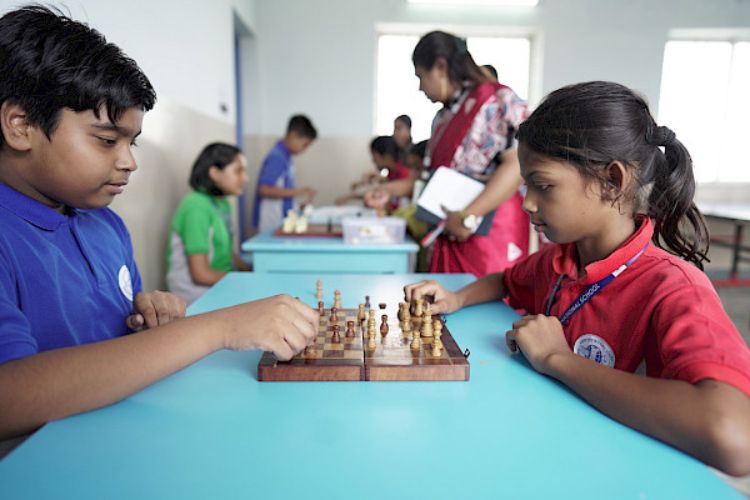
Admission for class 8 is not simply about moving into the next grade. It is a stage when students begin to think more independently, discover personal interests, and take greater responsibility for their learning. So, how can parents choose a school that supports marks and meaningful growth? The answer often lies in a balanced, holistic approach to education.
Middle-school experiences can shape how confidently a child approaches future challenges. Even the learning habits developed during 6th standard admission and subsequent grades can influence a student’s transition towards more demanding academic work.
Why Class 8 Is an Important Turning Point?
By Class 8, children are somewhere between childhood and adolescence. They are curious, opinionated, sometimes wonderfully unpredictable, and increasingly capable of reasoning for themselves. This makes the classroom experience particularly important.
A school that only concentrates on completing chapters may prepare students for a test, but a school that encourages questioning, discussion, experimentation, and reflection can prepare them for much more. Students begin to understand that learning is not about collecting correct answers; it is about knowing what to do with knowledge.
For parents planning admission for class 8, this distinction is worth considering. The right learning environment should combine academic discipline with opportunities for children to explore their abilities.
What Does Holistic Education Actually Mean?
Holistic education focuses on the complete development of a student. Academic achievement remains important, but it works alongside emotional, social, physical, creative, and communication skills.
The National Education Policy 2020 gives importance to conceptual understanding, critical thinking, creativity, communication, teamwork, problem-solving, and the broader development of learners. This reflects an increasingly practical view of education: students need knowledge, but they also need the ability to use it effectively.
A holistic school experience may give students opportunities to develop through:
- Academic learning: Understanding concepts instead of relying entirely on memorisation.
- Creative expression: Art, music, writing, theatre, design, and other activities that encourage imagination.
- Physical development: Sports, fitness, outdoor activities, and healthy routines.
- Social learning: Collaboration, empathy, communication, leadership, and respect for others.
How Holistic Education Helps Class 8 Students?
Encouraging Independent Thinking
A child who always waits for the teacher to provide an answer may find higher classes challenging. Holistic learning encourages students to investigate, compare ideas, ask questions, and explain their reasoning.
For instance, a science project about water conservation can move beyond a textbook chapter. Students might observe water usage at home, research conservation methods, calculate consumption, and present their findings. Suddenly, one topic brings together science, mathematics, communication, research, and teamwork.
Building Confidence and Character
Not every student is naturally comfortable speaking in front of a class. Others may hesitate to join competitions or team activities. Regular exposure to different experiences can gradually change that.
Sports can teach persistence. Group projects can teach cooperation. Public speaking can build confidence. Creative activities can give a quieter child a different way to shine. These experiences matter because children do not discover their strengths by sitting only behind a desk.
Preparing Students for Future Challenges
The UNESCO perspective on social and emotional learning recognises skills such as emotional awareness, communication, relationships, responsible decision-making, and problem-solving as meaningful parts of student development.
For families researching class 8 admission Howrah, it makes sense to ask how these abilities are developed through everyday school life rather than treated as occasional add-ons.
What Should Parents Look for During Admission?
School selection can feel overwhelming, especially when every institution highlights its facilities and achievements. A more useful approach is to look at what students actually experience each day.
- Teaching methodology: Check whether teachers encourage questions, discussion, projects, and conceptual understanding.
- Academic support: Find out how teachers identify learning gaps and help students improve.
- Extracurricular opportunities: Look for meaningful access to sports, arts, clubs, competitions, and cultural activities.
- Student participation: Ask whether children get opportunities to lead, present, collaborate, and make responsible choices.
- School culture: Consider whether the environment appears supportive, disciplined, inclusive, and respectful.
Parents looking for a private school in Hooghly District should therefore consider more than infrastructure. A school’s learning culture can have just as much influence on a child’s development.
Creating a Balanced Learning Experience
Holistic education does not mean taking academics less seriously. Instead, it adds depth to academic learning. A student who learns to research, communicate, collaborate, solve problems, and manage time is often better equipped to handle the increasing expectations of secondary education.
Some practical features parents can look for include:
- Project-based and experiential learning opportunities.
- Regular sports and creative activities.
- Opportunities for presentations, teamwork, and leadership.
- Constructive feedback alongside formal assessments.
These experiences can turn ordinary school days into opportunities for discovery. And sometimes, that is where the most memorable learning happens.
Frequently Asked Questions
1. Why is holistic education important for Class 8?
Class 8 is an important developmental stage. Holistic education supports academic learning while also developing confidence, creativity, communication, emotional awareness, teamwork, and practical skills.
2. What should parents consider for Admission for Class 8?
Parents should consider curriculum, teaching methods, teacher support, extracurricular activities, student well-being, school culture, and how effectively the school prepares students for higher classes.
3. Does holistic education reduce academic focus?
No. Holistic education complements academics. It encourages students to understand concepts, think critically, solve problems, communicate clearly, and apply classroom knowledge.
4. How can parents identify a school with a holistic approach?
Parents can ask about project work, sports, arts, student participation, assessment methods, classroom interaction, leadership opportunities, and support for individual learning needs.
Final Thoughts
Admission for class 8 is an opportunity to choose an environment that can influence much more than a child’s report card. A school that combines strong academics with creativity, character, communication, physical activity, and emotional growth gives students space to become capable and confident individuals. After all, education should prepare children not only to answer questions, but also to face the questions life eventually asks them.