

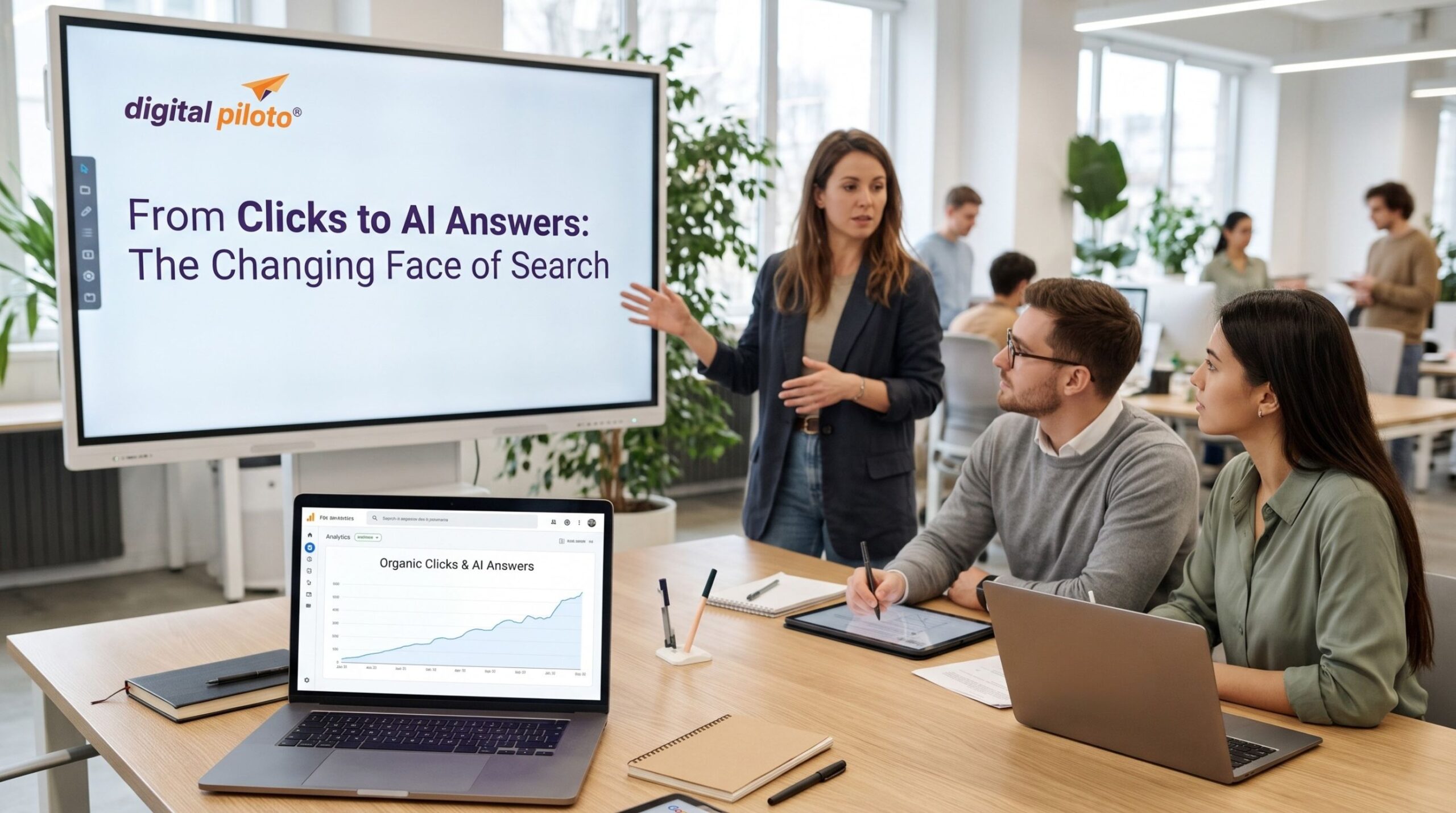
Remember when searching online meant typing a few words, opening several links, and comparing information yourself? That familiar routine is evolving. AI-powered search can now summarize information, answer follow-up questions, and recommend possible solutions within the search experience. For businesses, this changes not just how people find websites, but how they discover and evaluate brands.
For a digital marketing company, this shift raises an important challenge: how do you remain visible when users may get an answer without clicking through to a website? Traditional search engine optimization still matters, but businesses also need to think about clear information, brand credibility, and whether their content can contribute meaningfully to AI-generated responses.
How Search Moved Beyond the List of Links
Traditional search was largely built around discovery. A user entered a query, the search engine displayed relevant pages, and the user decided which result deserved a visit. The website provided the detailed experience, while the search engine helped people find it.
AI-powered search introduces another layer. Instead of simply presenting links, some search experiences interpret a question, gather information from different sources, and generate a summarized response. Users can ask a follow-up question without necessarily starting a completely new search.
Consider someone researching website development services. A traditional search might show agency websites, directories, and articles about choosing a developer. An AI-powered experience might first explain what to look for, compare common service considerations, and reference selected sources. The user may then visit a few websites to verify expertise, explore portfolios, or request a consultation.
The journey has not disappeared. It has become less linear. A customer might discover a brand through an AI answer, investigate it through conventional search, and eventually convert through a direct website visit.
Why AI Answers Are Changing User Behaviour
People generally want useful information with as little unnecessary effort as possible. If a search experience can explain a topic clearly, some users may feel less need to open multiple pages just to understand the basics.
This does not mean everyone has stopped clicking. People still visit websites when they need detailed product information, current prices, professional advice, original research, or a way to complete a transaction. The impact varies by query and industry.
Research from the Pew Research Center found that users in its study were less likely to click traditional search-result links when a Google AI summary appeared. This is a useful indication that answer-first search experiences can influence click behaviour, although the findings should not be treated as a universal prediction for every search or business.
For marketers, the practical lesson is straightforward: website traffic remains important, but it is no longer the only useful measure of search visibility.
From Keyword Rankings to Answer Relevance
Keywords still help search engines understand what a page is about. However, modern search journeys often involve questions that are more detailed than a short keyword phrase.
Someone may begin with “digital marketing agency” and then ask:
- What services should a growing ecommerce business look for?
- How can a company measure whether its marketing investment is working?
- What is the difference between SEO, paid advertising, and conversion optimization?
- How should a business evaluate an agency before signing a contract?
These questions reveal different stages of customer intent. A page optimized only for a broad keyword may not answer the specific concerns behind them.
Create content around real questions
Businesses should build content that addresses the problems customers are actually trying to solve. This might include service explanations, practical guides, comparisons, frequently asked questions, and detailed resources that clarify complicated decisions.
For example, a website development company should not only describe its development services. It could also explain how businesses should evaluate mobile usability, website security, content management systems, integrations, and ongoing maintenance.
The objective is not to turn every paragraph into a question-and-answer format. It is to make important information easy to understand, verify, and use.
What Makes Content Useful in AI-Powered Search?
AI systems vary in how they retrieve and process information. No particular writing formula guarantees that a page will be cited or included in an AI-generated answer. Still, businesses can improve the usefulness and clarity of their content by following a few sound principles.
1. Give direct answers before adding detail
When explaining a concept, begin with a clear definition or central point. Then expand with examples, limitations, and practical implications. Readers should not have to work through several paragraphs of promotional language before finding the information they came for.
2. Demonstrate genuine expertise
Generic explanations are easy to produce, which makes distinctive insight more valuable. Include practical observations, original examples, relevant experience, and meaningful explanations of trade-offs. If a recommendation depends on a particular business situation, say so.
3. Support important claims
Use credible references when discussing regulations, technical standards, research findings, or industry data. Distinguish between verified facts and professional interpretation. This is especially important when information could influence a business decision.
4. Keep information consistent
Make sure your website, business profiles, service pages, and other public information describe the company accurately. Conflicting business names, outdated service details, or unsupported claims can create confusion for customers and search systems alike.
These practices support both traditional SEO and broader AI search optimization. More importantly, they make a website genuinely more useful to the people it is meant to serve.
Why Brand Visibility Now Goes Beyond Website Traffic
In a click-focused model, marketers often treated organic visits as the clearest evidence of search performance. In an answer-focused environment, a brand may influence a customer’s research even when that interaction does not immediately produce a website visit.
Imagine an AI assistant explaining the factors to consider when choosing a local marketing provider. If it references a business’s research or service information, that brand may enter the customer’s consideration set. The person might remember the name and search for it later.
This makes brand recognition, accurate mentions, and source citations useful additional signals. However, they should not be confused with guaranteed leads or sales. A mention is an opportunity for discovery, not proof of commercial impact.
Businesses should therefore look at search visibility as a combination of several signals:
- Traditional visibility: Rankings, impressions, clicks, and organic landing-page performance.
- AI visibility: Brand mentions, linked citations, referenced pages, and the accuracy of AI-generated descriptions.
- Brand demand: Branded search activity, direct visits, and customer enquiries that may follow earlier discovery.
- Business outcomes: Qualified leads, purchases, bookings, and revenue contribution.
Looking at these signals together provides a more realistic picture than relying on a single ranking report.
How Businesses Can Adapt Their SEO Strategy
Adapting to AI answers does not require abandoning the fundamentals of search optimization. In fact, a weak technical foundation or confusing website structure can make broader visibility efforts harder.
Build topic depth instead of publishing isolated articles
A business should cover the important subjects connected to its products and services. A company offering digital marketing, for example, could develop useful resources on search intent, technical SEO, local discovery, paid campaigns, analytics, and conversion optimization.
These pages should connect naturally through internal links. A reader exploring an introductory guide should be able to move towards a detailed explanation or relevant service page without having to search the entire website again.
Improve technical accessibility
Make sure important pages can be crawled and indexed where appropriate. Use descriptive page titles, logical headings, useful internal links, mobile-friendly layouts, and accurate structured data. Structured data should represent information that is genuinely present on the page; it is not a shortcut to guaranteed AI citations.
Connect search strategy with business transformation
AI-driven discovery affects more than content production. It can influence customer research, brand positioning, website experience, and how businesses organize their digital information. Organizations investing in digital transformation services India should consider how these elements work together rather than treating search as an isolated marketing activity.
It may also be useful to work with an experienced SEO agency that understands technical optimization, content strategy, and the changing relationship between conventional search and AI-driven discovery.
How to Measure Success in an Answer-First Search Environment
Measuring AI visibility can be less straightforward than checking a keyword position. AI responses may vary according to the platform, query wording, location, available sources, and time. A single appearance should not be treated as proof of consistent visibility.
Businesses can create a repeatable monitoring process:
- Prepare relevant prompts: Use realistic questions customers might ask about the business, its industry, and its services.
- Check selected platforms: Record whether the brand or its pages appear in relevant AI-generated responses.
- Review citation quality: Check whether references are accurate, relevant, and connected to the right page.
- Compare with search performance: Monitor organic impressions, clicks, branded searches, and referral activity alongside AI observations.
- Connect visibility to outcomes: Examine enquiries and conversions to understand whether improved discovery contributes to business value.
Use the same prompts periodically and document changes. This makes observations more useful, although it still does not provide a universal AI ranking score. The goal is to identify patterns and opportunities, not chase every variation in an AI response.
What the Changing Search Landscape Means for the Future
Search is likely to become increasingly conversational and context-aware. People may move between traditional results, AI summaries, voice interfaces, and specialized assistants depending on what they need. Some searches will still lead directly to websites; others may be resolved within the search experience itself.
That creates a new responsibility for businesses. They must provide information that is not only discoverable but also accurate, distinctive, and helpful enough to deserve attention. Thin content, exaggerated claims, and pages created solely to repeat keywords are unlikely to build lasting trust.
The brands best prepared for this environment will treat search as a relationship between information and customer needs. They will maintain strong websites, explain their expertise clearly, and make it easy for interested people to take the next step.
Frequently Asked Questions
1. What is the difference between traditional search and AI-powered search?
Traditional search generally presents a list of relevant pages for users to explore. AI-powered search can interpret a question and generate a summarized answer using information from selected sources. Many modern search experiences combine both approaches.
2. Will AI answers reduce website traffic?
They may reduce clicks for some informational searches because users can get an overview without opening a website. However, visitors may still click when they need detailed guidance, original information, product comparisons, or a way to contact a business. The impact varies by query and industry.
3. How can a business improve its visibility in AI search results?
Publish accurate and helpful content, answer relevant customer questions clearly, demonstrate genuine expertise, maintain consistent brand information, and strengthen technical SEO. There is no guaranteed method of earning AI citations, so focus on usefulness and credibility.
4. Is traditional SEO still important in the age of AI answers?
Yes. Search engine accessibility, relevant content, sound website structure, and useful pages remain important. Traditional SEO supports organic discovery and can also contribute to the broader visibility of a business across evolving search experiences.
Final Thoughts: Be the Source Worth Finding
The move from clicks to AI answers does not make websites less important. It changes the role they play in discovery. Businesses now need to earn attention through useful information, clear expertise, and consistent credibility. Strong SEO remains part of that effort, but lasting visibility will increasingly depend on giving people—and the systems helping them search—good reasons to trust what a brand publishes.
Blog Development Credits
The concept originated with Amlan Maiti, developed through research and AI-assisted drafting, and received editorial refinement and search optimization from Digital Piloto Private Limited.