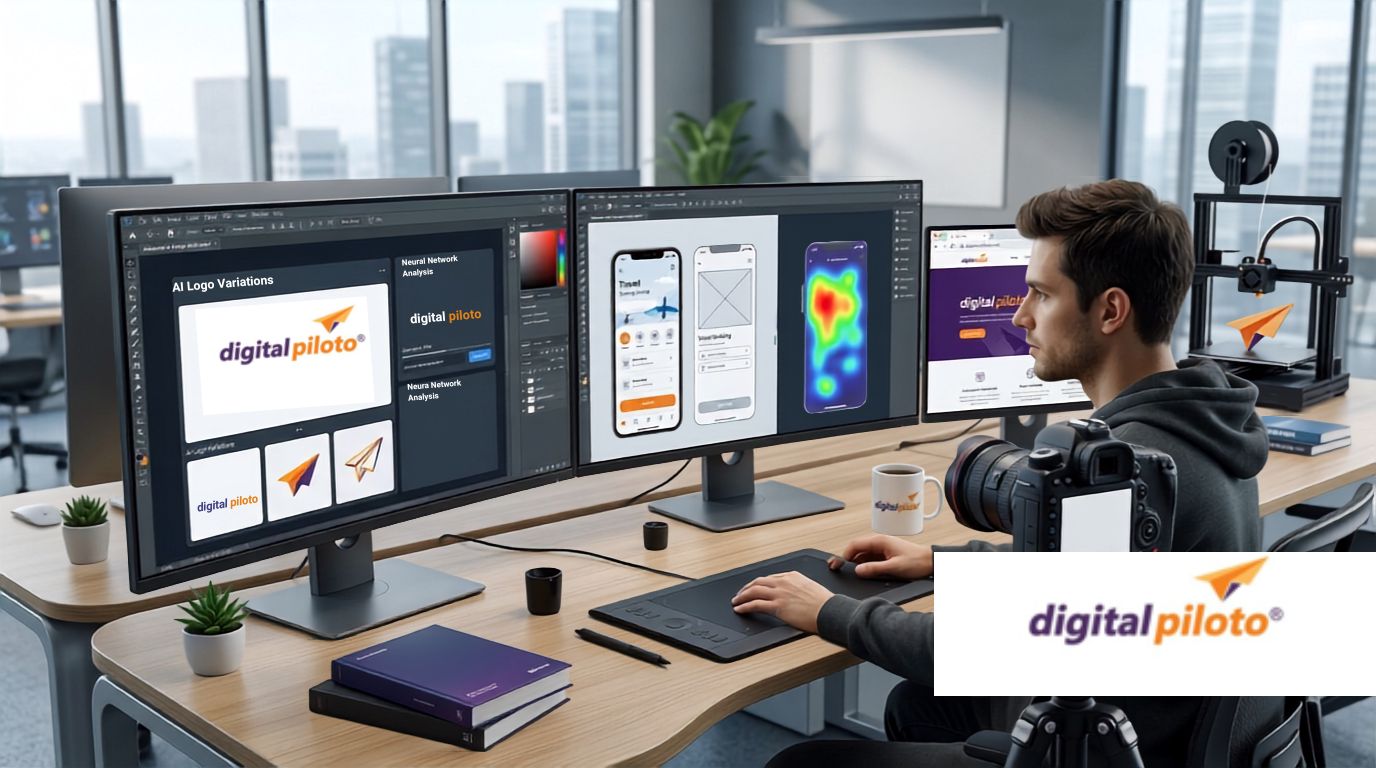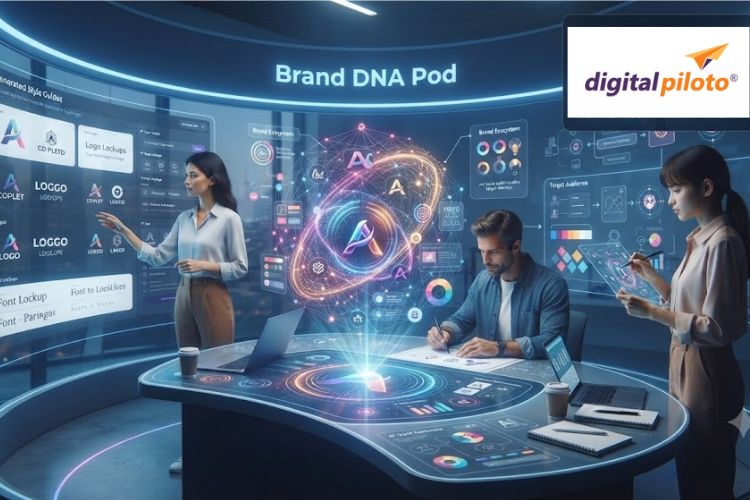


AI is changing how designers approach both branding and user experience. Instead of treating logo design and UI/UX as separate disciplines, businesses are now using AI tools to connect visual identity with digital interactions, creating experiences that feel more consistent, intuitive, and memorable from the first click.
The biggest advantage is speed with intelligence. Modern AI platforms can analyze user behavior, design preferences, and brand characteristics to recommend design directions that are not only visually appealing but also strategically effective. This shift is becoming especially valuable in projects involving Mobile App UI UX Design, where user expectations continue to rise every year.
What Does AI-Powered Design Actually Mean?
Definition
AI-powered design refers to the use of machine learning algorithms and intelligent automation to assist designers in creating logos, interfaces, layouts, and visual systems based on data, patterns, and user behavior.
AI does not replace creativity. Instead, it removes repetitive tasks and gives designers more time to focus on strategy, storytelling, and user psychology.
Why Are Logo Design and UI/UX Becoming Connected?
For years, logos were treated as standalone visual assets. Today, a logo lives inside apps, websites, dashboards, onboarding screens, and digital products.
If the logo promises innovation while the interface feels outdated, users notice the disconnect immediately.
Strong digital brands now ensure that their logo personality and user experience speak the same language.
Examples include:
- Minimal logos paired with clean interface layouts.
- Bold brand identities supported by vibrant visual interactions.
- Luxury branding combined with premium micro-animations and typography.
- Playful brands using friendly illustrations and intuitive navigation.
How AI Improves Logo Design Decisions
Traditional logo design often involved multiple rounds of revisions driven by personal preference. AI introduces data into the creative process.
Modern AI tools can analyze thousands of successful logos within an industry and identify patterns related to color psychology, typography trends, and shape recognition.
AI can assist with:
- Color palette recommendations.
- Typography matching.
- Competitor differentiation analysis.
- Scalability testing across devices.
- Accessibility validation.
The result is a logo that performs well in real-world digital environments rather than only looking attractive on presentation slides.
How AI Creates Smarter UI/UX Experiences
UI/UX design has always relied heavily on user research. AI accelerates this process by identifying patterns that humans might miss.
Behavioral data can reveal where users hesitate, where they become confused, and where they abandon a journey entirely.
AI-driven design systems can then recommend improvements automatically.
Common AI-powered UI improvements include:
- Personalized navigation flows.
- Adaptive content layouts.
- Smart search functionality.
- Predictive recommendations.
- Accessibility enhancements.
These capabilities are redefining how designers approach conversion optimization and user retention.
The Role of Brand Consistency
The smartest digital experiences feel unified from beginning to end.
This is where AI becomes especially valuable for Brand Identity Design. AI systems can ensure that typography, colors, spacing, imagery, and visual hierarchy remain consistent across websites, mobile applications, and customer touchpoints.
Consistency builds familiarity, and familiarity builds trust.
Many organizations underestimate how much trust is created simply by reducing visual friction.
How Businesses Can Use AI Design Workflows
Step-by-Step Approach
- Define the core brand personality and business objectives.
- Create logo concepts using AI-assisted ideation tools.
- Test logo variations across digital environments.
- Build UI components inspired by brand attributes.
- Collect user interaction data after launch.
- Allow AI systems to identify optimization opportunities.
- Continuously improve based on behavioral insights.
This approach transforms design from a one-time project into an evolving business asset.
Common Misconceptions About AI Design
Many businesses incorrectly believe that:
- AI completely replaces designers.
- AI-generated logos lack originality.
- Automation removes creativity.
- Only large enterprises can benefit from AI design.
In reality, the best results come from collaboration between human creativity and machine intelligence.
AI provides possibilities. Designers provide judgment.
What Makes Human Creativity Still Essential?
AI understands patterns but not emotions.
A logo that captures ambition, trust, or excitement still requires human understanding of culture, psychology, and storytelling.
The same applies to user experience design. Great interfaces are not simply usable; they create feelings.
That emotional layer remains one of the strongest competitive advantages human designers bring to the table.
The Future of Intelligent Design
The future will not belong to designers who compete with AI. It will belong to designers who collaborate with it.
Businesses that combine data-driven design decisions with human creativity will create stronger brands, better products, and more engaging customer experiences.
The next generation of design will be less about choosing between art and technology and more about blending both effectively.
Frequently Asked Questions
Can AI create professional logos?
Yes. AI can generate strong logo concepts and recommendations, although human designers remain essential for strategic refinement and originality.
Does AI replace UI/UX designers?
No. AI assists designers by automating repetitive tasks and providing insights, but human creativity and empathy remain critical.
How does AI improve user experience?
AI analyzes user behavior and helps optimize layouts, navigation, personalization, and accessibility.
Is AI-powered design suitable for small businesses?
Absolutely. AI tools make professional design processes more affordable and accessible for smaller organizations.
Why should logos and UI design work together?
Consistency between branding and user experience improves recognition, trust, and customer loyalty.
Conclusion
AI is not redefining creativity; it is expanding it. When logo design and UI/UX strategy work together with intelligent technology, businesses create experiences that feel cohesive, efficient, and genuinely human. The smartest designs of the future will likely be those where technology quietly supports creativity rather than trying to replace it.
Blog development Credits
This article was originally envisioned by Amlan Maiti, enriched through research supported by advanced AI technologies including ChatGPT, Gemini, and Copilot, and further refined with strategic optimization expertise from Digital Piloto.