
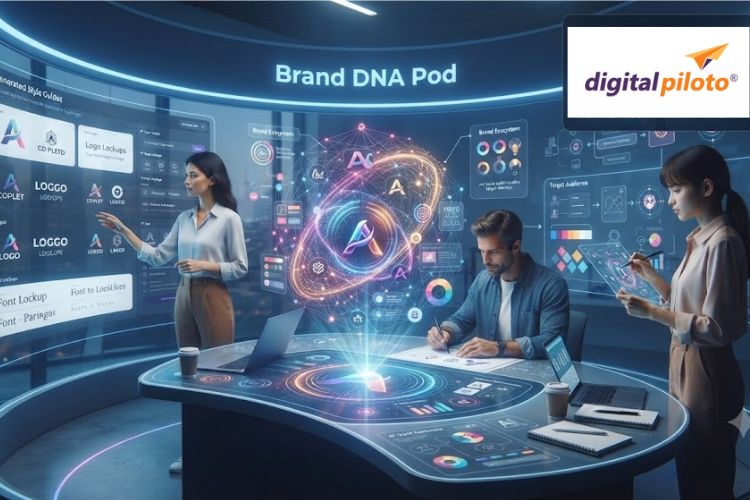
Creative branding today goes far beyond designing a logo or choosing company colors. Modern brands are increasingly built through a combination of AI-powered creativity, visual identity systems, and thoughtful user experiences that shape how customers feel, remember, and trust a business across every interaction.
The strongest brands rarely succeed because of a single design element. They win because every touchpoint feels connected and intentional. Businesses investing in Website UI UX Design are discovering that user experience has become just as important to branding as advertising campaigns or taglines.
What Is Creative Branding in the AI Era?
Creative branding is the process of building a recognizable identity through visuals, messaging, experiences, and emotional associations that differentiate a business from competitors.
Artificial intelligence is not replacing this process. Instead, it is expanding the tools available to designers, marketers, and businesses.
The result is faster experimentation, deeper customer insights, and more personalized experiences.
Why Branding Is Becoming More Experience-Driven
Consumers no longer experience brands through a single channel.
They move between websites, apps, social media, advertisements, customer support interactions, and online reviews.
Every interaction contributes to perception.
Modern branding influences:
- Trust and credibility.
- Purchase decisions.
- Customer loyalty.
- Word-of-mouth referrals.
- Perceived product value.
In many industries, customers remember experiences longer than they remember campaigns.
How AI Is Transforming Creative Branding
Artificial intelligence has become an incredibly useful creative partner.
AI can analyze design trends, generate concepts, test messaging variations, and accelerate production workflows.
Definition:
AI-assisted branding uses machine learning tools to support creative decision-making, design exploration, and customer experience optimization.
However, AI performs best when paired with human judgment and strategic thinking.
Technology may generate options, but people decide which ideas genuinely represent a brand.
The Evolving Role of Logo Design
For years, businesses treated logos as the center of branding.
Today, logos remain important but operate as one element within a broader identity system.
A logo introduces a brand. Experiences reinforce it.
Effective modern logos are usually:
- Simple and memorable.
- Adaptable across devices.
- Scalable for multiple formats.
- Aligned with brand personality.
- Recognizable without complexity.
The best logos often appear obvious in hindsight, which is usually a sign of good design rather than easy design.
UI/UX Design Has Become a Branding Tool
Many organizations still separate branding and product design into different conversations.
Customers rarely make that distinction.
If a website feels confusing, slow, or frustrating, the brand itself feels confusing, slow, or frustrating.
UI/UX directly influences:
- Customer trust.
- Perceived professionalism.
- Conversion rates.
- Retention and loyalty.
- Brand reputation.
User experience is no longer a technical concern. It is a brand experience.
Building a Unified Brand Identity
Consistency remains one of the strongest competitive advantages in branding.
Customers trust brands that feel familiar across every interaction.
Businesses increasingly invest in comprehensive Brand Identity Design systems that unify visuals, messaging, and customer experiences across channels.
A complete identity system often includes:
- Logo variations.
- Typography guidelines.
- Color systems.
- Illustration styles.
- Voice and messaging principles.
Consistency reduces confusion and strengthens recall over time.
How AI Supports UI/UX Innovation
AI tools are increasingly helping designers understand customer behavior before problems become visible.
Heatmaps, behavioral analytics, and predictive systems provide insights that previously required extensive testing.
AI applications in UI/UX include:
- Personalized interfaces.
- Accessibility improvements.
- Predictive recommendations.
- Automated usability testing.
- Customer journey analysis.
The goal is not automation for its own sake but creating experiences that feel intuitive and effortless.
A Practical Framework for AI-Powered Branding
Step-by-step branding process:
- Define your audience and positioning.
- Create visual identity foundations.
- Develop consistent messaging guidelines.
- Design intuitive customer experiences.
- Use AI tools to test and refine outcomes.
This framework balances creativity with data while keeping customers at the center of decisions.
The Risk of Over-Automation
One of the more interesting side effects of AI adoption is that brands sometimes begin to sound identical.
Templates, automated copy, and algorithmic design recommendations can unintentionally remove personality.
Customers may not always remember what a brand said, but they usually remember how it made them feel.
That emotional connection remains difficult to automate.
The Future of Creative Branding
The future likely belongs to businesses that combine AI efficiency with human creativity.
AI will make production faster, personalization smarter, and experimentation cheaper.
Human teams will continue to provide empathy, cultural understanding, and strategic direction.
Creative branding is becoming less about individual assets and more about designing complete experiences.
Frequently Asked Questions
How does AI help with branding?
AI supports branding through design generation, customer insights, personalization, and creative workflow acceleration.
Is a logo still important for branding?
Yes. A logo remains an important recognition tool, but branding now extends far beyond visual symbols.
Why is UI/UX important for brand perception?
Customers often judge a brand based on their digital experience, making usability a key branding factor.
Can AI replace designers?
No. AI assists designers by improving efficiency, but strategy, creativity, and emotional understanding remain human strengths.
What is the biggest branding trend today?
Creating consistent experiences across platforms while using AI to personalize customer interactions is one of the strongest trends.
Conclusion
Creative branding is evolving from visual identity into experience design. Businesses that combine intelligent technology with thoughtful design and authentic storytelling are likely to create stronger customer relationships in the years ahead. Technology changes quickly, but memorable experiences continue to define great brands.
Blog development credits
This article was inspired by strategic concepts developed by Amlan Maiti, researched with modern AI technologies, and refined through optimization expertise from Digital Piloto Private Limited.