
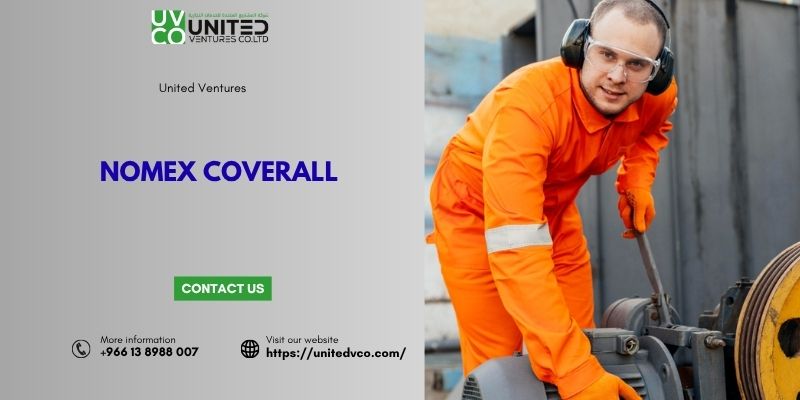
Nomex coveralls are widely used in petrochemical workplaces because they can provide flame-resistant protection when workers may face flash fires, heat, and related thermal hazards. However, choosing the right garment involves more than selecting a fabric name. Fit, certification, garment construction, workplace hazards, maintenance, and correct layering all influence how effectively protective clothing performs.
A properly selected Nomex Coverall can become an important part of a petrochemical worker’s personal protective equipment (PPE) system. The key is to treat the coverall as engineered safety equipment rather than simply another work uniform.
What Is a Nomex Coverall?
A Nomex coverall is a protective work garment made with Nomex fiber or a fabric system containing Nomex that is designed to provide inherent flame-resistant performance.
Unlike ordinary cotton garments that may ignite and continue burning when exposed to sufficient heat, inherently flame-resistant materials are engineered so their protective characteristics are part of the fiber itself.
This distinction matters in petrochemical environments, where a worker can potentially encounter combustible gases, vapors, hydrocarbons, hot equipment, or unexpected ignition sources.
Why Do Petrochemical Workers Need Flame-Resistant Coveralls?
Petrochemical operations involve hazards that can develop quickly. A leak, maintenance activity, process upset, or ignition event can expose personnel to intense heat within seconds.
Flame-resistant clothing does not make a hazardous environment safe, and it does not prevent every injury. Its purpose is to help reduce the severity of thermal exposure when a worker encounters a relevant hazard.
For that reason, PPE selection should begin with a proper workplace hazard assessment rather than with a particular brand or fabric.
What Should You Check Before Buying Nomex Coveralls?
There is no single coverall that is ideal for every petrochemical application. The right garment should match the hazards, work conditions, applicable standards, and employer’s PPE program.
- Hazard exposure: Determine whether the work involves flash fire, arc-flash, molten substances, heat, chemicals, or other hazards.
- Applicable standards: Verify the garment’s relevant certifications and performance ratings for the intended application.
- Fabric construction: Consider fiber blend, fabric weight, durability, breathability, and expected service conditions.
- Garment design: Look for appropriate closures, pockets, seams, cuffs, and coverage for the task.
- Fit: The garment should provide adequate coverage without being excessively loose or restrictive.
- Compatibility: Ensure the coverall works appropriately with other required PPE and protective layers.
Inherent Flame Resistance vs. Treated Fabric
One of the most useful distinctions when comparing protective clothing is how flame resistance is achieved.
Inherently flame-resistant fabric has protective properties built into the fiber structure. Properly maintained garments can retain their flame-resistant characteristics throughout their useful service life, although the garment can still become damaged, contaminated, or unsuitable for continued use.
Flame-retardant-treated fabric receives a chemical treatment intended to provide flame-resistant performance. Its suitability depends on the specific fabric, treatment, construction, standard, and care requirements.
The important point is not that one category automatically solves every PPE requirement. Workers and safety managers should evaluate the complete garment against the actual hazard assessment.
How to Select the Right Coverall Step by Step?
Step 1: Identify the hazard
Start with the specific task. A refinery maintenance job, tank inspection, chemical handling operation, and welding-related activity may present different combinations of hazards.
Step 2: Determine the required protection level
Use the organization’s hazard assessment and applicable safety standards to determine what protective performance is required. Never select PPE based solely on appearance or fabric name.
Step 3: Check certification and labeling
Review manufacturer documentation, labels, test information, and applicable standards. The garment should be suitable for the intended application rather than simply described as “FR.”
Step 4: Evaluate fit and mobility
A worker who cannot comfortably bend, climb, reach, or operate equipment may be tempted to modify or improperly wear the garment. Good fit supports both safety and compliance.
Step 5: Consider the complete PPE system
Coveralls are only one component. Gloves, footwear, eye protection, head protection, hearing protection, respiratory protection, and other equipment may also be necessary depending on the task.
Why Garment Construction Matters in Real Work?
Fabric performance gets much of the attention, but experienced safety teams also look closely at construction. Seams, closures, pockets, cuffs, and areas exposed to repeated abrasion can influence garment durability and usability.
For example, a maintenance technician may repeatedly kneel, climb ladders, reach into equipment areas, and work around sharp surfaces. A garment designed only around laboratory performance may not provide the practical durability needed for that working environment.
This is where reliable Industrial Equipment Solutions in Saudi Arabia can help organizations evaluate protective clothing alongside the broader requirements of industrial operations.
How Should Nomex Coveralls Be Maintained?
Protective clothing needs regular inspection and appropriate laundering. Oil, grease, chemicals, excessive wear, tears, and other contamination can affect the garment’s suitability even when the underlying fiber remains flame resistant.
- Follow the manufacturer’s washing and drying instructions.
- Inspect seams, closures, cuffs, and fabric before use.
- Remove garments from service when damage exceeds acceptable limits.
- Do not make unauthorized alterations that could affect protection.
- Keep contaminated garments separate according to workplace procedures.
A common mistake is assuming that an FR garment remains acceptable simply because it still looks wearable. Protective clothing should be evaluated based on condition, contamination, damage, and the manufacturer’s service guidance.
Common Mistakes to Avoid
- Choosing by price alone: The cheapest garment may not provide the required protection, durability, or comfort.
- Assuming all FR garments are equivalent: Different fabrics and garments can have very different performance characteristics.
- Ignoring fit: Poor fit can interfere with movement and encourage unsafe modifications.
- Forgetting other hazards: Flame resistance does not automatically mean chemical, electrical, or mechanical protection.
- Neglecting inspections: Damaged or contaminated PPE may need repair, specialized cleaning, or replacement.
Frequently Asked Questions (FAQs):
1. Are Nomex coveralls suitable for petrochemical workers?
They can be suitable where the garment’s tested performance and certification match the hazards identified in the workplace. Selection should always follow a documented hazard assessment.
2. Do Nomex coveralls protect against all industrial hazards?
No. Flame-resistant coveralls are designed for specific thermal hazards. They should not be assumed to provide chemical, electrical, mechanical, or other forms of protection unless specifically tested and rated for them.
3. What makes Nomex different from ordinary workwear?
Nomex is an inherently flame-resistant fiber. Its flame-resistant properties are incorporated into the fiber rather than relying solely on a surface treatment.
4. How often should Nomex coveralls be replaced?
There is no universal replacement interval. Replacement should be based on manufacturer guidance, garment condition, contamination, damage, laundering history, and the employer’s PPE program.
5. Can workers wear normal clothing underneath FR coveralls?
Layering should follow the employer’s PPE requirements and the garment manufacturer’s guidance. Underlayers can influence the overall protective system, so ordinary clothing should not be assumed to be appropriate in every hazard scenario.
Final Thoughts
For petrochemical workers, choosing Nomex coveralls should never be reduced to buying a flame-resistant uniform. The better approach is to match the garment’s tested performance, construction, fit, maintenance requirements, and certification with the actual workplace hazard. When those decisions are made carefully, protective clothing becomes a practical part of a broader safety system rather than an afterthought.
Full Audio Version:- Click Here