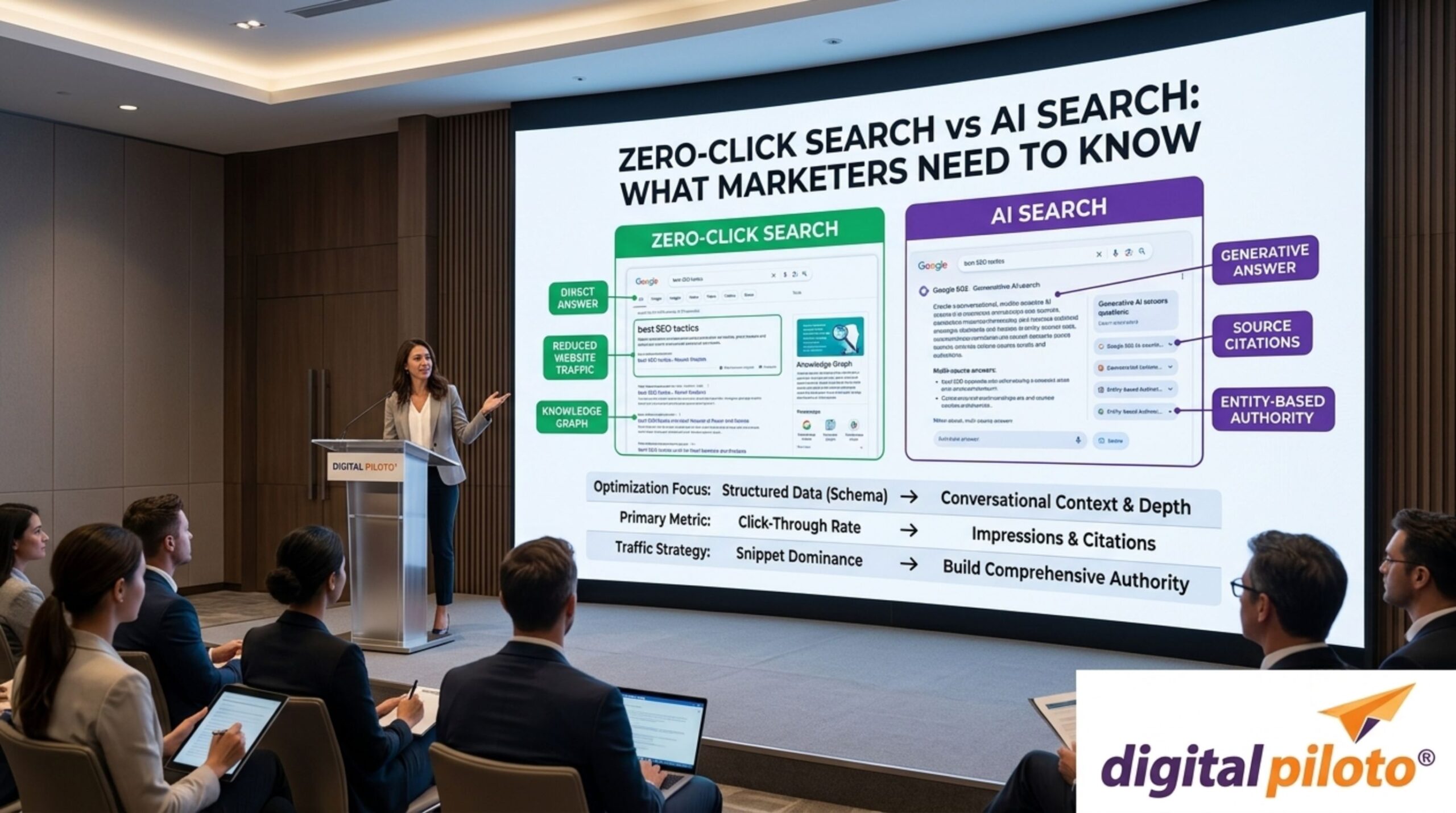


The evolution from search engines to answer engines represents a fundamental shift from index-based link retrieval to generative synthesis powered by artificial intelligence. Traditional search engines crawl, index, and list links for users to click, whereas answer engines utilize Large Language Models (LLMs) and Retrieval-Augmented Generation (RAG) to understand complex prompts, cross-verify data, and deliver direct, real-time answers. Adapting your online presence with a strategic Digital Marketing Service Provider in Siliguri ensures your brand adapts seamlessly to this conversational discovery paradigm.
What Is the Difference Between Search Engines and Answer Engines?
Search engines are digital libraries that retrieve ranked lists of web addresses based on keyword matches, requiring users to manually visit multiple websites to collect facts.
Answer engines (such as ChatGPT, Google Gemini, and Perplexity) act as intelligent conversational assistants. Instead of returning raw links, they parse user intent, evaluate unstructured web data, cross-reference entity graphs, and synthesize singular, comprehensive responses directly on the screen.
Why Traditional Keyword-Based Search Is Becoming Obsolete
For nearly three decades, human web search was governed by string matching. Users entered short phrase queries like “best running shoes,” and engines evaluated backlink counts and on-page density to display ten blue links. This model worked well when web content was sparse, but it eventually led to bloated search result pages flooded with ads, SEO fluff, and redundant articles.
Modern users demand immediate clarity. Rather than opening six browser tabs to synthesize pricing, specifications, and user reviews manually, users now lean on generative platforms to do the heavy lifting in seconds.
Key structural limitations pushing traditional search engines toward extinction include:
- High Friction & Time Loss: Users must navigate through multiple websites, ad placements, and pop-up forms to piece together simple answers.
- Keyword Gaming Vulnerability: Legacy algorithms often ranked articles based on keyword density and domain authority rather than genuine information value.
- Lack of Multi-Dimensional Context: Traditional engines struggle with nuanced, multi-layered queries that require comparative synthesis across independent industries.
Navigating this rapid transition requires integrating advanced generative engine optimization services into your core content strategy to remain discoverable by conversational parsers.
The Technological Drivers Behind the Answer Engine Revolution
1. Retrieval-Augmented Generation (RAG)
RAG bridges static LLM training data with real-time web access, allowing answer engines to ground conversational outputs in live, up-to-date web facts.
- Fetches authoritative micro-content segments dynamically during an active prompt.
- Minimizes model hallucination risks by validating outputs against current web datasets.
- Directly attributes verified web entities inside dynamic citation links.
2. Knowledge Graphs and Vector Embeddings
Instead of matching string letters, modern answer systems evaluate mathematical relationships between real-world concepts.
- Converts text into multi-dimensional vectors to assess semantic proximity and intent.
- Map relationships between brand entities, authors, historical facts, and service offerings.
- Prioritizes websites with clear, machine-readable microdata schemas.
3. Conversational Intent and Context Retention
Unlike classic search engines that reset context on every query, answer engines maintain memory across long conversational streams.
- Refines answers based on previous follow-up questions without restarting search parameters.
- Synthesizes hyper-personalized recommendations tailored to user-specific parameters.
- Delivers multi-modal answers integrating text, structured tables, and code blocks.
Partnering with an experienced SEO Company in Siliguri helps businesses restructure legacy assets to thrive within conversational discovery environments.
Step-by-Step Guide: Optimizing Content for AI Answer Engines
To transition your brand strategy from traditional SERPs to AI synthesis platforms, execute this four-step optimization framework:
- Shift from Keyword Targets to Entity Authority: Unify brand details across Wikidata, corporate profiles, and industry directories to solidify your Knowledge Graph presence.
- Structure Information for Direct Extraction: Place concise 50-word direct answers immediately following descriptive headings to simplify semantic parsing.
- Implement Advanced JSON-LD Microdata: Embed detailed
Organization,FAQPage, andProductschema across site templates to feed structured data straight to RAG crawlers. - Publish High Information-Gain Assets: Include original statistics, primary research, and distinct expert commentary that AI engines cannot find elsewhere.
Frequently Asked Questions
Will answer engines destroy website traffic entirely?
Answer engines reduce low-intent top-of-funnel clicks, but they generate higher-quality, highly qualified referral traffic when users click direct source citations to complete transactions.
How do answer engines decide which sources to cite?
Answer engines cite sources based on machine-readable schema accuracy, cross-web factual consensus, information gain, and verified author E-E-A-T signals.
What is Answer Engine Optimization (AEO)?
AEO is the practice of structuring website content and backend microdata so generative AI engines can easily extract, verify, and cite your brand in direct user answers.
Is traditional SEO dead in the age of AI search?
Traditional SEO is not dead; rather, it has evolved into Generative Engine Optimization (GEO). Technical crawlability and domain health remain essential foundations for modern AI indexing.
Final Thoughts
The transformation from search engines to answer engines is not a temporary trend—it is a permanent evolution in how humanity accesses information. Brands that embrace entity mapping, structured data formats, and unique information gain today will capture the citations and visibility of tomorrow.
Blog development credits
This post was conceptualized by AI strategist Amlan Maiti, extensively researched using advanced AI engines such as ChatGPT, Gemini, and Copilot, and received final technical optimization from Digital Piloto Private Limited.