
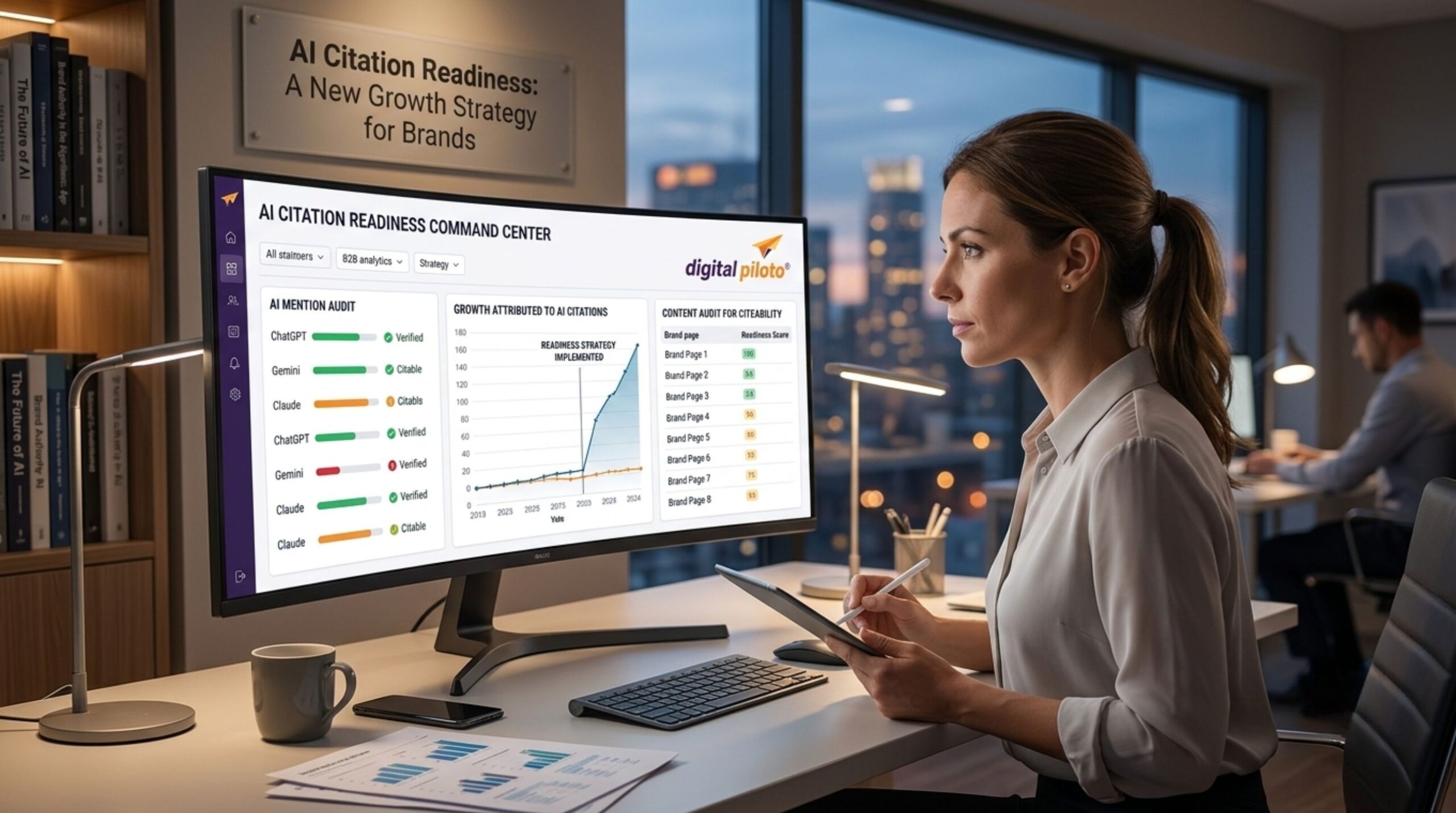
AI citation readiness is the practice of creating trustworthy, structured, and authoritative content that artificial intelligence search platforms can confidently reference in their responses. As AI-powered search becomes more influential, brands that earn citations from these systems gain stronger visibility, greater credibility, and more qualified traffic without relying solely on traditional search rankings.
Forward-thinking businesses are already adapting their digital strategies by working with an experienced digital marketing agency to build content that serves both human readers and AI-driven search experiences. The future of organic growth will depend not only on being indexed but also on becoming a trusted source worthy of citation.
What Is AI Citation Readiness?
Definition
AI citation readiness is the process of optimizing a website so AI search engines, conversational assistants, and answer engines recognize its content as reliable enough to reference when generating responses.
Unlike traditional SEO, which focuses primarily on rankings, AI citation readiness prioritizes content quality, factual accuracy, topical authority, semantic relationships, structured information, and demonstrated expertise.
Why AI Citations Matter More Than Traditional Rankings
Search behavior is evolving rapidly. Users increasingly expect direct answers instead of scrolling through pages of search results. AI systems summarize information by selecting trustworthy sources rather than simply displaying ranked webpages.
When your content becomes one of those trusted references, your brand benefits in several ways:
- Higher brand credibility across AI search experiences
- Greater visibility without depending entirely on first-page rankings
- Improved authority signals for future content
- Higher-quality referral traffic
- Stronger topical recognition within your industry
Being cited consistently positions your business as a recognized knowledge source instead of simply another website competing for clicks.
The Foundation of AI Citation Readiness
1. Demonstrate Genuine Expertise
AI systems increasingly evaluate whether content demonstrates practical knowledge rather than repeating widely available information.
Include:
- Original insights
- Real-world examples
- Industry observations
- Case studies
- Unique frameworks
- Actionable recommendations
The more distinctive your expertise, the more valuable your content becomes for AI-generated responses.
2. Build Strong Entity Relationships
Modern AI understands topics through entities and their relationships instead of relying only on keywords.
For example, if your website discusses technical SEO, your content should naturally connect related concepts such as structured data, crawl budget, schema markup, search intent, website architecture, and content optimization.
This semantic depth helps AI understand the broader context of your expertise.
Step-by-Step Framework for AI Citation Readiness
Step 1: Audit Existing Content
Evaluate every important page for factual accuracy, freshness, author expertise, structured formatting, and topical completeness.
Ask yourself:
- Does this answer a real user question?
- Does it provide original value?
- Would an AI confidently reference it?
Step 2: Strengthen Content Structure
AI extracts information more efficiently from well-organized content.
Use:
- Clear headings
- Short paragraphs
- Definition sections
- Step-by-step explanations
- Bullet lists
- FAQ sections
Well-structured content improves both user experience and answer engine readability.
Step 3: Improve Trust Signals
Trust extends beyond content quality. AI also evaluates the overall credibility of a website.
Important trust signals include:
- Author information
- Updated publication dates
- Reliable references
- Consistent branding
- Secure website architecture
- Transparent business information
How AI Evaluates Citation-Worthy Content
Although search companies use different models, high-quality AI systems often prioritize similar characteristics when selecting sources.
- Accuracy over opinion
- Clear explanations
- Complete topical coverage
- Logical content hierarchy
- Semantic consistency
- Demonstrated expertise
- Current and well-maintained information
Rather than producing more content, brands should focus on publishing more authoritative content.
Common Mistakes That Reduce AI Citations
Many businesses unintentionally make their content less useful for AI search by emphasizing volume instead of quality.
- Publishing repetitive articles
- Weak topical authority
- Keyword stuffing
- Outdated statistics
- Poor internal linking
- Missing structured data
- Thin informational pages
These issues make it harder for AI systems to identify trustworthy information worth referencing.
Combining AI Citation Strategy with Organic Growth
AI citation readiness complements—not replaces—traditional SEO. Strong technical optimization, high-quality content, semantic SEO, and user experience continue to influence long-term visibility. Businesses that invest in both citation readiness and technical excellence are better positioned for sustainable growth.
Many organizations also combine organic strategies with campaigns managed by a professional PPC agency in Kolkata, allowing them to generate immediate visibility while AI-driven authority develops over time.
The Long-Term Business Impact of AI Citation Readiness
Brands that consistently earn AI citations create a competitive advantage that extends beyond search rankings. They become recognized knowledge sources across multiple AI-powered platforms, increasing trust before a visitor even lands on the website.
A comprehensive strategy developed alongside an experienced SEO company in Kolkata can align technical SEO, entity optimization, content marketing, and knowledge graph signals into a sustainable authority-building framework.
Over time, this approach supports:
- Higher brand recognition across AI search experiences
- Improved organic visibility
- Greater customer trust
- Higher-quality inbound leads
- Long-term digital authority
Frequently Asked Questions
1. What is AI citation readiness?
AI citation readiness is the process of optimizing content so AI search engines and answer platforms recognize it as reliable enough to reference when generating responses.
2. Is AI citation readiness different from traditional SEO?
Yes. Traditional SEO focuses on rankings, while AI citation readiness emphasizes trust, authority, semantic relevance, structured information, and content quality that AI systems can confidently cite.
3. How can businesses improve their chances of being cited by AI?
Create original, well-structured, factually accurate content, demonstrate expertise, strengthen entity relationships, maintain updated information, and build strong technical SEO foundations.
4. Why are entities important for AI search?
Entities help AI understand relationships between people, organizations, products, locations, and concepts, allowing it to interpret content with greater accuracy and confidence.
5. Will AI citations replace search rankings?
No. Rankings remain important, but AI citations are becoming an additional visibility channel that complements traditional SEO by increasing brand authority and trust.
Conclusion
The future of search belongs to brands that are trusted, not merely indexed. AI citation readiness encourages businesses to publish genuinely useful, well-structured, and authoritative content that both users and AI systems value. Instead of chasing algorithm updates, focus on becoming the source others—including AI—choose to reference. That shift transforms SEO from a ranking exercise into a long-term authority-building strategy.
Blog Development Credits
This article was envisioned by Amlan Maiti, developed with research supported by advanced AI technologies, and professionally refined with strategic SEO enhancements by Digital Piloto Private Limited.