
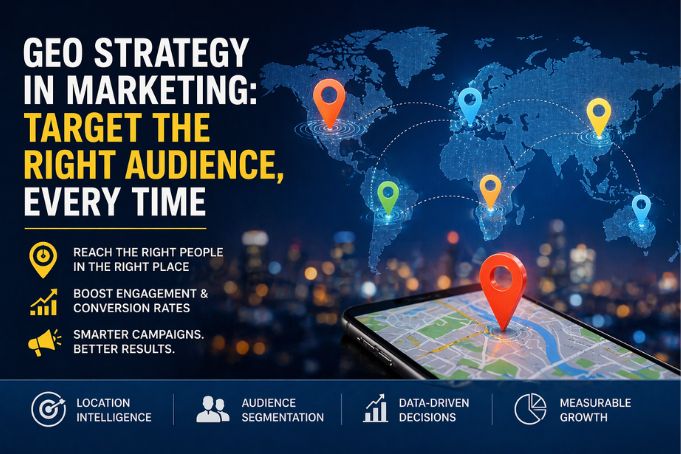
Ever wondered why some ads feel uncannily relevant while others completely miss the mark? The secret often lies in location. Modern marketing isn’t just about who your audience is—it’s also about where they are. That’s where geo strategy steps in, quietly transforming how brands connect with people in meaningful, location-specific ways.
In a world overflowing with digital noise, targeting the right audience at the right place can feel like hitting a moving target. But with the right approach, geo-targeting can turn scattered campaigns into sharply focused, high-performing ones. Let’s unpack how it works—and why it matters more than ever.
What Is Geo Strategy in Marketing?
At its core, geo strategy is about tailoring marketing efforts based on geographic data. This could be as broad as targeting a country or as precise as reaching users within a few kilometers of a store. It blends location intelligence with consumer behavior, helping brands deliver relevant messages exactly where they’re needed.
According to insights from U.S. Census Bureau, population density and regional demographics significantly influence purchasing patterns. That means understanding geography isn’t optional—it’s essential for smarter marketing decisions.
Also Read: SEO for Al Search and LLMs: How are We Adapting It?
Why Geo Strategy Matters More Than Ever
Let’s be honest—blanket marketing rarely works anymore. People expect personalization, and location is one of the most powerful personalization signals available.
- Relevance Boost: Ads tailored to a user’s location feel more useful and less intrusive.
- Higher ROI: Businesses waste less budget targeting audiences unlikely to convert.
- Improved Customer Experience: Localized messaging creates a stronger emotional connection.
Think about it: a café promoting iced coffee in a hot region versus a cold one in winter climates. Same product, different context—completely different results.
How Geo Targeting Works in Practice
Data Sources That Power Geo Strategy
Behind every successful geo strategy lies a mix of data sources working together:
- GPS & Mobile Data: Tracks real-time user location
- IP Address Mapping: Identifies general geographic regions
- User Behavior Patterns: Combines location with browsing habits
These inputs allow marketers to craft campaigns that feel less like advertising and more like helpful suggestions.
Real-World Applications
Geo strategy isn’t just theory—it’s already shaping how businesses operate daily.
- Local SEO Optimization: Helping businesses appear in “near me” searches
- Location-Based Ads: Delivering promotions based on proximity
- Regional Campaign Customization: Adapting messaging for cultural relevance
Interestingly, many software development companies in Kolkata are now integrating geo-targeting features into apps and platforms, enabling businesses to reach hyper-local audiences with precision.
Key Benefits of a Strong Geo Strategy
When done right, geo strategy can feel almost intuitive—like your brand just “gets” the customer. Here’s what makes it so powerful:
- Better Conversion Rates: Localized offers often lead to quicker decision-making
- Efficient Ad Spend: Reduced wastage on irrelevant audiences
- Stronger Brand Loyalty: Customers appreciate brands that understand their environment
A report by Think with Google highlights that location-based searches often lead to immediate action, such as store visits or purchases. That’s a clear signal—geo-targeting isn’t just smart; it’s profitable.
Best Practices to Get Geo Strategy Right
Of course, not all geo strategies are created equal. Some feel seamless, while others come across as awkward or overly aggressive.
Expert Tips
- Start Small: Focus on high-performing regions before expanding
- Test & Optimize: Continuously refine campaigns based on performance data
- Respect Privacy: Be transparent about data usage to build trust
It’s also worth noting that combining geo strategy with local SEO, location-based marketing, and audience segmentation can amplify results significantly.
Challenges You Shouldn’t Ignore
Like any strategy, geo targeting has its quirks. Over-targeting can feel invasive, while inaccurate data can lead to irrelevant ads. The trick is balance—using data wisely without overwhelming the user.
And then there’s the human factor. Just because someone is in a location doesn’t mean they fit your ideal customer profile. Smart marketers blend location data with behavioral insights for a fuller picture.
FAQs
Q1. What is geo strategy in simple terms?
Geo strategy is a marketing approach that uses location data to target audiences more effectively, ensuring messages are relevant to where users are.
Q2. How does geo targeting improve marketing ROI?
By focusing on specific locations, businesses reduce wasted ad spend and reach audiences more likely to convert, leading to better returns.
Q3. Is geo strategy only useful for local businesses?
Not at all. Even global brands use geo strategy to customize campaigns for different regions and cultures.
Q4. What tools are used for geo targeting?
Common tools include Google Ads location targeting, GPS-based mobile apps, and analytics platforms that track user location data.
Final Thoughts
Geo strategy isn’t just a technical tactic—it’s a mindset shift. It encourages marketers to think beyond demographics and dive into context. When you understand where your audience is, you start to understand how they live, shop, and decide. And that’s where truly effective marketing begins.
Also Read: How AI Is Reshaping Modern Marketing Success
Blog Development Credits:
This article idea was originally shaped by Amlan Maiti. It was researched and drafted using AI platforms such as ChatGPT, Gemini, and Copilot, and later refined with SEO insights from Digital Piloto Private Limited.