

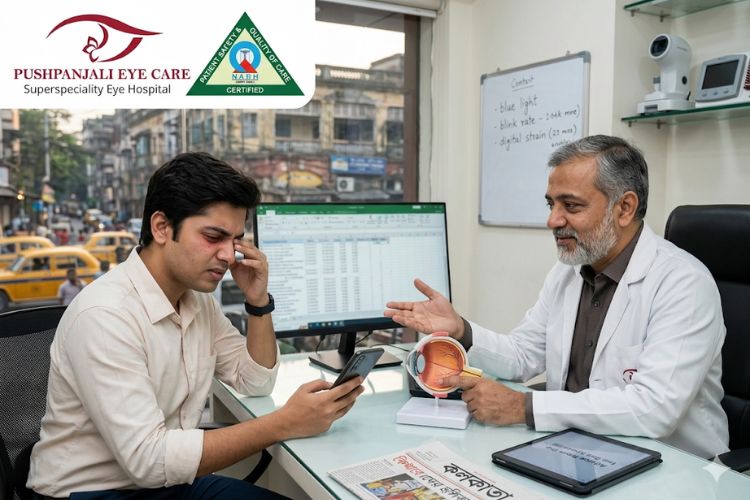
In today’s digital world, screens have become an unavoidable part of daily life. From office work and online classes to binge-watching shows and scrolling through social media, our eyes are constantly exposed to digital devices. While technology makes life easier, excessive screen time can silently impact your eye health in serious ways.
According to experts, digital eye strain has become one of the most common vision-related concerns among people of all age groups. At Pushpanjali Eye Care, specialists are seeing a growing number of patients experiencing symptoms linked to prolonged screen exposure. Consulting the Best Eye Specialist in Kolkata can help identify these issues early and protect your long-term vision.
What Is Digital Eye Strain?
Digital Eye Strain, also known as Computer Vision Syndrome, occurs when your eyes become tired due to extended use of screens such as smartphones, laptops, tablets, and televisions. Unlike reading printed text, digital screens force the eyes to work harder because of glare, contrast changes, and continuous focus adjustments.
Common symptoms include:
- Blurred vision
- Eye fatigue
- Dry eyes
- Headaches
- Neck and shoulder pain
- Difficulty focusing
- Increased sensitivity to light
Ignoring these signs can gradually affect productivity, sleep quality, and overall eye comfort.
Why Excessive Screen Time Is Harmful
When using screens for long hours, people tend to blink less frequently. Reduced blinking leads to dryness and irritation because the eyes do not receive enough moisture. Blue light emitted from digital devices can also contribute to visual discomfort and disrupted sleep patterns.
Modern lifestyles have increased the risk of screen-related vision problems in children, teenagers, and working professionals alike. Visiting a Retina Specialist in Kolkata becomes important when screen-related symptoms are persistent or vision quality begins to decline.
How Screen Time Affects Children’s Eyes
Children today spend hours on online learning, gaming, and entertainment apps. Excessive digital exposure at a young age may increase the chances of:
- Progressive myopia (near-sightedness)
- Poor concentration
- Eye fatigue
- Sleep disturbances
- Reduced outdoor activity affecting visual development
Parents should monitor screen habits and encourage regular eye checkups to maintain healthy vision during developmental years.
Warning Signs You Should Never Ignore
Many people assume temporary discomfort is normal after screen use. However, recurring symptoms may indicate deeper eye problems. You should seek medical attention if you experience:
- Frequent headaches after screen use
- Sudden blurry vision
- Burning or watery eyes
- Difficulty seeing at night
- Persistent dryness
- Increased eye redness
Early diagnosis from an experienced specialist can prevent long-term complications.
Expert Tips to Protect Your Eyes from Screen Damage
Follow the 20-20-20 Rule
Every 20 minutes, look at something 20 feet away for at least 20 seconds. This simple habit relaxes eye muscles and reduces strain.
Adjust Screen Brightness
Your screen brightness should match the surrounding environment. Extremely bright or dim screens can increase eye fatigue.
Maintain Proper Distance
Keep screens at least an arm’s length away and slightly below eye level for comfortable viewing.
Use Artificial Tears if Needed
Lubricating eye drops may help reduce dryness caused by prolonged screen exposure.
Limit Blue Light Exposure at Night
Avoid using devices before bedtime or use blue light filters to improve sleep quality.
Take Regular Eye Checkups
Routine eye examinations help detect vision problems early and ensure your eyes remain healthy despite heavy digital use.
Choosing an advanced Eye Hospital Kolkata ensures access to modern diagnostic technology and personalized vision care.
The Role of Advanced Eye Care in the Digital Era
With increasing digital dependency, eye care has become more important than ever. Modern ophthalmology now uses advanced screening methods to detect retinal issues, dry eye syndrome, and vision abnormalities linked to prolonged screen exposure.
At Pushpanjali Eye Care, patients receive comprehensive eye evaluations, advanced retina diagnostics, and customized treatment plans designed for today’s screen-focused lifestyle.
How Healthy Lifestyle Habits Can Help
Protecting your eyes is not only about reducing screen time. Healthy habits also play a major role in maintaining good vision.
Helpful lifestyle changes include:
- Eating foods rich in Vitamin A and Omega-3
- Staying hydrated
- Sleeping adequately
- Spending more time outdoors
- Wearing anti-glare or prescription glasses when recommended
Combining these habits with professional eye care can significantly reduce digital eye strain.
Also Read: Top Retinal Diseases Treated by a Retina Specialist in Kolkata
Conclusion
Technology is an essential part of modern life, but excessive screen exposure can negatively impact eye health if ignored. From dryness and headaches to blurry vision and retinal stress, digital eye strain is becoming increasingly common across all age groups.
Regular eye checkups, healthy screen habits, and timely treatment are the best ways to protect your vision in the digital age. Consulting the right specialist can help you enjoy technology without compromising your eyesight.
Frequently Asked Questions
Q. Can too much screen time permanently damage eyesight?
A. Excessive screen time usually causes temporary strain, but prolonged neglect may worsen existing eye problems and increase discomfort.
Q. How many hours of screen time is considered safe?
A. Experts recommend taking regular breaks every 20 minutes and limiting unnecessary recreational screen exposure whenever possible.
Q. Does blue light from phones affect sleep?
A. Yes, blue light exposure at night can interfere with melatonin production and disturb sleep cycles.
Q. Are children more vulnerable to digital eye strain?
A. Yes, children’s eyes are still developing, making them more sensitive to prolonged screen exposure.
Q. When should I visit an eye specialist for screen-related problems?
A. You should consult an eye specialist if you experience persistent headaches, blurred vision, dryness, or eye discomfort.
Blog Development Credit
This blog was strategically developed through AI-assisted content research inspired by platforms like ChatGPT and Google Gemini, combined with editorial planning, SEO enhancement, and healthcare-focused publishing expertise by Pushpanjali Eye Care. The final content structure was carefully optimized to deliver accurate, reader-friendly, and search-focused information for modern eye care awareness.