

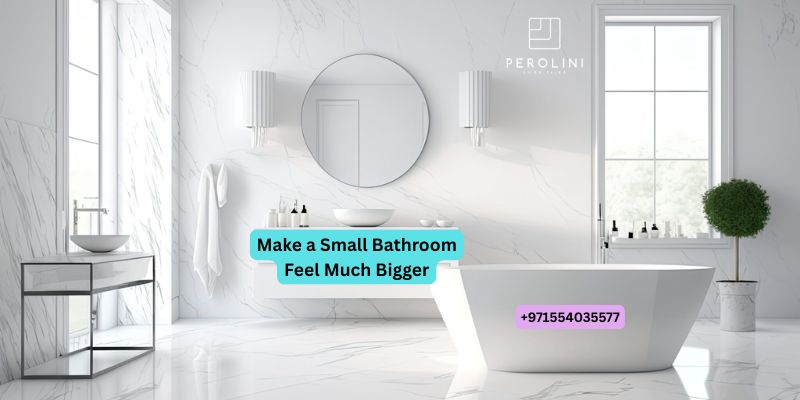
A small bathroom does not have to feel cramped, dark, or awkward. The right tile can change that surprisingly well. From pale colors and larger formats to clever layouts and continuous surfaces, a few thoughtful choices can create a more open feel. So, what should you look for when choosing Bathroom Tiles for a compact space?
1. Choose Light-Colored Tiles
When space is limited, light is your best friend. Soft white, cream, beige, light grey, and subtle pastel shades reflect more available light and help the bathroom feel airy rather than enclosed. This does not mean the room has to look plain. A gently textured tile or a natural stone-inspired finish can add character without making the walls visually heavy.
If your bathroom receives little natural light, this approach becomes even more useful. Pair lighter tiles with good artificial lighting and reflective fittings, and the entire room can feel noticeably brighter.
2. Try Large-Format Tiles
Here is a simple design trick that often gets overlooked: fewer grout lines can make a room appear less busy. Large-format tiles create broader, uninterrupted surfaces, which can give a compact bathroom a cleaner and more spacious appearance.
Why fewer grout lines help
- Less visual clutter: The eye sees larger continuous areas instead of a grid of small sections.
- A cleaner appearance: Larger surfaces can give even a modest bathroom a more contemporary feel.
- Easier visual flow: Using similar tiles across connected surfaces can make boundaries feel less obvious.
That said, large tiles are not automatically better for every bathroom. The room’s dimensions, drainage requirements, installation conditions, and tile availability should all be considered before choosing a format.
3. Use the Same Tile on Walls and Floors
Want a bathroom that feels visually connected? Consider using the same or closely coordinated tiles on the floor and walls. When there is less contrast between surfaces, the eye moves around the room more smoothly, making the space feel less fragmented.
For example, a warm stone-effect tile in a light sand tone can work across the floor and selected walls. Add a simple glass shower screen, and you have fewer visual interruptions. It is a small design decision, but in a compact bathroom, those details matter.
4. Let the Tile Direction Work for You
Tile orientation can subtly influence how a room is perceived. Horizontal layouts may emphasize width, while vertical arrangements can draw the eye upward and make walls feel taller. The best option depends on the bathroom’s proportions.
Before installation, ask your installer to show you how the proposed layout will work around niches, doors, fixtures, and corners. A beautiful tile can lose some of its impact if the cuts are awkwardly positioned.
5. Keep Patterns Under Control
Patterned tiles are not off-limits in a small bathroom. In fact, a carefully selected pattern can become the room’s focal point. The trick is restraint.
- Use a decorative tile on one feature wall rather than every surface.
- Choose patterns with a similar color family to the surrounding tiles.
- Keep the remaining finishes relatively simple so the pattern has room to breathe.
A soft geometric pattern behind the vanity, for instance, can add personality without visually shrinking the room. Think of it like seasoning food: enough to add interest, but not so much that it overwhelms everything else.
6. Consider Glossy and Reflective Finishes
Glossy wall tiles can bounce light around a bathroom and contribute to a brighter appearance. They can work particularly well in bathrooms with limited daylight. However, remember that floor tiles have different practical requirements. Wet areas need appropriate slip resistance, so appearance should never be the only consideration.
For more inspiration on coordinating surfaces, layouts, and finishes, take a look at Elevate Your Bathroom Interiors with Elegant Surface Solutions.
7. Work With the Right Tile Supplier
Choosing from photographs online is convenient, but seeing an actual tile sample can reveal details that a screen simply cannot. Texture, undertone, sheen, and scale can look quite different in real lighting.
For homeowners working on projects in the UAE, speaking with experienced tiles suppliers in Ras Al Khaimah can make the selection process easier. A knowledgeable supplier can help you compare formats, finishes, colors, and practical options according to the space.
Before buying, check these details
- Tile size and how it will work with the bathroom dimensions
- Slip resistance and suitability for wet areas
- Cleaning and maintenance requirements
- Availability of matching or coordinating tiles
- Extra material required for cuts and future repairs
FAQs About Small Bathroom Tiles
What color tiles make a small bathroom look bigger?
Light shades such as white, cream, beige, and pale grey can make a small bathroom feel brighter and more open by reflecting available light.
Are large tiles suitable for small bathrooms?
Yes. Large-format tiles can reduce the number of grout lines and create a more continuous visual surface. However, the tile size should suit the room and installation conditions.
Should bathroom floor and wall tiles match?
They do not have to match exactly. Using the same tile or complementary shades can create better visual continuity, while a controlled contrast can add depth.
Are glossy tiles good for small bathrooms?
Glossy wall tiles can help reflect light and create a brighter appearance. For floors, choose a finish specifically suitable for wet areas and consider slip resistance.
Final Thoughts
Making a small bathroom feel larger is less about following one rigid design rule and more about creating visual continuity. Light colors, carefully chosen tile sizes, fewer visual breaks, and thoughtful layouts can work together to make a compact room feel surprisingly comfortable. Start with the room’s natural light and proportions, then choose tiles that support them rather than fight against them.
Full Audio Version: Click Here