

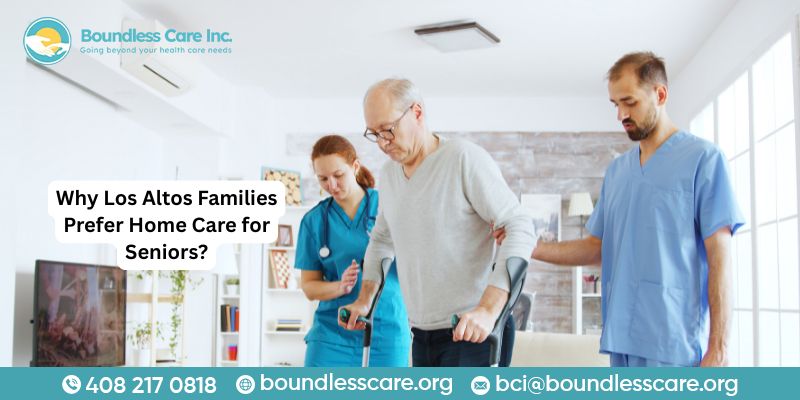
For many Los Altos families, home care offers a practical way to help an aging loved one remain comfortable, supported, and independent without immediately moving into a residential care setting. The growing preference for aging in place is reflected nationally: 75% of adults age 50 and older say they want to remain in their current home, while 73% want to remain in their community for as long as possible. Home Care Services Los Altos can provide flexible assistance with everyday activities while allowing seniors to remain in familiar surroundings.
For families balancing work, distance, appointments, household responsibilities, and changing care needs, professional in-home support can also provide valuable consistency. The goal is not to take independence away it is to make independence more sustainable.
Why Aging in Place Matters to Los Altos Families?
Aging in place means continuing to live safely and comfortably in a familiar home and community as circumstances change. Familiar surroundings can preserve established routines, relationships, and a sense of control.
But staying home successfully may require additional support. A senior who once managed everything independently may gradually need assistance with bathing, dressing, meals, mobility, errands, companionship, or household routines. Home care can fill those gaps without requiring a major lifestyle change.
1. Home Care Can Help Preserve Independence
One of the biggest reasons families consider in-home care is that assistance can be introduced gradually. A senior may need help for only a few hours each week initially and require more support later.
This flexibility can make the transition easier for both the older adult and the family. Instead of replacing a person’s routines, a caregiver can support the activities that have become difficult while encouraging the senior to continue doing what they can safely manage themselves.
2. Personalized Support Fits Changing Needs
Older adults do not all need the same type or amount of assistance. Some primarily need companionship and help with errands, while others need regular assistance with personal care, meals, mobility, or daily routines.
A personalized plan allows families to match support with actual needs instead of choosing a one-size-fits-all arrangement. Boundless Care’s Los Altos service model includes personal care, mobility assistance, meals, light household support, companionship, transportation, and flexible scheduling.
3. Home Care Can Reduce the Pressure on Family Caregivers
Family members often want to help but cannot realistically provide every hour of care themselves. Employment, children, travel, and personal responsibilities can make full-time caregiving difficult.
Professional support can share the responsibility. Respite or scheduled in-home assistance may give family caregivers time to work, rest, attend appointments, or simply maintain their own routines. Respite care can range from several hours to longer periods depending on individual circumstances.
4. Familiar Surroundings Can Make Daily Life Easier
Moving an older adult can be emotionally and practically demanding. Home care allows families to consider whether additional support can make the existing environment workable before pursuing a residential move.
However, remaining at home should always be based on safety and suitability. Falls, significant cognitive changes, complex medical needs, or an inability to complete essential activities may indicate that a higher level of professional care is necessary.
5. Home Care and Home Health Are Not the Same
Families should understand the difference before choosing a provider. Non-medical home care generally focuses on everyday assistance such as personal care, companionship, mobility, meals, and household routines.
Medicare-covered home health is different. Medicare describes home health as medically necessary services such as intermittent skilled nursing and certain therapies when eligibility requirements are met. Medicare generally does not cover 24-hour care or custodial/personal care when that is the only care required.
Boundless Care also clearly states that it is not a home health agency and that its Los Altos services focus on non-medical support.
How Los Altos Families Can Choose a Home Care Provider?
Choosing a caregiver is ultimately a trust decision. Families should look beyond availability and compare the provider’s screening process, communication practices, flexibility, care planning, and ability to respond when needs change.
- Confirm the organization’s California licensing status where applicable.
- Ask how caregivers are screened and trained.
- Discuss the senior’s specific daily needs and preferences.
- Ask how caregiver matching is handled.
- Understand scheduling, backup coverage, and communication.
- Clarify exactly which services are non-medical.
- Discuss how the care plan can change over time.
California’s Department of Social Services oversees Home Care Organizations and maintains a registry for Home Care Aides who have undergone background checks. Families can use state resources when evaluating care providers.
When Is Home Care a Good Fit?
Home care may be appropriate when an older adult can continue living at home but needs help managing everyday activities. Common indicators include difficulty with bathing or dressing, reduced mobility, trouble preparing meals, missed errands or appointments, loneliness, or a family caregiver who needs additional support.
It may not be sufficient when someone requires continuous skilled medical treatment, intensive rehabilitation, or a level of supervision that cannot safely be provided through the available home-care arrangement. In those situations, families should discuss appropriate options with qualified healthcare professionals.
What Families Should Prioritize?
The strongest home-care arrangement is one that balances safety, independence, consistency, and dignity. Families should avoid choosing care solely because it is the cheapest or fastest option. The better question is whether the provider can reliably support the senior’s actual needs while adapting as those needs evolve.
For families exploring broader Senior Care Service options, Boundless Care also provides care coordination, transportation, private-duty nursing registry services, and other support across Santa Clara County.
Final Thoughts
Los Altos families are increasingly looking at home care as a way to combine familiar surroundings with dependable professional support. The appeal is straightforward: seniors can receive assistance with daily life while families gain greater confidence that their loved one is supported.
The right solution depends on the individual’s health, safety, preferences, home environment, and level of independence. When those factors align, carefully planned home care can be an important part of helping an older adult remain at home with dignity.
Frequently Asked Questions
1. What does home care for seniors usually include?
Non-medical home care may include personal care, companionship, mobility assistance, meal support, light household tasks, transportation, and help with everyday routines.
2. Does Medicare pay for non-medical home care?
Generally, Medicare does not pay for custodial or personal care when that is the only care a person needs. Medicare coverage for home health is subject to specific eligibility and medical requirements.
3. Can home care be temporary?
Yes. Families may arrange short-term support, respite assistance, part-time visits, or ongoing care depending on needs and provider availability.
4. How do I know whether my parent needs home care?
Consider whether your parent is struggling with personal care, mobility, meals, errands, household routines, companionship, or safely managing daily activities. A professional assessment can help clarify appropriate support.
5. How should families evaluate a home care provider?
Review licensing, caregiver screening, training, communication, scheduling flexibility, care planning, service boundaries, and how the provider handles changing needs.
Full Audio Version:- Click Here