

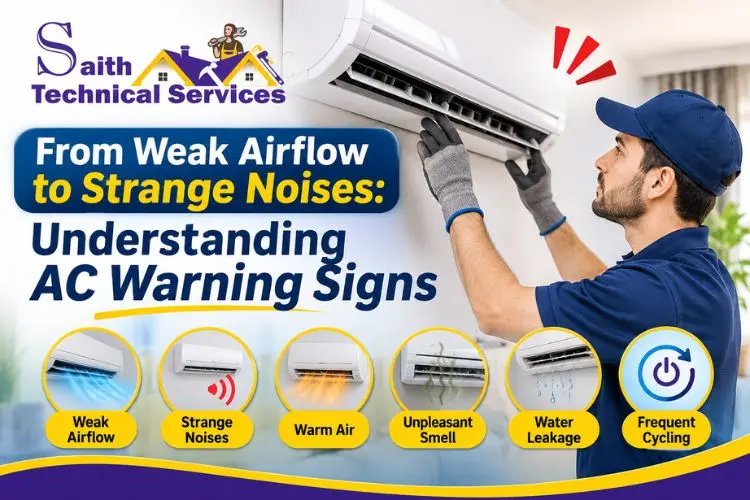
An air conditioner rarely stops working without giving some warning. Weak airflow, unusual noises, warm air, or frequent cycling can indicate problems developing inside the system. Recognising these symptoms early helps homeowners avoid unexpected breakdowns and uncomfortable indoor temperatures. Understanding what these warning signs mean also helps you decide when professional AC inspection and repair are necessary.
Why Does an Air Conditioner Show Warning Signs?
An air conditioner depends on several components working together, including the blower motor, air filters, evaporator coils, refrigerant circuit, and electrical controls. When one component starts struggling, the entire cooling process can become less effective.
For example, a partially blocked filter may reduce airflow, while a failing fan motor can produce unusual sounds and inconsistent cooling. These problems often develop gradually, which is why homeowners sometimes overlook them until the AC stops performing properly.
Professional home air conditioner repair can help identify the underlying cause before a minor fault develops into a more serious issue.
6 AC Warning Signs Homeowners Should Never Ignore
1. Weak Airflow From AC Vents
If your air conditioner is running but very little air comes through the vents, something may be restricting airflow.
Common causes include:
- Dirty or clogged air filters.
- Blocked return-air vents.
- Dust accumulation inside the ductwork.
- A malfunctioning blower motor.
- Problems with the indoor fan assembly.
A simple observation can help: compare the airflow in different rooms. If only one room has weak airflow, the problem may involve a particular duct or vent rather than the entire AC system.
2. Strange Noises During Operation
Air conditioners produce some normal operating sounds, but sudden or unfamiliar noises deserve attention.
Different sounds can indicate different problems:
- Buzzing: Possible electrical issues, loose components, or motor problems.
- Grinding: May indicate worn motor bearings or mechanical friction.
- Rattling: Could come from loose panels, screws, or internal components.
- Whistling: Often associated with restricted airflow or air escaping through small gaps.
- Banging: May indicate a loose or damaged internal component.
Do not assume that a noisy AC will eventually settle down. Switching the system off and arranging an inspection is safer when the noise is sudden, loud, or accompanied by vibration.
3. AC Blows Warm or Less-Cool Air
An air conditioner should deliver consistently cool air when operating under normal conditions.
If the room remains warm despite continuous operation, possible causes include refrigerant leaks, dirty evaporator coils, compressor problems, or incorrect thermostat settings.
One important distinction: low refrigerant is not something that should be treated as routine consumption. If refrigerant levels are low, a technician should investigate the possibility of a leak rather than simply topping up the system.
4. Unpleasant Smells Coming From Vents
Unusual smells can reveal problems that are not immediately visible.
A musty smell may indicate moisture and microbial growth around damp components. A burning smell could point to overheating electrical parts or motor-related problems.
If you notice a burning or electrical smell, switch off the AC and arrange professional assistance. Do not continue operating it in the hope that the smell disappears.
5. Frequent On-and-Off Cycling
When an air conditioner repeatedly starts and stops within short intervals, it may be experiencing short cycling.
Possible reasons include:
- Incorrect thermostat placement or settings.
- Restricted airflow.
- Electrical control problems.
- Refrigerant-related issues.
- An incorrectly sized or malfunctioning system.
Frequent cycling can affect cooling consistency and place additional strain on system components.
6. Water Leakage Around the Indoor Unit
Water dripping from an indoor AC unit is another warning sign that should not be ignored.
A blocked condensate drain line is a common cause. Damaged drain connections, improper drainage, or other internal problems may also contribute.
If water reaches nearby walls, ceilings, or electrical fittings, switch off the unit and arrange an inspection to prevent further damage.
What Should You Do When Your AC Shows Warning Signs?
The best approach is to observe the symptoms, avoid unnecessary adjustments, and arrange professional diagnosis when required.
Follow these practical steps:
1. Check the thermostat: Confirm that the cooling mode and temperature settings are correct.
2. Inspect the air filter: Look for visible dust buildup and clean or replace it according to the manufacturer’s instructions.
3. Check the vents: Make sure furniture, curtains, or other objects are not blocking airflow.
4. Listen carefully: Notice whether unusual sounds occur during startup, normal operation, or shutdown.
5. Look for visible leakage: Check around the indoor unit for dripping water or signs of moisture.
6. Contact a technician: Arrange professional inspection if the problem continues or involves electrical faults, refrigerant leaks, or mechanical damage.
Avoid opening electrical panels, handling refrigerant lines, or attempting internal motor repairs yourself.
Can Dirty AC Components Cause Weak Airflow and Noise?
Yes. Dust accumulation can interfere with normal airflow and reduce the efficiency of an air conditioning system.
When filters, evaporator coils, or blower components become dirty, the system may need to work harder to circulate air. This can contribute to uneven cooling, increased operating strain, and unusual sounds.
Choosing a reliable ac cleaning company can help address dirt-related problems through appropriate cleaning of accessible system components.
However, cleaning is not a solution for every AC fault. A damaged fan motor, refrigerant leak, or electrical issue requires a different repair approach.
How Does Timely AC Maintenance Help Prevent These Problems?
Regular inspection helps identify developing faults before they cause unexpected cooling interruptions.
For Dubai homes, where air conditioners often operate for extended periods, consistent attention to system condition is particularly important.
Professional ac maintenance Dubai services can help homeowners monitor important components and maintain reliable cooling performance.
A practical maintenance inspection should consider:
- Air filter and evaporator coil condition.
- Blower motor and fan operation.
- Condensate drain condition.
- Electrical connections and controls.
- Refrigerant system performance.
- Thermostat response and airflow consistency.
The goal is not simply to keep the AC running. It is to identify changes in performance before they become disruptive.
Frequently Asked Questions
Q. Why is my air conditioner running but not cooling properly?
A. Common causes include dirty filters, restricted airflow, refrigerant leaks, thermostat problems, and compressor faults. A professional inspection can identify the actual cause.
Q. What does a strange noise from an AC unit mean?
A. Buzzing, grinding, rattling, or banging sounds may indicate loose components, motor problems, electrical faults, or mechanical wear. Sudden or loud noises should be investigated promptly.
Q. Can a dirty air filter cause weak AC airflow?
A. Yes. A clogged air filter restricts the amount of air passing through the system. Cleaning or replacing the filter according to manufacturer instructions can help restore normal airflow.
Q. When should I call an AC repair technician?
A. Contact a technician when cooling performance drops, unusual noises continue, water leaks appear, or the system repeatedly switches on and off. Electrical or burning smells require immediate attention.
Q. How can I prevent unexpected AC breakdowns at home?
A. Keep filters clean, avoid blocking vents, pay attention to unusual sounds, monitor cooling performance, and arrange periodic professional inspections. Early attention can help prevent more disruptive faults.
Conclusion
Weak airflow, unusual noises, water leakage, and inconsistent cooling are not just minor inconveniences. They can be early signs of developing air conditioner problems. Paying attention to these changes gives homeowners a better chance of addressing faults before they interrupt everyday comfort.
Saith Technical Services helps homeowners approach AC problems with proper inspection and practical repair solutions. The smartest time to investigate an AC warning sign is when it first appears, not when the cooling finally stops.
Blog Development Credit
This blog was developed with research support and content insights from ChatGPT and Google Gemini. The topic selection, SEO strategy, keyword placement, content refinement and final publishing are managed by Saith Technical Services to provide Dubai homeowners with practical, informative and user-focused home air conditioning guidance.